The City
Santa Fe was founded in 1610 as the capital of the Spanish province of Nuevo México — the oldest functioning state capital in the United States and the second-oldest continuously occupied European-founded capital city in North America (after St. Augustine, Florida). The city sits at 7,000 feet in the foothills of the Sangre de Cristo Mountains — the southernmost range of the Rocky Mountains — producing a high-desert climate with 300 days of sun per year, low humidity, cool nights even in July, and a quality of light that has drawn painters, writers, and photographers since the early 20th century.
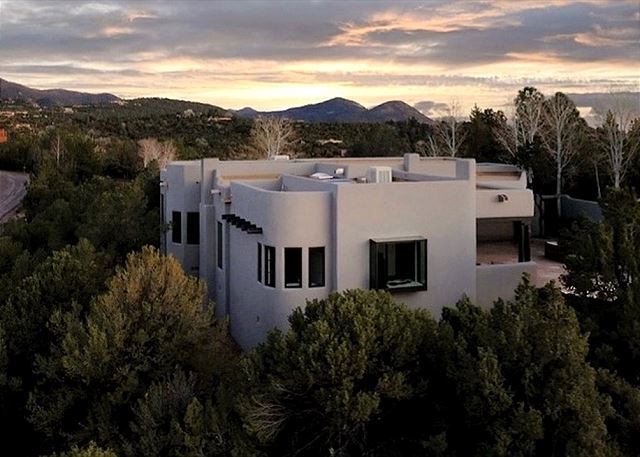
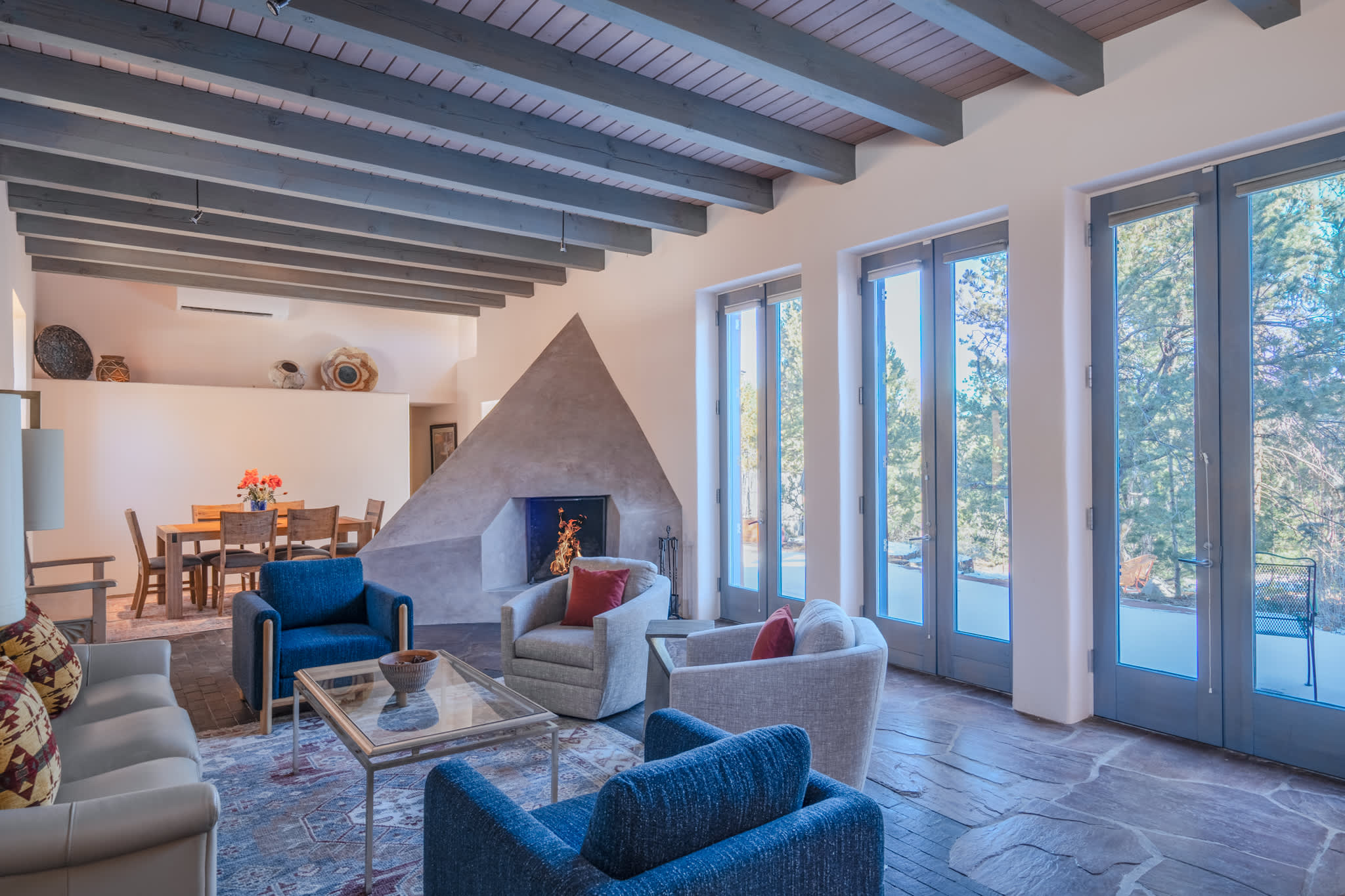
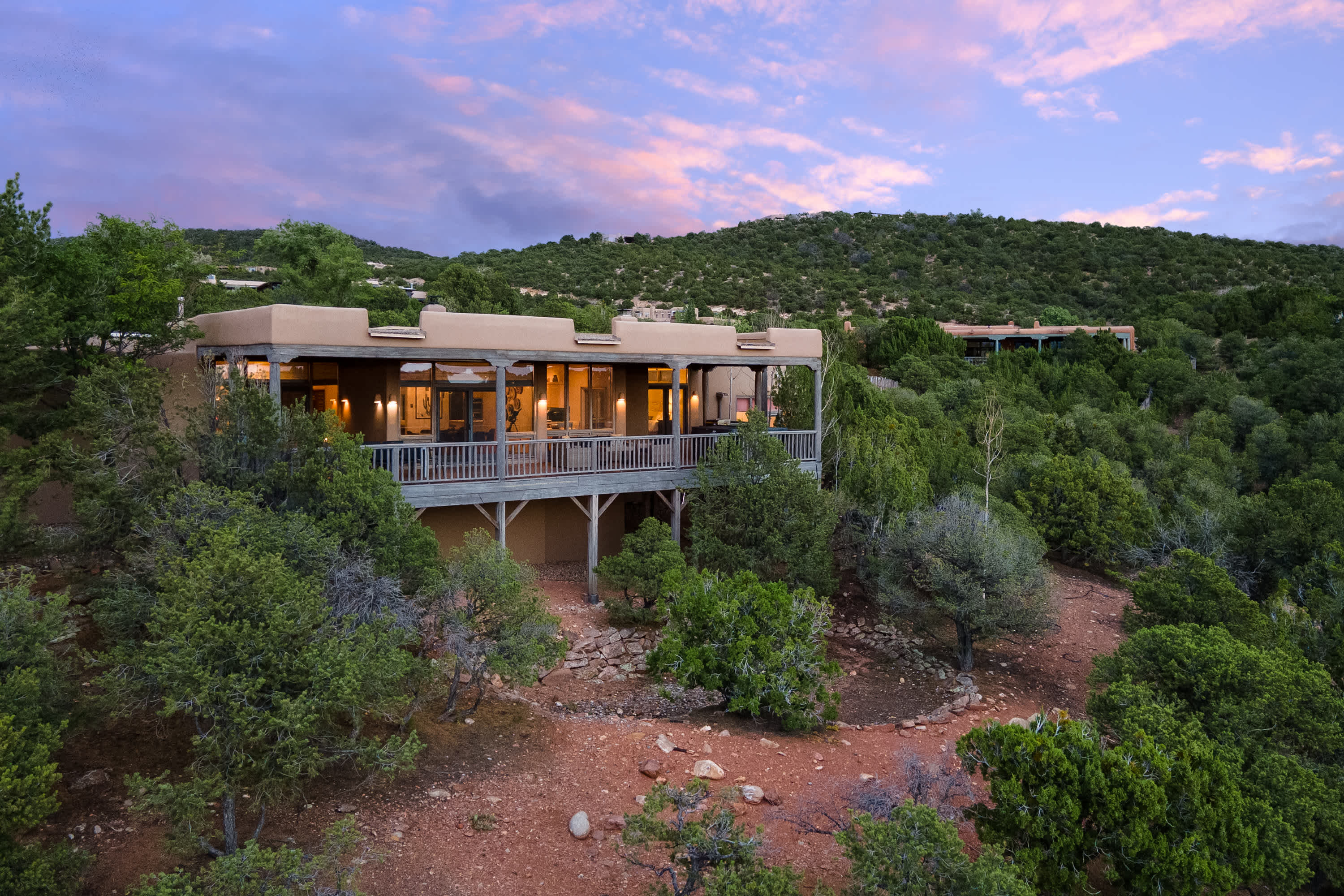
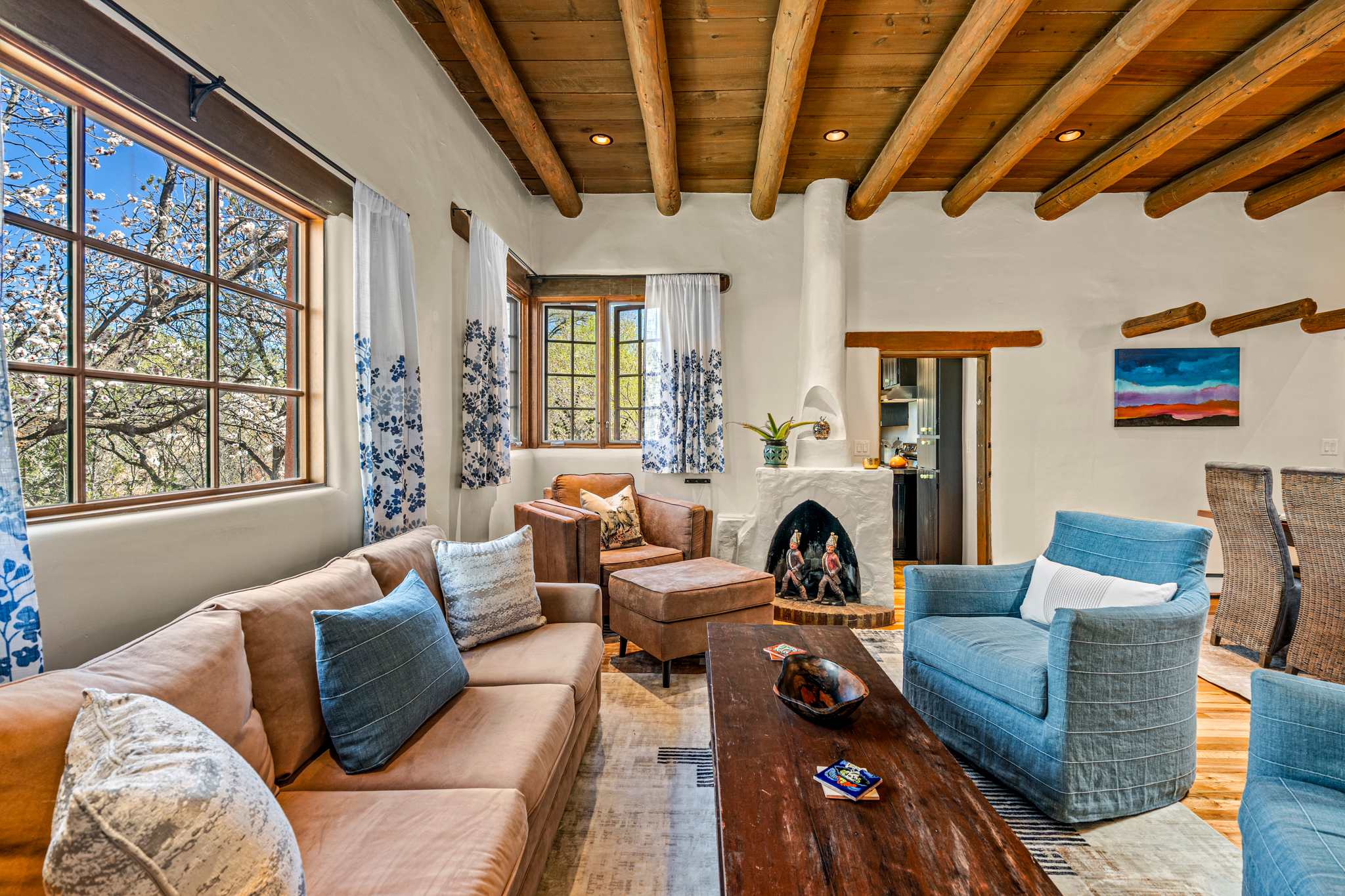
The Pueblo Revival building style — adobe construction, earth-toned walls, flat roofs with parapets, projecting vigas (roof beams), and portals (covered outdoor corridors) — was formalized as Santa Fe's aesthetic mandate in 1912, when the city adopted an ordinance requiring new construction in the historic core to maintain either Pueblo Revival or Spanish Colonial character. The result: a city that looks largely as it did four centuries ago, where a LEED-certified building constructed in 2020 uses the same proportions and materials as a 1670 mission church. The adobe building tradition predates European settlement by centuries — the Pueblo peoples of the Rio Grande valley have been building with earthen construction for over a thousand years.
The Architecture
The vocabulary of Santa Fe's architecture is worth learning because it appears in every property description and every conversation:
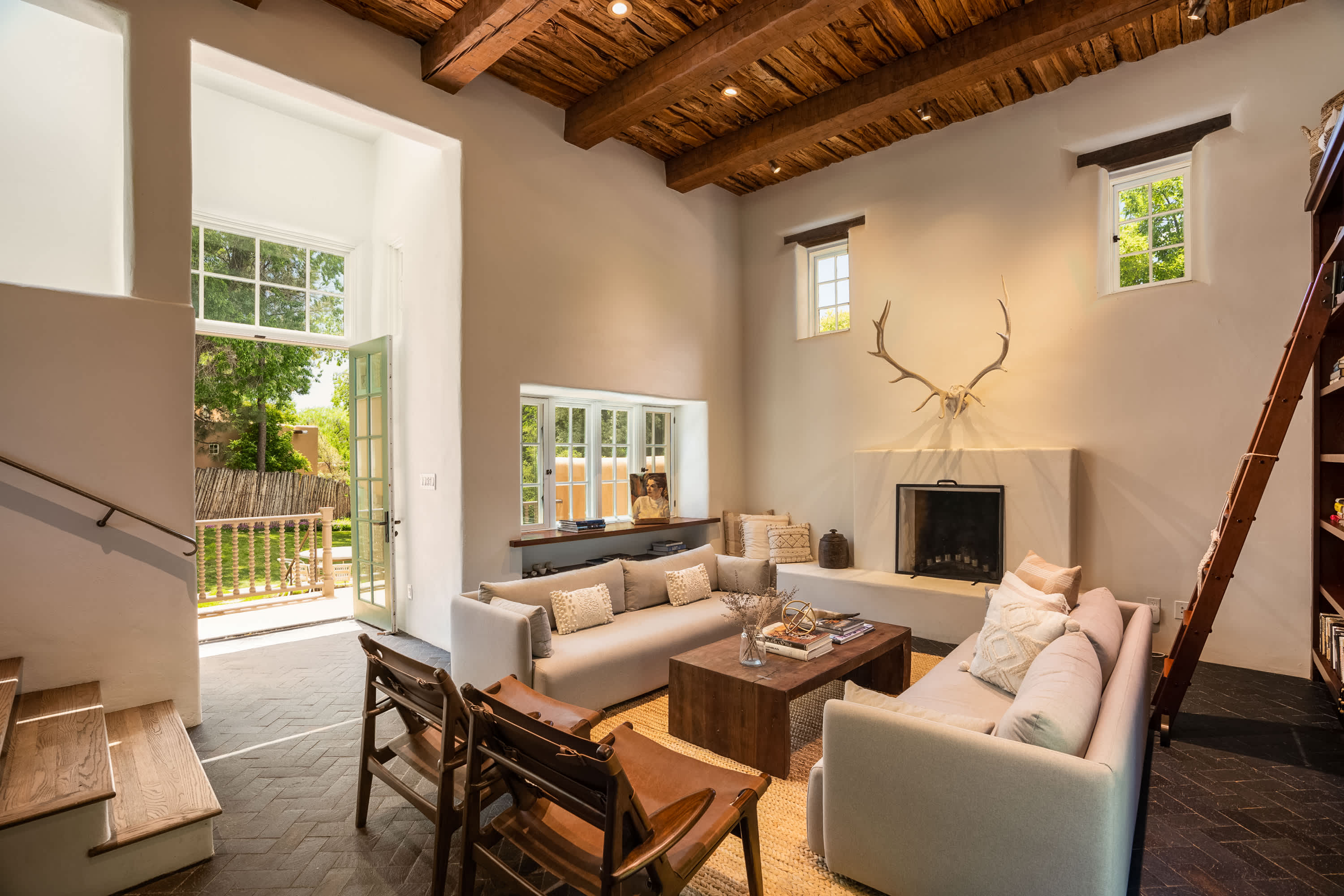
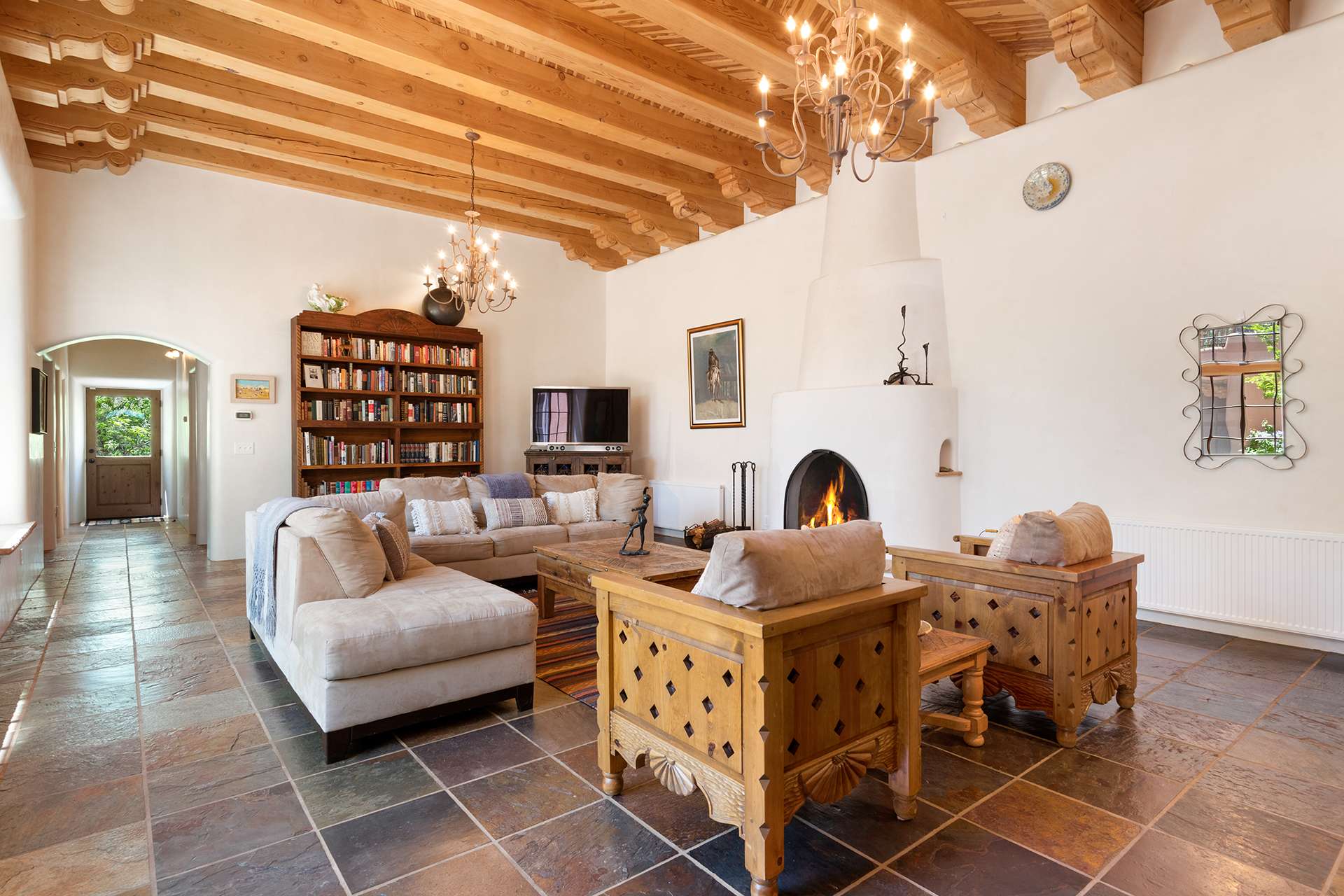
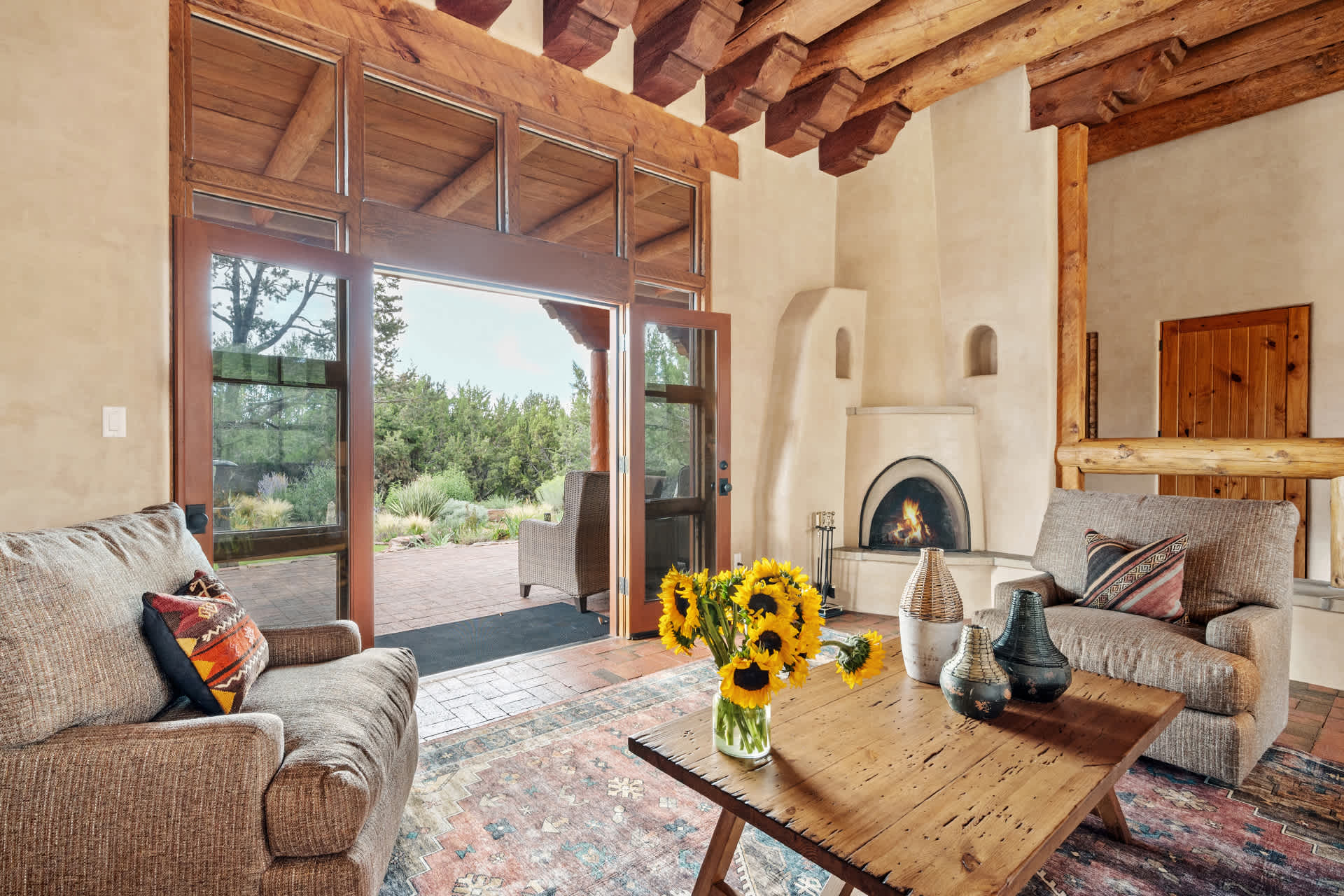
- Vigas — round pine or cottonwood roof beams that project through exterior walls; structural and decorative
- Latias — round or split cedar poles laid perpendicular across vigas; the traditional ceiling material
- Corbels — carved wooden brackets where vigas meet the wall, often decorated
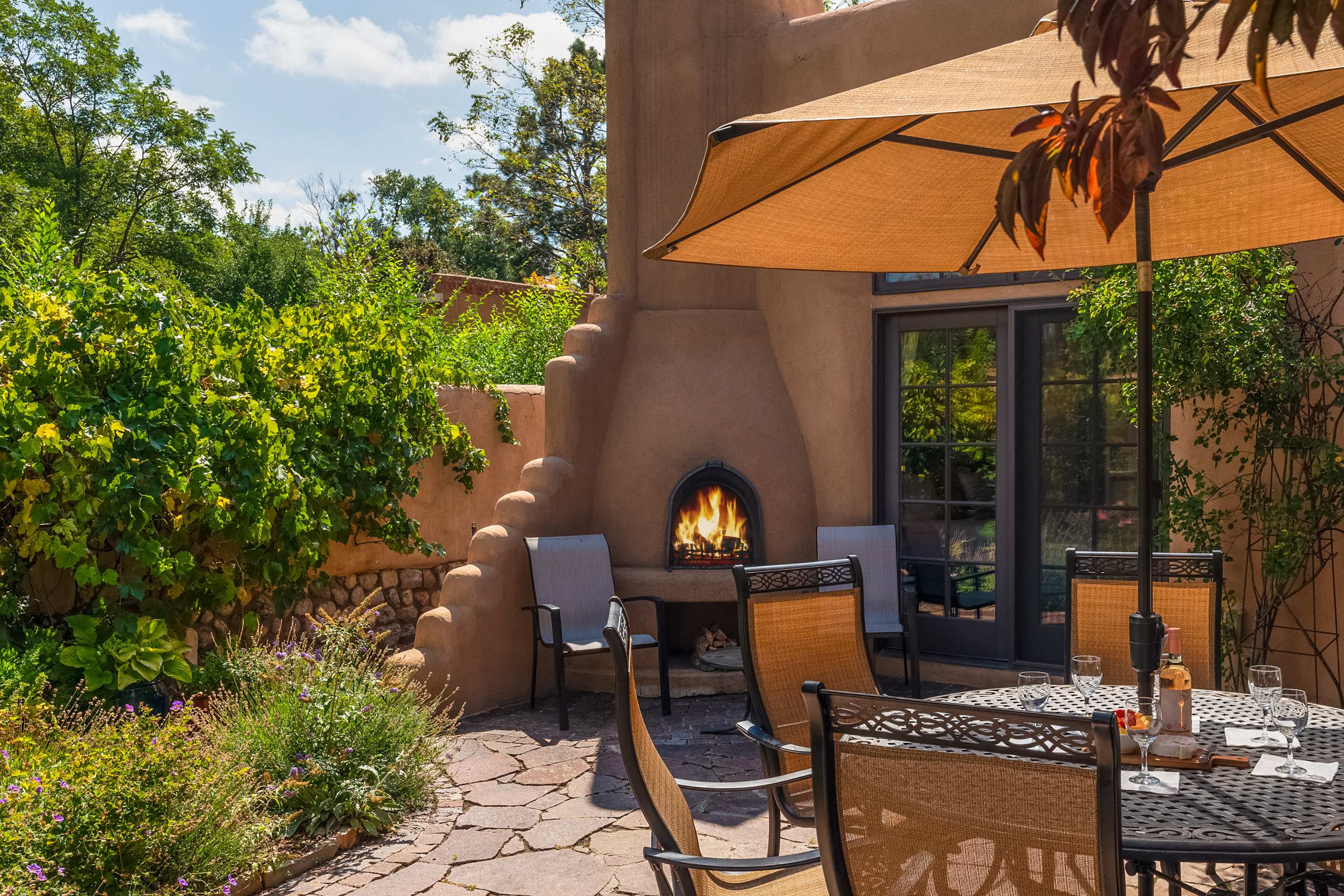
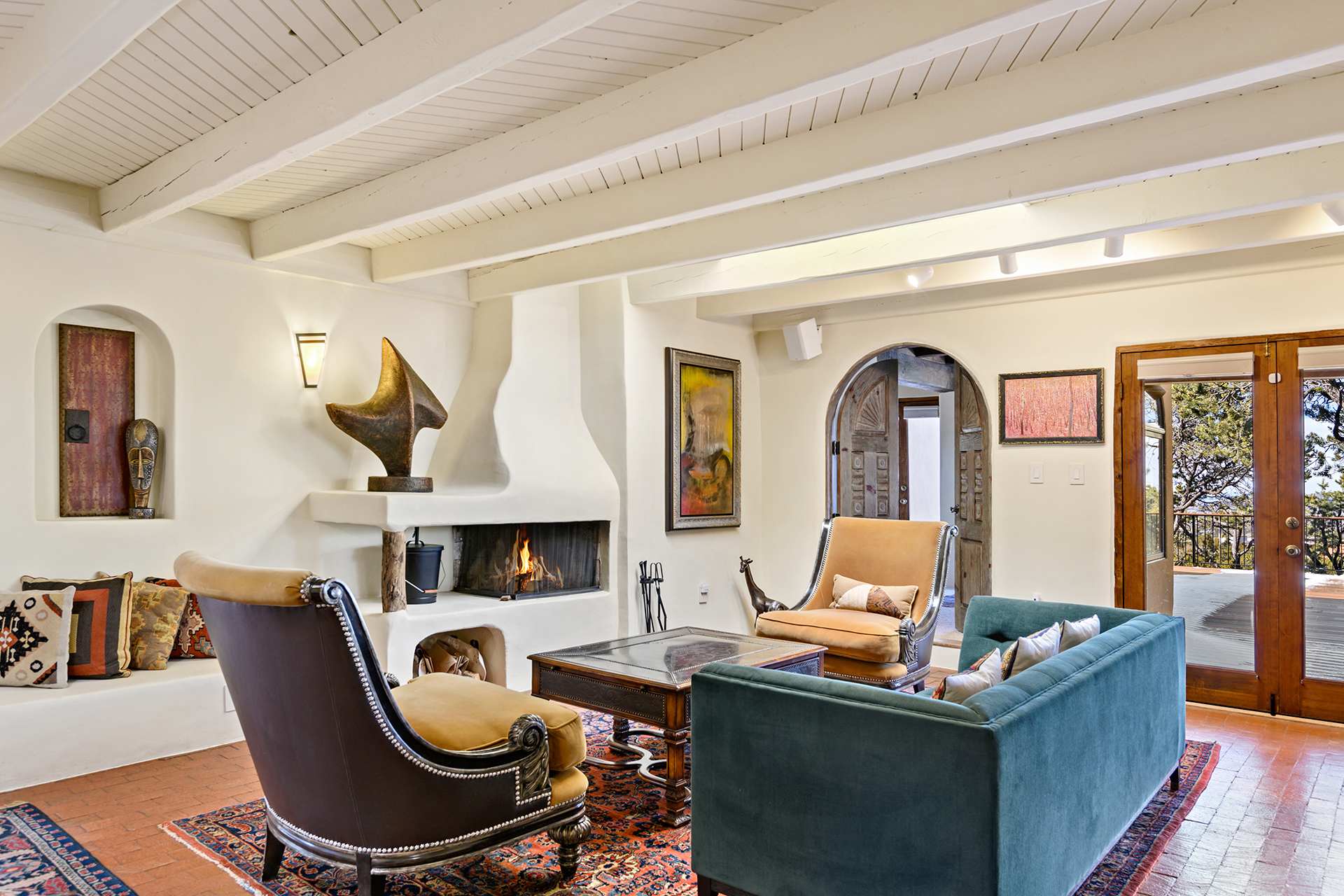
- Kiva fireplace — a rounded, corner-set adobe fireplace; the defining thermal feature of the traditional interior, providing radiant heat and flickering light
- Saltillo tile — terracotta floor tile from Saltillo, Coahuila; warm in color, cool underfoot in summer
- Portal — covered outdoor corridor or terrace, the main living space in warm weather
- Acequia — a community irrigation ditch, part of a Spanish colonial and pre-colonial water management system still operating in the Tesuque valley
The acequia system in Tesuque village is particularly remarkable: the Acequia Madre de Tesuque is part of a 700-year-old network of irrigation ditches that distributed water to the Tesuque Pueblo farmlands long before Spanish settlement, runs seasonally in spring and summer, and forms the eastern boundary of some of the valley's most prized residential properties.
Canyon Road
Canyon Road runs about one mile southeast from Paseo de Peralta into the foothills — a former acequia trail that became the city's primary arts district in the 1950s. Today it has over 100 galleries and studios, making it one of the highest concentrations of visual art per square mile of any street in the world. The range: established painters and sculptors with international gallery representation, emerging artists working in traditional Pueblo or Hispanic craft traditions, bronze foundries with outdoor sculpture gardens, and dealers in Native American art and antiquities.
The historic residential fabric of Canyon Road dates to the early 20th century. Andrew Dasburg — recognized as one of the most important Cubist and Modernist painters in the American Southwest — built his home here in 1923. That property, on the quiet streets just off the road, remains in use as a vacation rental and is one of the few places in the country where you can stay in a working artist's historic compound in a world-class art district.
The galleries on Canyon Road typically open 10 AM–5 PM and most welcome walk-in visitors. The major openings happen on Friday evenings in summer and fall — Canyon Road becomes a pedestrian parade of gallery-hopping that flows until well after dark, with wine, conversation, and the Santa Fe tradition of knowing your neighbor's neighbor.
The Santa Fe Opera
The Santa Fe Opera performs in an open-air theater 7 miles north of the city, in the hills above the village of Tesuque. The season runs late June through late August — six to eight productions, including world premieres and American premieres of major European works alongside core repertoire. The theater is partially open to the desert sky on the sides and rear; the experience of watching Wagner or Strauss with the Jemez Mountains visible in the fading light, lightning storms on the horizon, and the smell of piñon in the air is one of the more remarkable things available in American performing arts. Tailgating in the parking lot before the performance (a full pre-opera picnic with champagne and a tailgate setup is the tradition) is as important as the opera itself.
Ten Thousand Waves
[Ten Thousand Waves](https://www.tenthousandwaves.com) is a Japanese-style mountain spa in the hills above Santa Fe, accessed via Hyde Park Road toward the ski area. Private and communal hot tubs in the ponderosa forest, traditional shiatsu and Japanese bodywork, a small inn on site. It has operated since 1981 and has an international following. It is the kind of place that gets mentioned by hosts in listing copy when they want to convey that the property is within the world Santa Fe operates in.
Tesuque Village
Tesuque is a village 5 miles north of the Plaza, off the Bishop's Lodge Road, distinct in character from the city proper — quieter, more residential, with the Tesuque Creek running through it and large cottonwood and aspen trees providing shade uncommon in the high desert. The Tesuque Village Market is the informal community center: groceries, prepared food, a decent breakfast burrito, and the social layer of a village that is home to artists, ranchers, and families that have been here for generations. The Bishop's Lodge area — where horses pass through on the meadow behind some properties — is the eastern edge of the village before the hills rise toward the Santa Fe National Forest and the Windsor Trail, which connects directly to Ski Santa Fe.
Skiing
Ski Santa Fe operates on the slopes of Santa Fe National Forest at the end of Hyde Park Road — a 30-minute drive from the Plaza. The mountain tops out at 12,075 feet. It is a smaller resort than Taos Ski Valley (20 miles away) but serves as the local mountain for city residents and has a loyal following for its weekday emptiness and the quality of its bowl skiing after a powder storm. The Windsor Trail — accessible from the Bishop's Lodge Road area in Tesuque without touching a road — connects directly to the ski area for touring in winter and mountain biking in summer.
Find your base in Santa Fe, NM — browse stays indexed by CielStay.
Search stays on CielStay →Frequently asked questions
What is the elevation of Santa Fe, New Mexico?
Santa Fe sits at approximately 7,000 feet above sea level in the foothills of the Sangre de Cristo Mountains — the highest elevation of any state capital in the United States. The altitude produces a high-desert climate with low humidity, cool nights even in July, and the clear light that has drawn artists and photographers to the city for over a century. Visitors arriving from sea level should expect mild altitude effects (fatigue, headache, increased sun sensitivity) for the first 24–48 hours.
When does the Santa Fe Opera season run?
The Santa Fe Opera season runs late June through late August, with six to eight productions including world premieres and American premieres alongside core repertoire. The open-air theater is 7 miles north of the city in the hills above Tesuque, partially open to the desert sky. The traditional pre-performance tailgate picnic in the parking lot is as much a part of the experience as the opera itself. Tickets go on sale in January; peak productions (Opening Night, closing weekends) sell out quickly.
What does "red or green" mean in New Mexico?
"Red or green?" is the question you will be asked at every New Mexico restaurant that serves chile-sauced dishes — it refers to whether you want red chile sauce or green chile sauce on your enchiladas, posole, or huevos rancheros. Red chile is dried and earthy; green chile (often Hatch green chile from southern New Mexico) is brighter and ranges from mild to incendiary depending on the season and source. "Christmas" means both. New Mexico chile cuisine is distinct from Tex-Mex and California Mexican — earthier, drier, and built around the chile itself as the primary flavor rather than as a condiment.
How far is Santa Fe from Albuquerque?
Santa Fe is about 60 miles north of Albuquerque — roughly 1 hour by car on I-25. Albuquerque International Sunport (ABQ) is the primary air gateway for Santa Fe, with significantly more direct flights than the Santa Fe Regional Airport. The rental car drive from Albuquerque is straightforward; the Rail Runner commuter train also connects the two cities (approximately 90 minutes, multiple trips daily) with a stop near the Santa Fe Railyard District.
Stays near this guide
Top-rated independent stays in the region, ranked by CielStay authenticity score.
Try a search
Searches inspired by this guide — describe the vibe you want.
More guides

Nearby landmarks & attractions
Key destinations and attractions in the Santa Fe, NM area.
Santa Fe Plaza ↗ Maps
The oldest public park in the US — at the center of the oldest state capital, surrounded by galleries, the Palace of the Governors, and the Museum of New Mexico.
Canyon Road ↗ Maps
The world's most concentrated mile of art galleries — over 100 studios and galleries on a single street.
Meow Wolf Santa Fe ↗ Maps
Immersive arts complex in a former bowling alley — the House of Eternal Return is unlike anything else in the Southwest.
This guide was assembled from the local knowledge of hosts with properties throughout Santa Fe, NM, as indexed by CielStay. The descriptions of restaurants, trails, swimming holes, and local tips reflect what hosts share with guests in their listings — not the observations of a travel journalist or guest reviewer. Photos are sourced from host listing images and are credited to their respective listings. Information about permits and trail conditions may change; always verify with official sources before your trip.