San Diego: California's Pacific Coast in Full
San Diego sits at the southwestern edge of the continental United States, where the Pacific Ocean meets the California coast and the climate delivers what residents simply call "the best weather in the country." With 70 miles of coastline running through a chain of distinct beach communities — each with its own character, crowd, and shoreline personality — the city is one of the most versatile coastal destinations in North America.
For visitors who want ocean proximity without the density of Los Angeles or the fog of San Francisco, San Diego is the answer. The water is swimmable, the light is exceptional, and the neighborhoods range from the architecturally extraordinary cliffs of La Jolla to the laid-back surf culture of Ocean Beach and the family-friendly sands of Coronado.
Sunset Cliffs and Ocean Beach
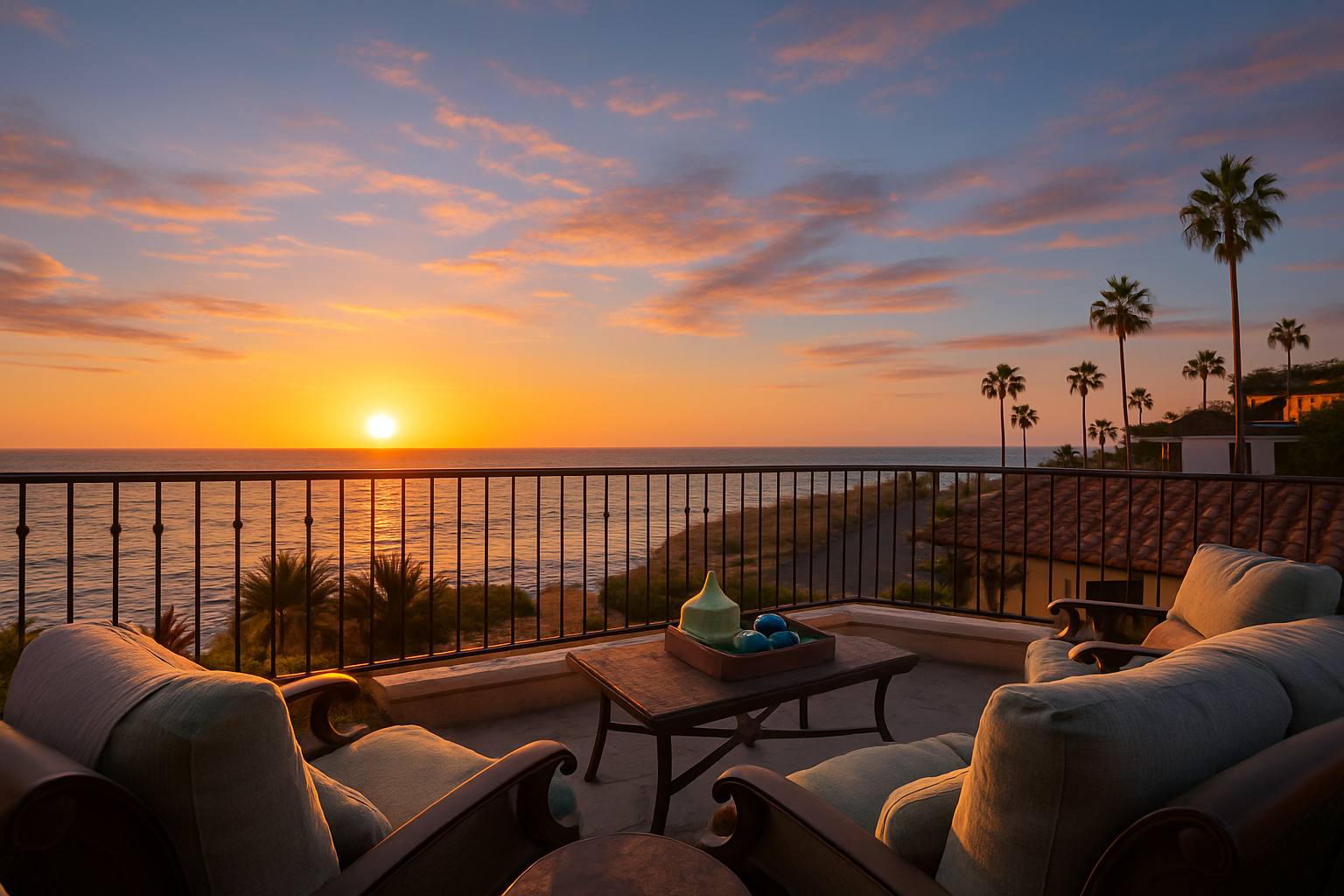
The southwestern edge of San Diego is defined by Sunset Cliffs Natural Park, a stretch of sculpted sandstone bluffs that drop directly into the Pacific. Hosts of properties perched on these cliffs describe watching the sun dip into the Pacific from private hot tubs, with panoramic ocean views visible from floor-to-ceiling windows. The cliffs are a dramatic counterpoint to the sandy beaches further north — raw geology meeting open ocean, with blowholes, sea caves, and tidepools accessible at low tide.
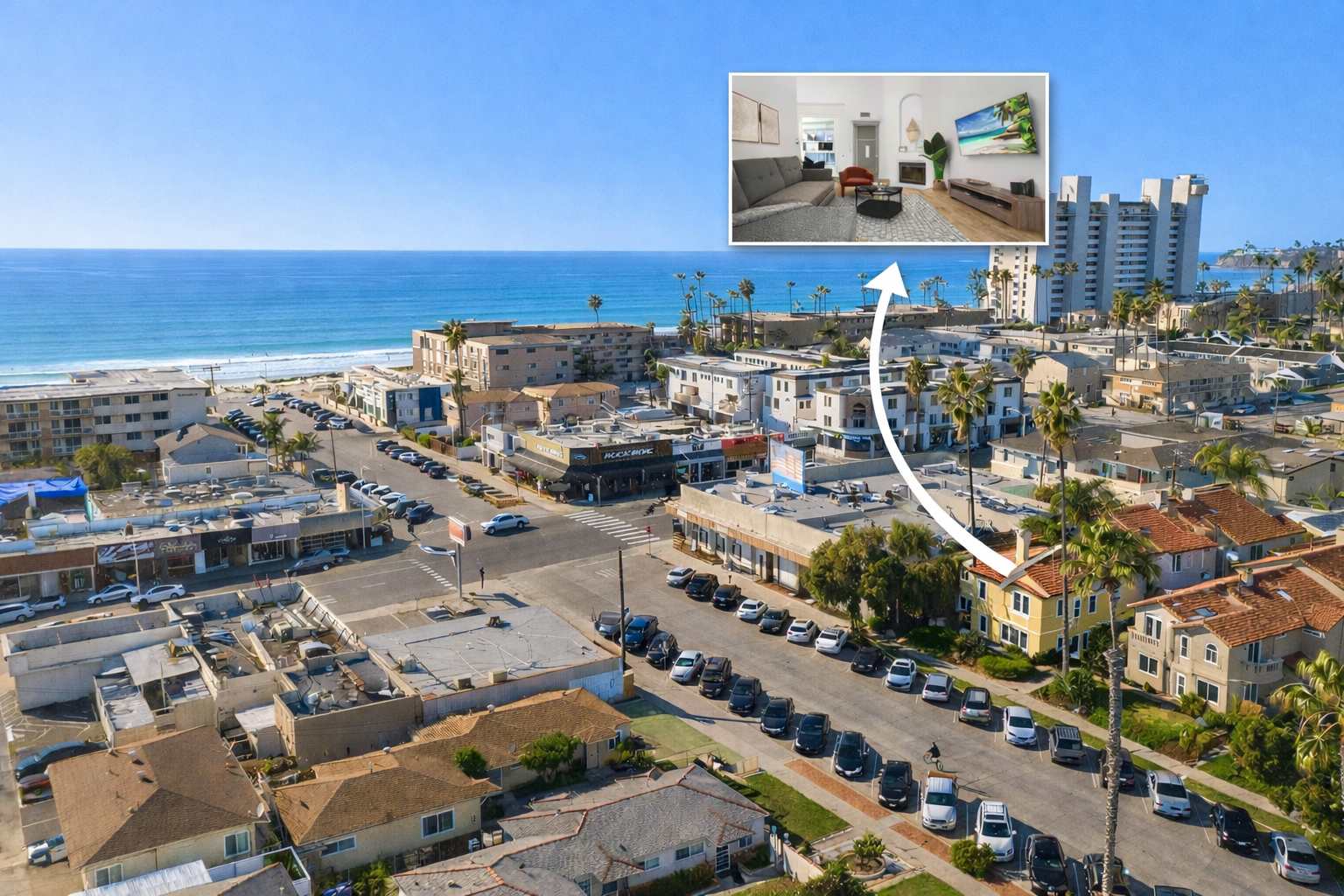
Ocean Beach, just north of the cliffs, is one of San Diego's most bohemian neighborhoods. The pier stretches into the Pacific less than a mile from Sunset Cliffs, and the commercial strip along Newport Avenue carries the kind of independent-business character that beach towns tend to lose as they gentrify. The neighborhood has resisted that drift better than most.
The area's proximity to Cabrillo National Monument — just 3.5 miles from Sunset Cliffs — adds a significant historical dimension. The monument marks the site of Juan Rodriguez Cabrillo's 1542 landing, the first European exploration of the West Coast. The promontory at Point Loma offers some of the most sweeping views in the city: on clear days, downtown San Diego, the Coronado Bridge, the Tijuana skyline, and the Pacific all visible from a single vantage point. The monument also protects rich intertidal habitat and seasonal grey whale migration viewpoints.
La Jolla: Architecture, Ocean, and the Tide Pools
La Jolla occupies a bluff-lined stretch of coast about 12 miles north of downtown, and it is genuinely unlike anywhere else in San Diego. The neighborhood is best known for La Jolla Cove — a small protected beach surrounded by sea caves, where leopard sharks rest in the shallows during summer and snorkelers and divers explore the underwater reserve. The La Jolla Cove area sits within a City of San Diego ecological reserve, with no fishing and controlled access to protect the marine life.
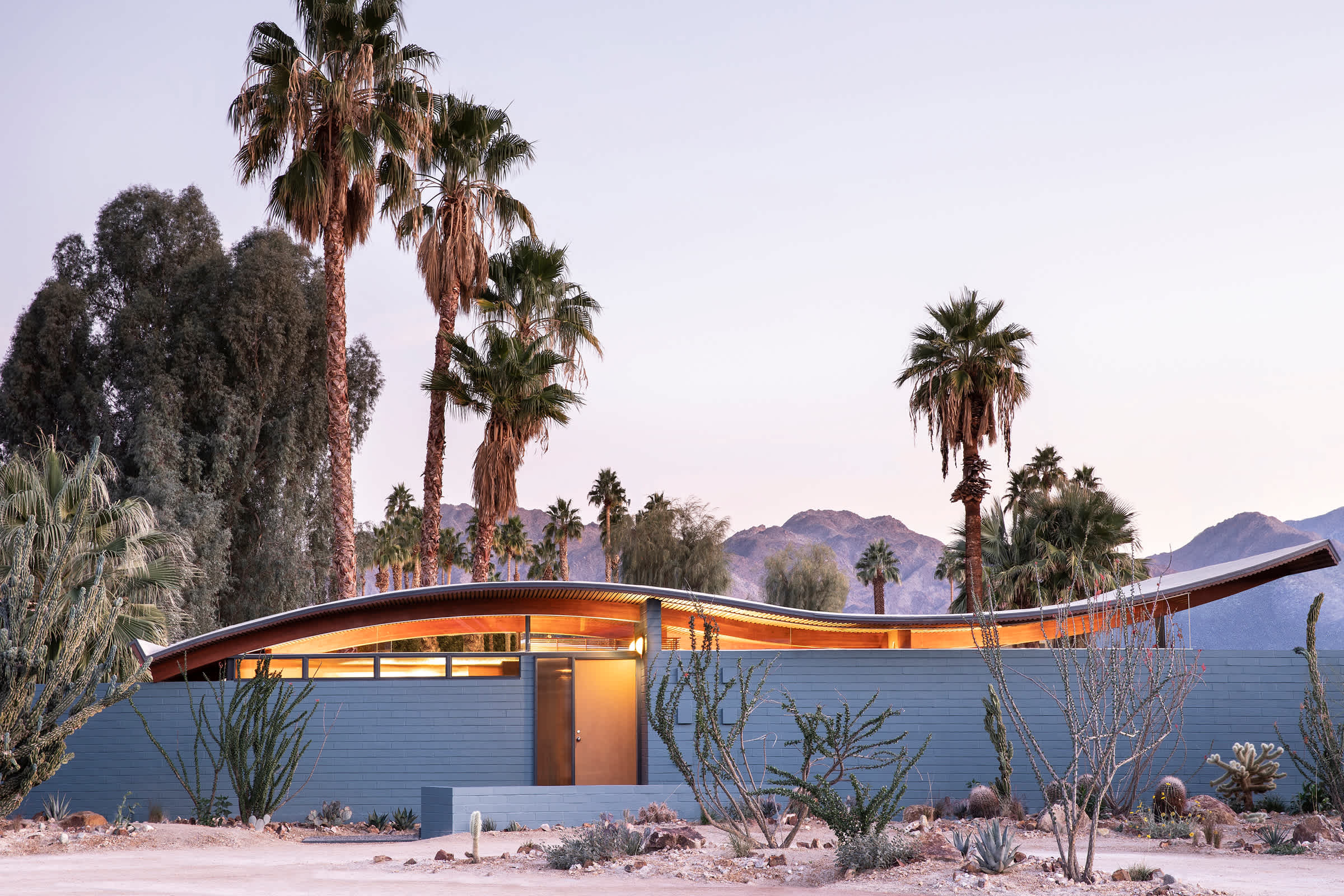
Above the cove, the residential streets climb through neighborhoods of exceptional private architecture. The Lotus House — designed by visionary architect Kendrick Bangs Kellogg and regarded by hosts as one of the premier masterpieces of modern organic architecture — sits on a 0.9-acre homesite in La Jolla Heights overlooking Pottery Canyon. Hosts describe curvilinear Douglas fir beams, a one-of-a-kind concrete fireplace, an authentic hot rocks sauna, and massive ocean views from virtually every room. No other residence is located behind the property, leaving views of sunsets, the shoreline, and coastal bluffs unobstructed.
This kind of architectural investment is not unusual in La Jolla. The neighborhood has attracted serious design attention for decades, and the density of thoughtfully built private homes is high. Travelers staying in La Jolla get access not just to the beach but to a built environment that rewards attention.
Encinitas and the North Coast
North of La Jolla, the coastline continues through a string of communities — Cardiff, Solana Beach, Encinitas — that offer a calmer, more residential version of the San Diego beach experience. Encinitas has developed a reputation as one of the best surf towns in Southern California, with Stonesteps Beach and Moonlight Beach as its primary access points.
Hosts of properties in Encinitas note that Stonesteps Beach is a quick 3-minute walk from certain rentals, while the popular Moonlight Beach is a mere 10-minute stroll down the road. The neighborhood has the kind of walkable-to-the-water setup that other beach communities promise but rarely deliver. Downtown Encinitas supports a local commercial strip with independent shops and a surf-town vibe that pairs well with the beach access.
The coastal path connecting these communities rewards cyclists, runners, and walkers who want to explore multiple beaches in a single outing. The terrain is gentle by California standards, and the views are consistent.
Balboa Park and the City's Cultural Core
San Diego's cultural identity is anchored inland at Balboa Park, a 1,200-acre urban park that houses the San Diego Zoo, 17 museums, performing arts venues, and the Spanish Colonial Revival architecture of the 1915 Panama-California Exposition. The park is large enough to spend a full day exploring — the Aerospace Museum, the Natural History Museum, the San Diego Museum of Art, and the Old Globe Theatre all share its grounds.
The Zoo itself is one of the largest in the world and among the most visited attractions in California. For visitors staying in the Mission Hills, North Park, or Hillcrest neighborhoods, the park is walkable — but it draws visitors from all over the city and from beach communities that are otherwise a different world from the park's inland, tree-lined setting.
Balboa Park is also where San Diego's Spanish Colonial architectural heritage is most visible. The buildings constructed for the 1915 exposition — elaborate facades, tiled domes, ornamental towers — established an aesthetic that influenced Southern California architecture for decades and remains distinctive today.
Coronado and the Bay
Coronado is technically a peninsula but functions as an island, connected to the mainland by a long spit of land (the Silver Strand) and the iconic Coronado Bridge. The community across the bay from downtown San Diego has a military history — Naval Air Station North Island occupies the northern half of the peninsula — and a resort tradition centered on the Hotel del Coronado, the Victorian-era resort built in 1888.
Coronado Beach is consistently ranked among the best beaches in the United States, with wide, soft sand and the Hotel del Coronado as backdrop. The Coronado Ferry connects the island to downtown's Embarcadero in minutes, making it a practical base for visitors who want beach access with easy proximity to the Gaslamp Quarter, the USS Midway Museum, and Seaport Village.
The Coronado Bridge itself is a San Diego landmark — its graceful curve over the bay visible from numerous points in the city, and from properties on elevated terrain in Ocean Beach and Point Loma.
Staying on the San Diego Coast
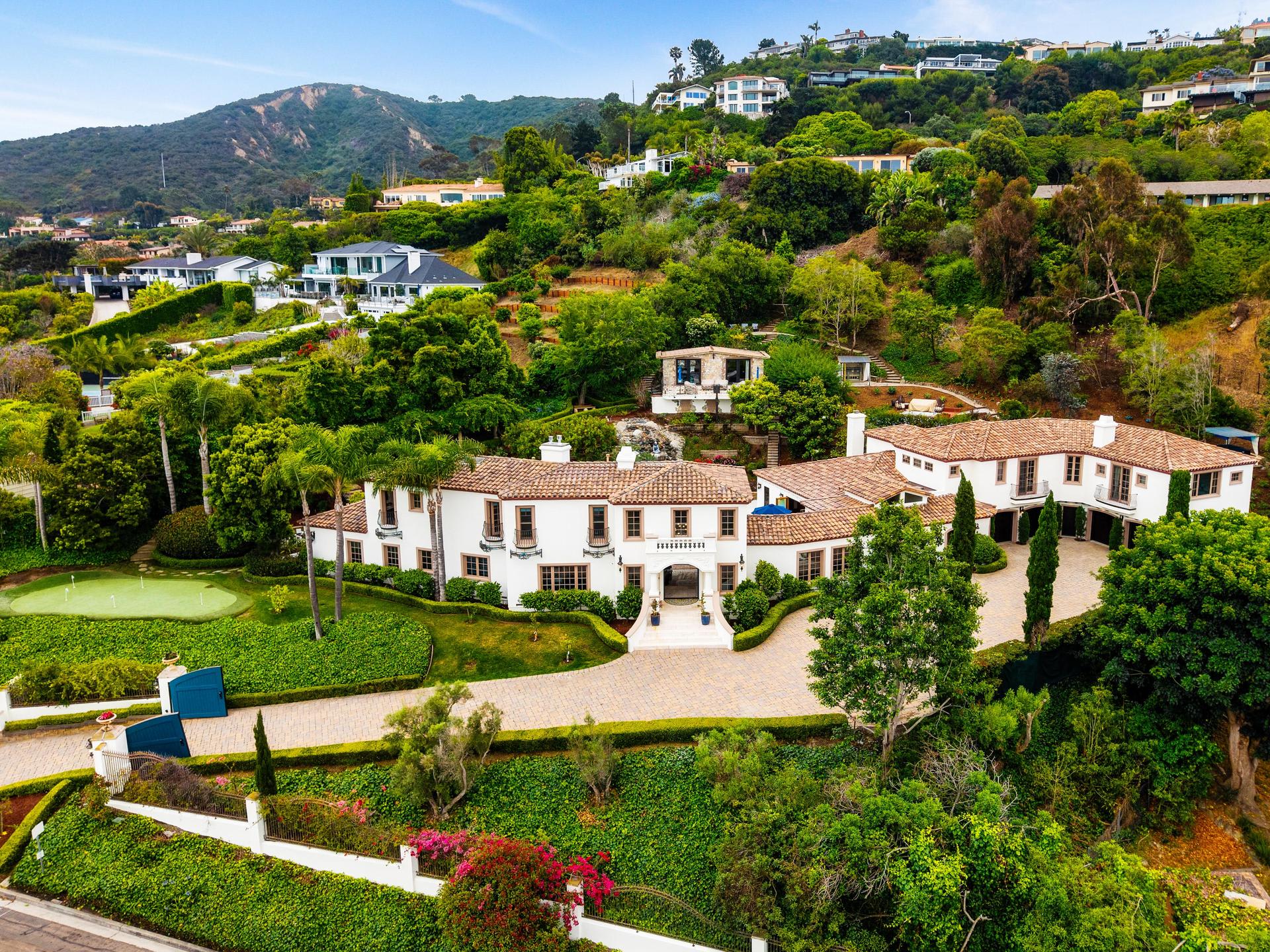
Accommodation in San Diego skews heavily toward beachfront and beach-adjacent private homes, reflecting the coastal character of the destination. The most distinctive properties tend to be in Ocean Beach and Point Loma (for cliff and ocean views), La Jolla (for architecture and upscale amenities), and Encinitas and Carlsbad (for a quieter, residential beach experience).
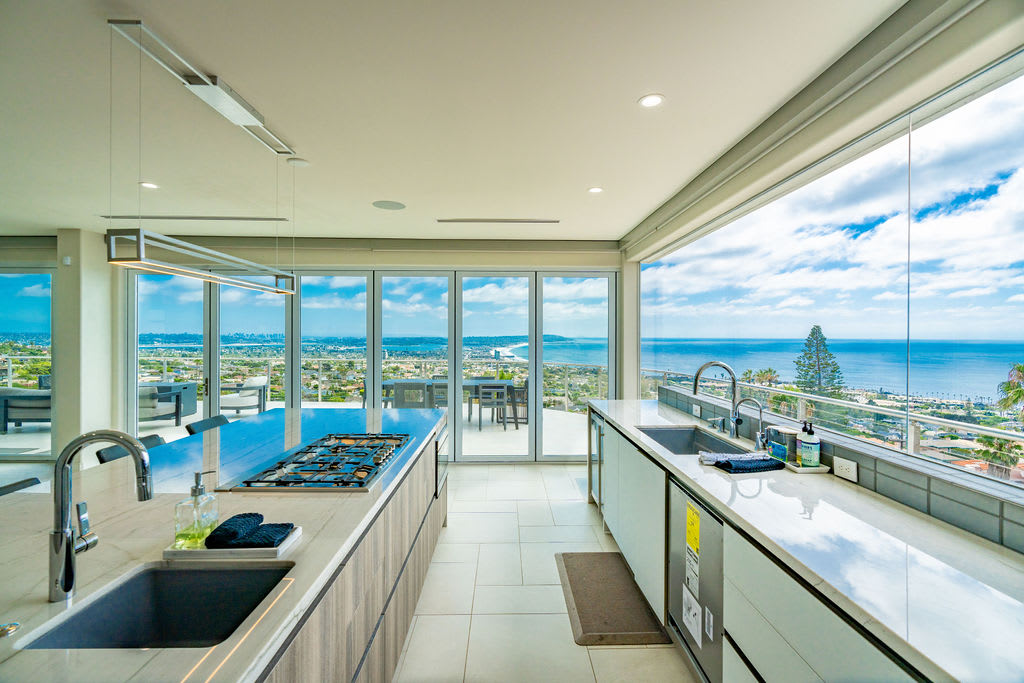
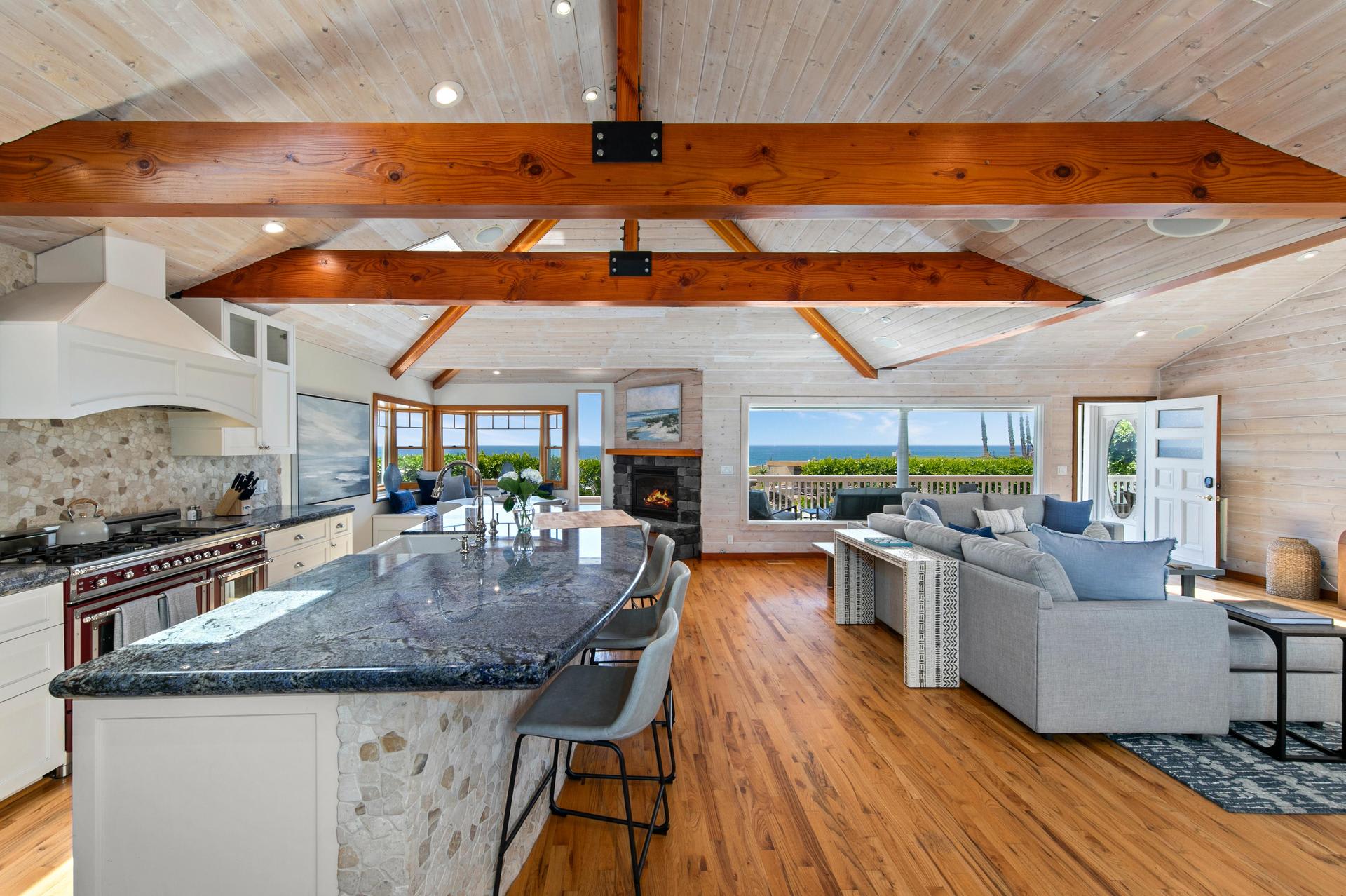
Listings range from architect-designed estates with hot rocks saunas and three-level atriums to modern 3-bedroom beach homes with private spas, outdoor kitchens, and multiple fire pits. Sunset Cliffs properties offer rooftop decks with outdoor dining and panoramic ocean views, while Encinitas homes tend to prioritize indoor-outdoor living with large sliding glass doors, backyard fire pits, and two outdoor showers for washing off the sand.
For groups, Ocean Beach and Point Loma have inventory that scales — six-bedroom oceanfront villas with guest houses, multiple living rooms, and private hot tubs are available for large gatherings. La Jolla has smaller, more architecturally ambitious properties that suit smaller groups willing to pay for design and location.
Planning Your San Diego Visit
San Diego's climate is genuinely exceptional: temperatures are mild year-round, humidity is low, and the Pacific moderates the summer heat that affects inland Southern California. The marine layer — a morning fog that often burns off by midday — is most prevalent in June and July, a phenomenon locals call "June Gloom." For visitors who want guaranteed sunshine, September through November offers the best combination of warmth, clear skies, and post-summer crowd reduction.
The city is large and the neighborhoods are spread out. Point Loma, Ocean Beach, and Sunset Cliffs are clustered together in the southwest. La Jolla is its own contained world to the north. Encinitas and Carlsbad require a car or the Coaster commuter train. Coronado is a quick bridge or ferry ride from downtown. Budget time accordingly, and consider which cluster is the right base for your visit.
Visit San Diego maintains current event calendars, neighborhood guides, and visitor information for the full metro area.
Find your base in San Diego, CA — browse stays indexed by CielStay.
Search stays on CielStay →Frequently asked questions
When is the best time to visit San Diego?
September through November is ideal for most visitors: daytime temperatures are 70-80°F, the June Gloom marine layer has cleared, and summer crowds have thinned. Spring (March-May) is also excellent, with wildflowers along the coast and comfortable beach weather. June and July bring overcast mornings that typically burn off by noon. December through February is mild by most standards (60-65°F) but can see rain.
What is Sunset Cliffs Natural Park and how do I visit?
Sunset Cliffs Natural Park is a stretch of sculpted sandstone bluffs on the southwestern edge of San Diego in the Ocean Beach and Point Loma neighborhoods. The park is free and accessible year-round from Sunset Cliffs Boulevard. The cliffs offer dramatic Pacific views, blowholes, sea caves, and tidepool access at low tide. Parking is available along the boulevard. Sunset here is a San Diego institution and draws crowds on clear evenings.
How far is La Jolla from downtown San Diego?
La Jolla is approximately 12 miles north of downtown San Diego, about 20-25 minutes by car without traffic. The neighborhood has its own commercial center, beaches, and amenities, and many visitors base their entire trip there. La Jolla Cove, the Birch Aquarium, and the Torrey Pines State Natural Reserve are all within the La Jolla area. Public bus service connects La Jolla to downtown, but a car is the most practical option for exploring multiple neighborhoods.
Is San Diego a good destination for families?
San Diego is an excellent family destination. The San Diego Zoo in Balboa Park is world-class and can fill a full day. Legoland California is in Carlsbad, about 35 miles north. Mission Beach and Pacific Beach have calm, family-friendly surf, while Coronado Beach is wide, sandy, and ideal for young children. The mild year-round climate means outdoor activities are reliably accessible, and the range of beach neighborhoods means families can find a base that suits their preferred pace.
Stays near this guide
Top-rated independent stays in the region, ranked by CielStay authenticity score.





Try a search
Searches inspired by this guide — describe the vibe you want.
More guides


Nearby landmarks & attractions
Key destinations and attractions in the San Diego, CA area.
Balboa Park ↗ Maps
1,200-acre urban park with 17 museums, the San Diego Zoo, and the greatest concentration of Spanish Colonial Revival architecture in the US.
La Jolla Cove ↗ Maps
A protected marine reserve with California sea lions and leopard sharks in the shallows — snorkeling and kayaking beside wildlife.
Old Town San Diego State Historic Park ↗ Maps
The birthplace of California — the site of the first European settlement on the West Coast, preserved as a living history park.
This guide was assembled from the local knowledge of hosts with properties throughout San Diego, CA, as indexed by CielStay. The descriptions of restaurants, trails, swimming holes, and local tips reflect what hosts share with guests in their listings — not the observations of a travel journalist or guest reviewer. Photos are sourced from host listing images and are credited to their respective listings. Information about permits and trail conditions may change; always verify with official sources before your trip.