Nashville, Tennessee — Music City — sits at the intersection of American popular music's most durable commercial traditions: country, gospel, bluegrass, rhythm and blues, and the polished pop-country crossover that made the city's recording studios known worldwide. The Cumberland River bends through the downtown core, where a concentration of historic buildings, live music venues, and cultural institutions within a few walkable blocks of each other creates a density of experience unusual for a city of its size. The music here is not nostalgia: the studios, publishing houses, and performance venues that defined American country music across the last century are still operating, and a new generation of artists continues to record and perform here. What makes Nashville worth a sustained visit is not just the heritage district but the living, working city built around it.
Lower Broadway and the Honky Tonk Highway
Nashville's most concentrated entertainment district runs along Lower Broadway from the Cumberland River to roughly 5th Avenue — a stretch of honky tonk bars, live music venues, and western wear shops collectively known as the Honky Tonk Highway. The entertainment here operates on a scale unlike most American entertainment districts: live music plays across multiple floors of every major bar simultaneously, typically from early afternoon until two in the morning, seven days a week, with no cover charge at most venues. The model — cover-free live music supported by drink sales — turns the strip into a perpetual open stage for touring and local musicians alike. Hosts in the historic loft buildings within one block of Broadway describe the immediate surroundings: Printer's Alley one block to the north; Tootsie's Orchid Lounge three blocks from the riverfront end of the strip; the Wildhorse Saloon a block and a half from the loft buildings that anchor the western reach of the entertainment core.
The physical scale of Lower Broadway has expanded significantly over the past two decades. Older honky tonks have been joined by large multi-story complexes with rooftop bars, event spaces, and restaurants on each floor. The street-level experience remains anchored to live country music — pedal steel, fiddle, upright bass — but the floors above support an increasingly diverse mix of genres and formats. Parking at the garages on 2nd and 3rd Avenues near Commerce Street, less than a block from the Nashville Riverfront Lofts buildings that anchor the heart of the entertainment district, is the practical access point for visitors arriving by car.
The Ryman Auditorium and the Historic Core
Ryman Auditorium — one and a half blocks from the loft buildings along Broadway — is a red brick tabernacle completed in 1892 as a gospel venue and converted in the 20th century into the original home of the Grand Ole Opry. It served as the Opry's broadcast home from 1943 to 1974, the years when the weekly WSM radio program was shaping American country music's national identity. The Ryman's horseshoe balcony and church-pew seating define its acoustic character; the room was designed for speech and congregational singing, which means even large bands fill it with an intimacy modern arenas cannot replicate. The Ryman operates today as a working concert hall across genres, with daytime tours available when the venue is not in use for evening events.
Printer's Alley, one block from the Broadway loft buildings, is a narrow laneway that served as Nashville's original nightlife corridor in the mid-20th century and has been revived as an entertainment zone. The Johnny Cash Museum, one and a half blocks from the historic loft core, is dedicated to the life and career of the Man in Black — a comprehensive collection of personal artifacts, stage costumes, guitars, and archival material spanning his career from his early Sun Records sessions through the late American Recordings era. The Schermerhorn Symphony Center, two blocks from the same core, is the purpose-built home of the Nashville Symphony — a classical Georgian Revival exterior housing a shoebox-format main hall designed for orchestral acoustics, opened in 2006. Acme Feed and Seed, two blocks from the loft district at the riverfront end of Broadway, anchors the eastern reach of the entertainment strip.
The Country Music Hall of Fame and the Cultural District
The Country Music Hall of Fame and Museum — four blocks from the historic loft buildings on lower Broadway — is the institutional anchor of Nashville's music heritage. Its permanent collection spans the pre-commercial era of the late 19th century through the present-day Nashville scene, with particular depth in the 1950s through 1980s decades when the Nashville Sound — developed at RCA Studio B on Music Row — transformed country music into a national commercial genre. Rotating exhibitions have covered artists including Dolly Parton, Loretta Lynn, and Charley Pride. The Tennessee Performing Arts Center on 6th Avenue North, five blocks from the Broadway core, is the city's primary presenting venue for touring Broadway productions, major dance companies, and classical performances.
The Frist Art Museum — seven blocks from the Broadway loft buildings — occupies a restored 1933 Art Deco post office with terrazzo floors, bronze trim, and carved stone work, and functions as Nashville's primary fine arts presenting institution, showing traveling exhibitions from major national and international collections. The building's Depression-era interior is itself worth the visit. The Ascend Amphitheater on the Cumberland Riverfront, five blocks from the historic core, is Nashville's primary outdoor concert venue — 6,800 capacity with reserved and lawn seating positioned directly beside the river, with the downtown skyline as backdrop for evening performances.
The Gulch and Nashville's Expanding Neighborhoods
The Gulch — a former rail yard redeveloped into a walkable mixed-use neighborhood — sits approximately five minutes from the Songbird Suites-area properties near downtown and represents Nashville's most visible urban transformation of the past two decades. Condominiums, boutique hotels, restaurants, and retail have been built on a grid where freight infrastructure once stood, with Broadway eight minutes away on foot. Hosts with properties in this corridor describe the neighborhood as within steps of cafes, live music venues, and parks — easy access to downtown without being at the center of the Broadway noise.
Bridgestone Arena, three blocks from the historic loft buildings on Broadway, is Nashville's primary indoor arena — home of the NHL's Nashville Predators and a major touring concert venue that hosts some of the largest events in the city. Nissan Stadium, home of the Tennessee Titans, sits 0.6 miles from the downtown loft district across the Cumberland River. The combination of arena sports, river amphitheater concerts, and the permanent entertainment infrastructure of the Honky Tonk Highway means that on most nights in Nashville, multiple significant events are within walking distance of downtown lodging.
Music Row and the Grand Ole Opry
Music Row — the cluster of recording studios, publishing houses, and music industry offices centered on 16th and 17th Avenues South — is approximately 1.8 miles from the downtown loft buildings, adjacent to Vanderbilt University. The studio complex has operated here since the 1950s; RCA Studio B, the oldest surviving recording studio on the Row, is offered as a guided tour through the Country Music Hall of Fame and represents the most intimate access to Nashville's recording history available to visitors. Vanderbilt University, also 1.8 miles from the loft district, anchors the Midtown neighborhood and supports an active independent restaurant and entertainment corridor.
The Grand Ole Opry moved from the Ryman to its current purpose-built home — the Grand Ole Opry House at the Opryland complex — 11.6 miles from the downtown loft district, in 1974. The weekly show still broadcasts live on WSM-AM: a variety format mixing Opry members with guest artists across country, bluegrass, and Americana. Shows run Friday and Saturday evenings year-round, with select Tuesday performances. The Opryland Hotel adjacent to the Opry House is a resort built around an indoor atrium garden, with restaurants and event spaces under glass. Backstage tours of the Opry House are available during non-show hours. Nashville International Airport sits 7.8 miles from the downtown loft district — the primary air gateway for the city.
Where to Stay in Nashville
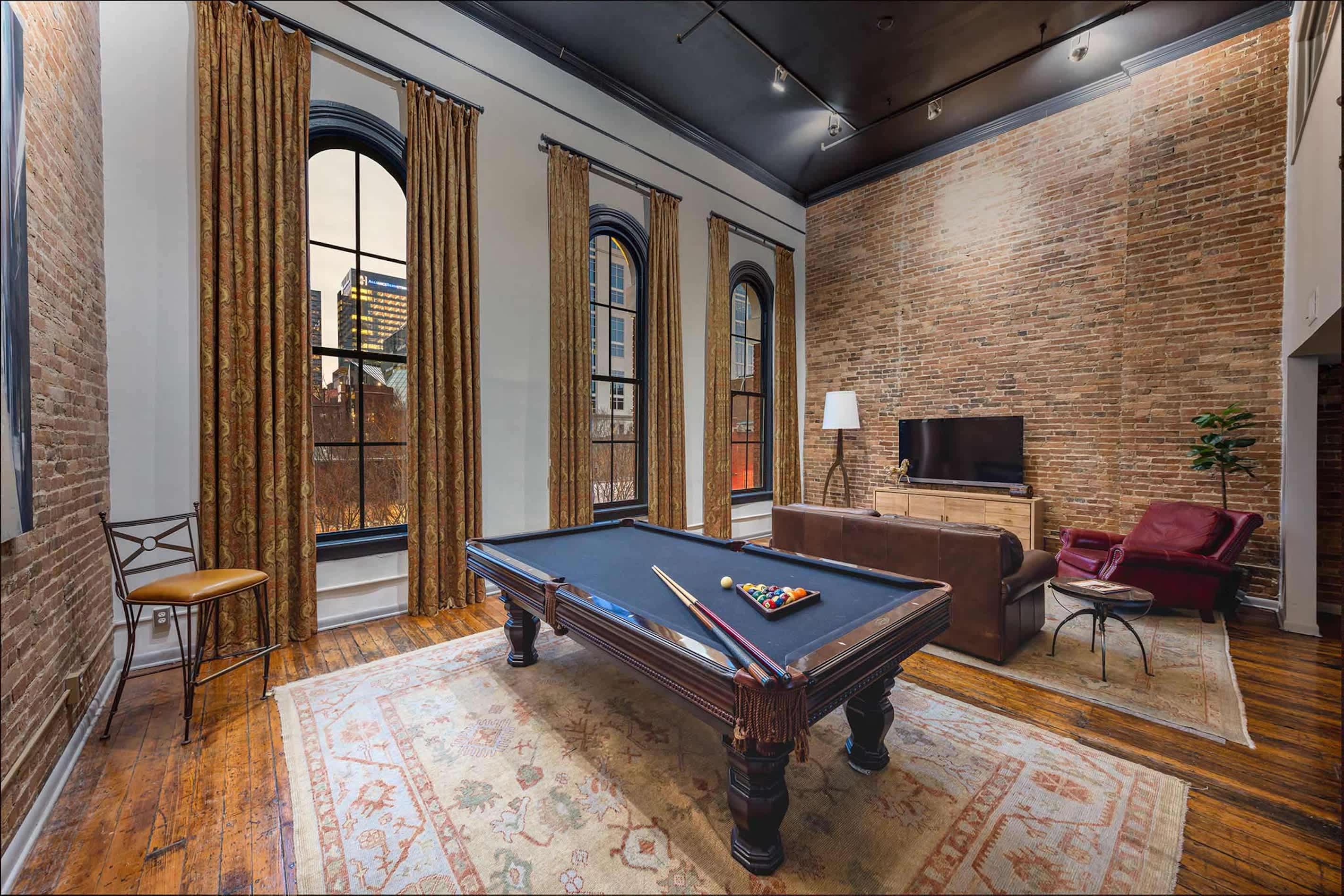
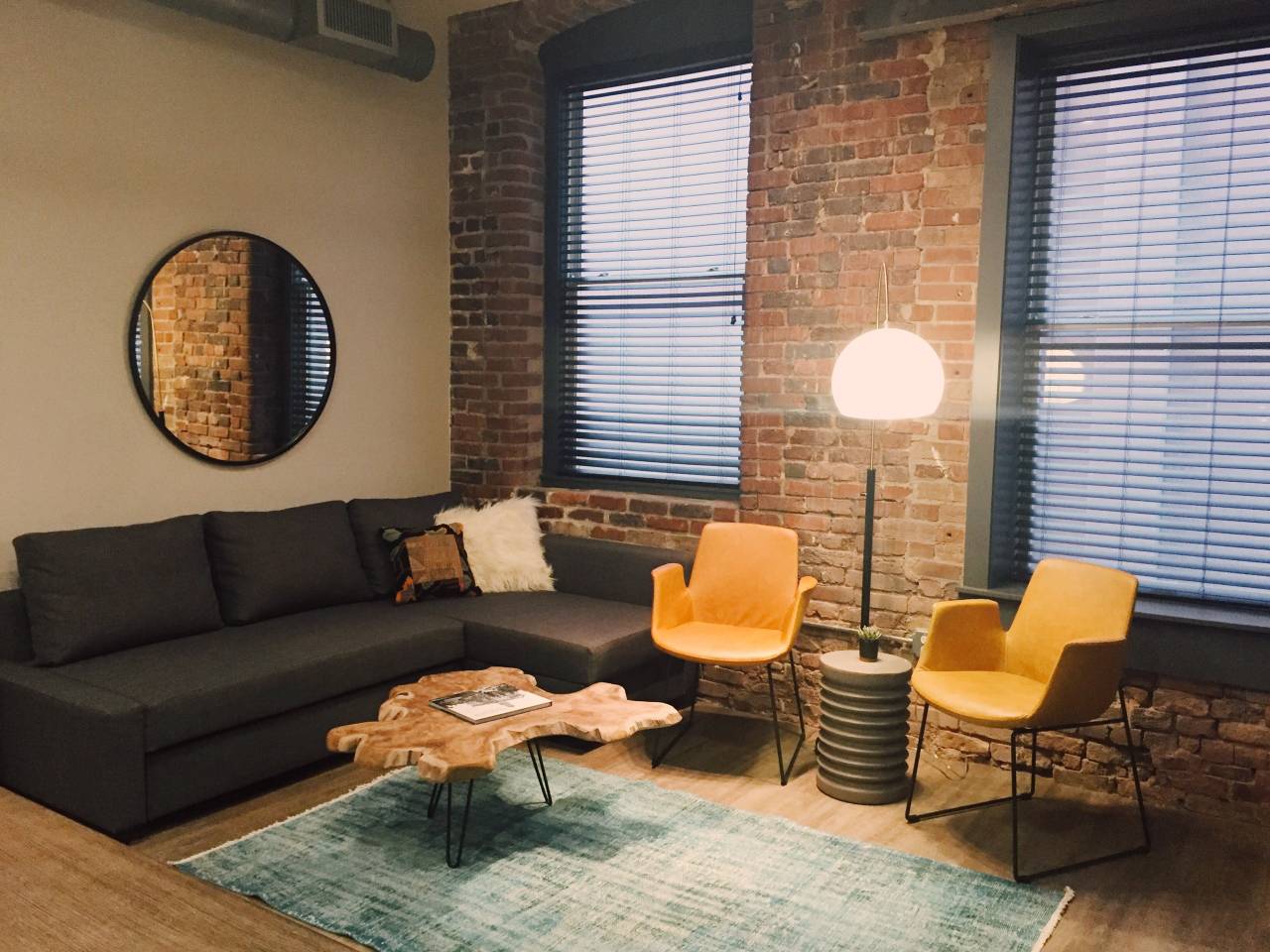
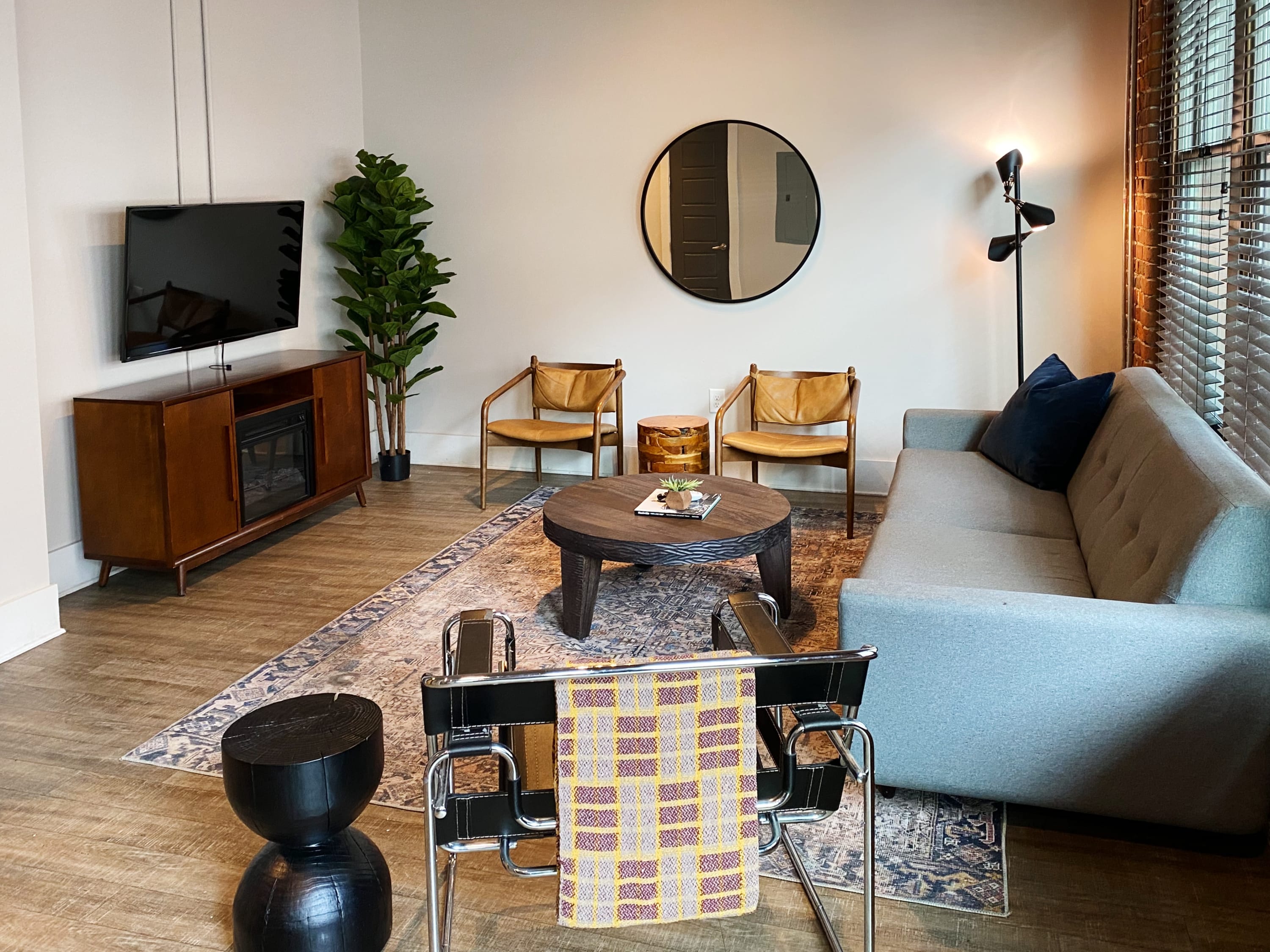
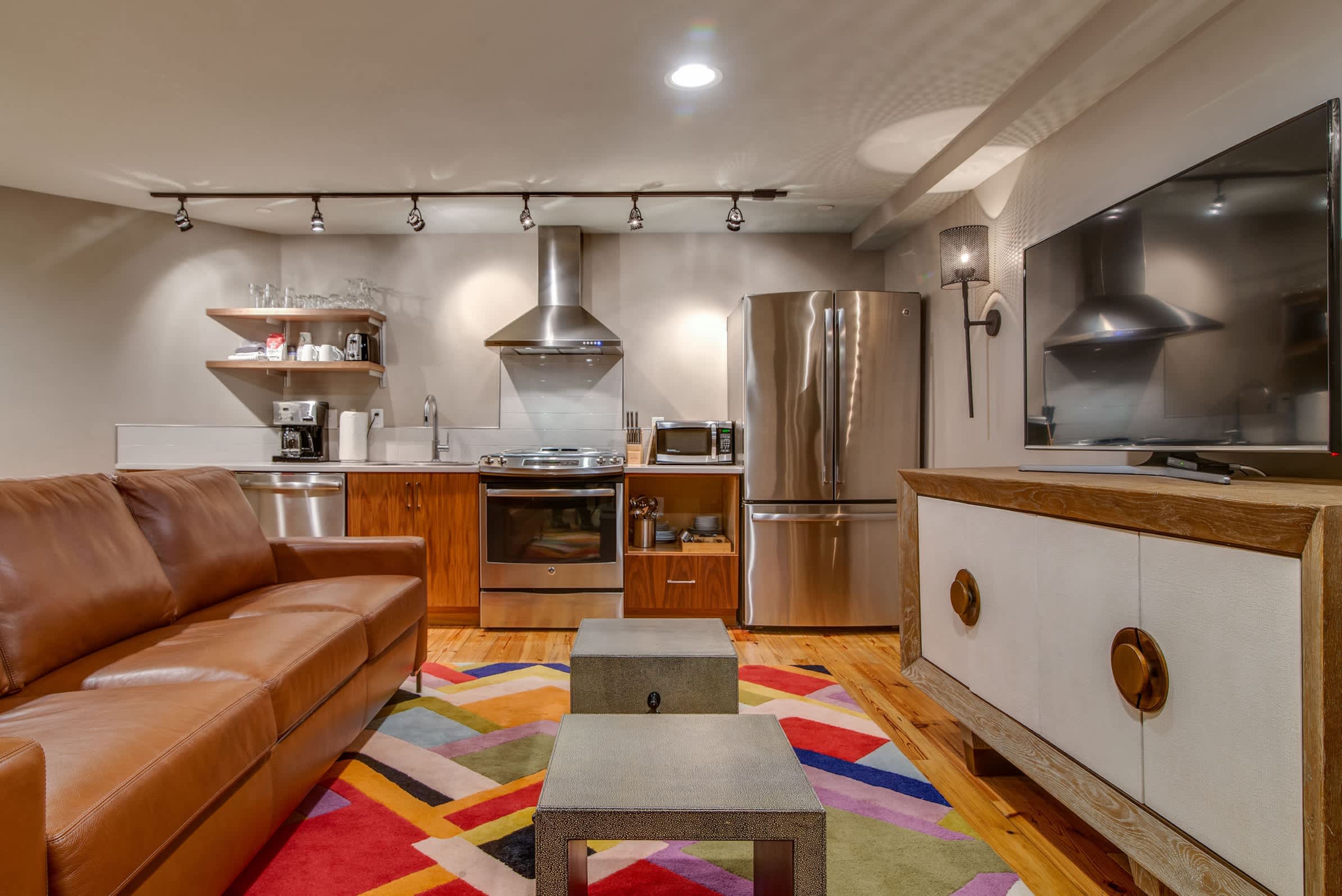
The Downtown and SoBro (South of Broadway) core puts guests within walking distance of the full entertainment corridor: Broadway, the Ryman Auditorium, the Johnny Cash Museum, the Country Music Hall of Fame, Schermerhorn Symphony Center, Bridgestone Arena, and Ascend Amphitheater. The historic loft buildings immediately north and south of Broadway offer the most concentrated access — hosts describe locations one block from Printer's Alley and the Honky Tonk Row, in buildings that have been part of Nashville's riverfront since 1875. A renovated historic loft in the landmark Nashville Banner Newspaper building, dating to 1910, puts guests in original exposed brick and high-ceilinged spaces blocks from every major attraction in the district.
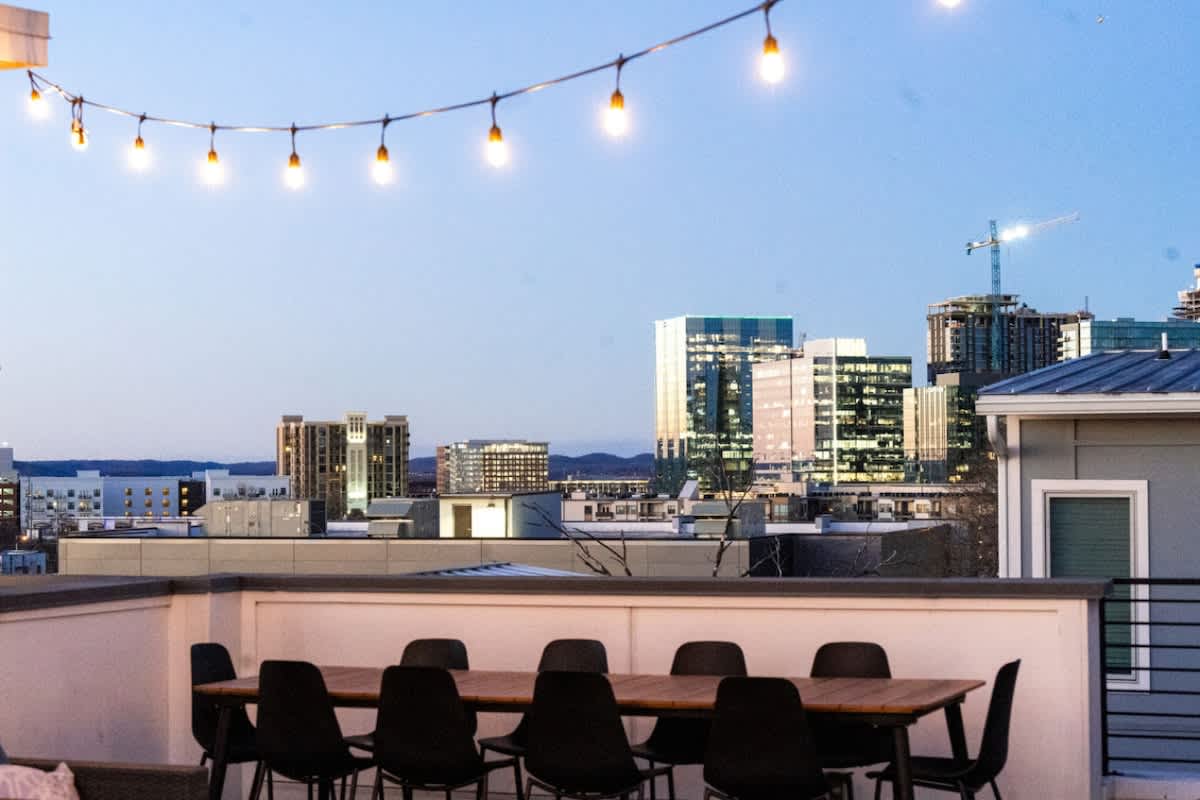
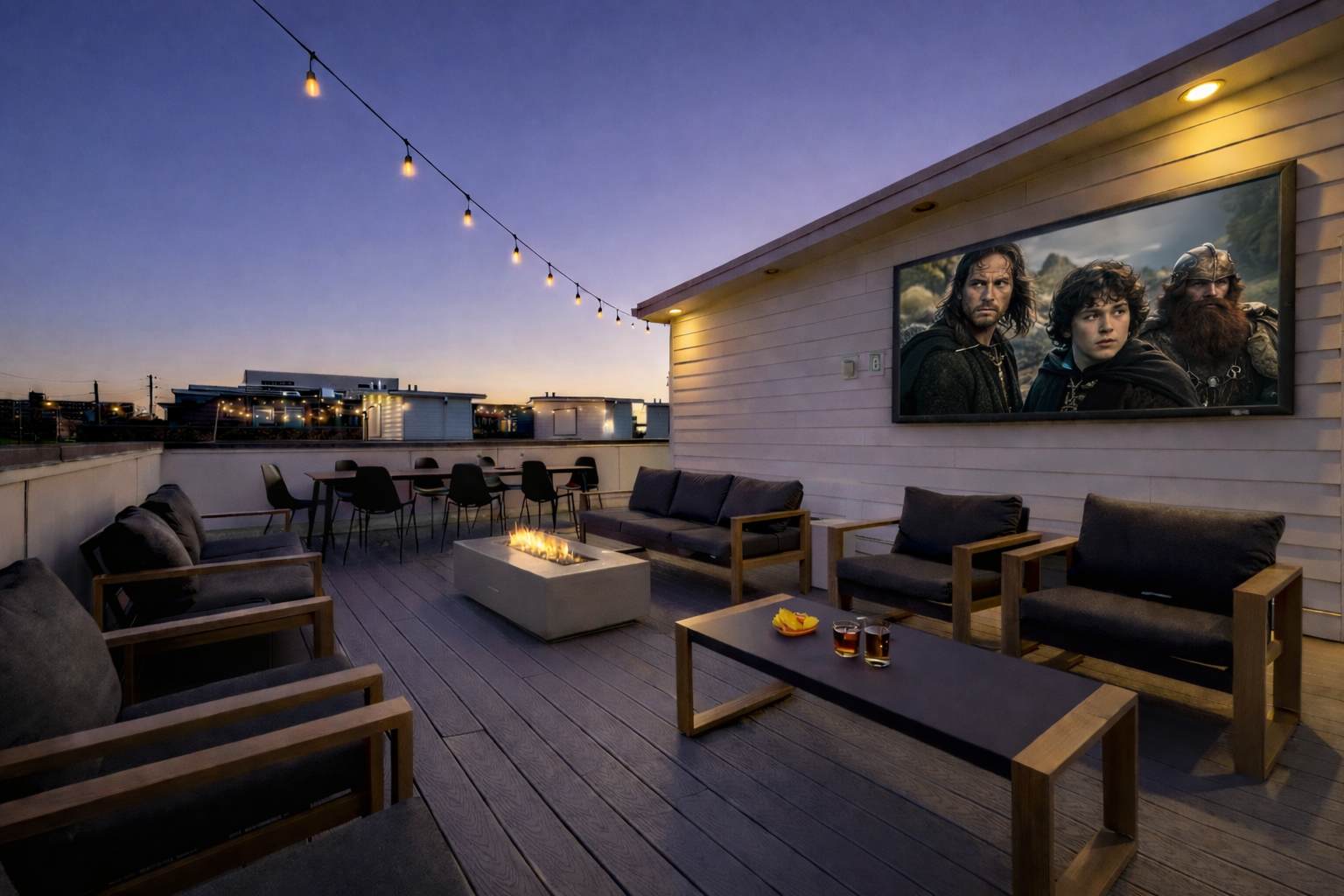
For larger groups, the downtown-adjacent corridor offers townhouse-style properties with multiple floors, private rooftop decks, and 360-degree views of the downtown skyline — eight minutes on foot to Broadway and five minutes to the Gulch's own restaurant and retail scene. The rooftop experience in particular — Nashville's skyline reflected in the night sky — is one of the more compelling group travel experiences in any American city.
When to Visit Nashville
Nashville is a year-round destination; the live music scene operates without seasonal interruption across the indoor venues of the Broadway corridor. Spring (April through May) and fall (September through October) offer the most comfortable weather for walking the entertainment district and attending outdoor shows at Ascend Amphitheater on the Cumberland Riverfront. The CMA Fest in June is the single busiest week of the year for accommodations and Broadway crowds. NFL games at Nissan Stadium, 0.6 miles from the loft district, affect downtown availability and rates from September through January. Summer is hot and humid but the density of indoor venues makes Nashville viable as a warm-weather destination. Winter is mild by national standards and the least crowded season — the best time to find availability and competitive rates at downtown properties while experiencing the full live music calendar unchanged.
Find your base in Nashville, TN — browse stays indexed by CielStay.
Search stays on CielStay →Frequently asked questions
When is the best time to visit Nashville, Tennessee?
Nashville is a year-round destination given its concentration of indoor venues and the uninterrupted live music calendar on Lower Broadway. Spring (April through May) and fall (September through October) offer the best walking weather and outdoor concert conditions at Ascend Amphitheater on the Cumberland Riverfront. The CMA Fest in June is the single busiest week of the year for accommodations and crowds on Broadway. Winter is the least crowded and most affordable season — rates drop, availability opens up, and the full live music and museum experience is unchanged.
What is Lower Broadway and what should I do there?
Lower Broadway — also called the Honky Tonk Highway — runs from the Cumberland River to roughly 5th Avenue and is Nashville's primary entertainment district. It is lined with multi-story honky tonk bars offering live country music from early afternoon until 2 a.m. daily, with no cover charge at most venues. Walking the strip and catching live performances across multiple floors and venues is the central activity. Printer's Alley is one block away, and the Ryman Auditorium and Johnny Cash Museum are each a block and a half from the center of the strip.
How far is the Grand Ole Opry from downtown Nashville?
The Grand Ole Opry House at the Opryland complex is 11.6 miles from the downtown loft district. The Opry moved to its current purpose-built home in 1974 after three decades at the Ryman Auditorium; the original Ryman is still a working concert hall on Lower Broadway and worth visiting in its own right. Opry shows run Friday and Saturday evenings year-round, with select Tuesday performances, and tickets can be reserved in advance at opry.com. The Opryland Hotel adjacent to the Opry House is a self-contained resort with indoor garden atriums, restaurants, and convention facilities.
Is Nashville a good destination for large groups and bachelorette parties?
Nashville has become one of the top large-group and bachelorette destinations in the United States, and the downtown lodging supply reflects that demand. The historic core offers loft buildings in 19th-century riverfront buildings with multiple sleeping areas within walking distance of Broadway. For larger groups, downtown-adjacent properties offer multi-floor homes with 7 bedrooms, private rooftop decks with 360-degree views of the downtown skyline, and locations eight minutes on foot to Broadway. The cover-free honky tonk model on Lower Broadway — walk in, listen, move on — suits large groups that want multiple venues in a single night without coordinating advance tickets.
Stays near this guide
Top-rated independent stays in the region, ranked by CielStay authenticity score.

Try a search
Searches inspired by this guide — describe the vibe you want.
More guides

Nearby landmarks & attractions
Key destinations and attractions in the Nashville, TN area.
Broadway (Nashville) ↗ Maps
Honky-tonk row — the neon heart of Nashville's live music scene, running from the Ryman Auditorium to the Cumberland River.
Grand Ole Opry ↗ Maps
The longest-running radio broadcast in US history — country music's most storied stage, now in a purpose-built theater in Music Valley.
The Gulch ↗ Maps
Nashville's most Instagram-famous neighborhood — the Wings mural, boutique hotels, and the upscale dining and nightlife corridor.
This guide was assembled from the local knowledge of hosts with properties throughout Nashville, TN, as indexed by CielStay. The descriptions of restaurants, trails, swimming holes, and local tips reflect what hosts share with guests in their listings — not the observations of a travel journalist or guest reviewer. Photos are sourced from host listing images and are credited to their respective listings. Information about permits and trail conditions may change; always verify with official sources before your trip.