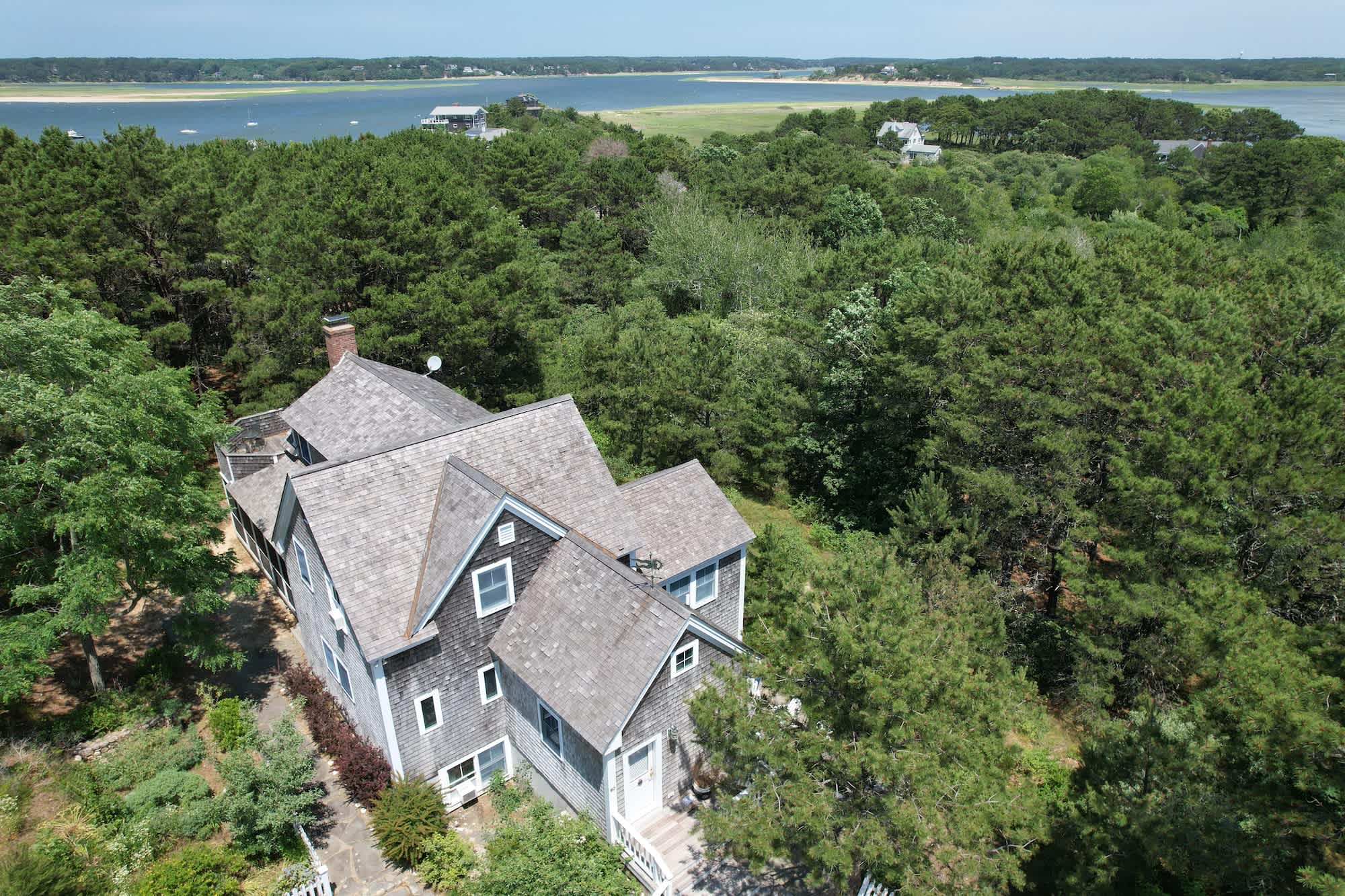
The Peninsula and Its Villages
Cape Cod extends 65 miles into the Atlantic Ocean from its narrow base at the Bourne and Sagamore bridges, bending north at Chatham and curling back west at Provincetown like a beckoning arm. The result is one of the most distinctive coastlines on the East Coast — a peninsula with ocean on one side and bay on the other, where the light has a particular quality that drew Edward Hopper, Henry David Thoreau, and generations of painters before and after them.
The Cape divides into three rough sections: the Upper Cape (Sandwich, Falmouth, Barnstable, Bourne — closest to the bridges, most developed), the Mid-Cape (Dennis, Yarmouth, Harwich, Chatham — the waist of the peninsula, with calmer bay beaches and classic shingle cottage architecture), and the Outer Cape (Brewster, Orleans, Eastham, Wellfleet, Truro, Provincetown — narrower, wilder, where the Cape Cod National Seashore protects the dune-and-forest landscape from further development). The distinction matters when choosing where to stay: the Upper Cape has more conveniences and shorter drive times to the mainland; the Outer Cape has more solitude, deeper ponds, and access to the National Seashore beaches.
The Cape Cod National Seashore
The Cape Cod National Seashore was established in 1961, protecting 40 miles of Atlantic-facing beachfront, freshwater kettle ponds, and pitch pine and scrub oak forest along the Outer Cape. The Seashore's beaches — Coast Guard, Nauset, Marconi, Head of the Meadow, Race Point — are among the most consistently striking on the East Coast: wide, windswept, and backed by parabolic dunes rather than development.
The kettle ponds scattered through the Seashore interior were formed by retreating glaciers. Gull Pond in Wellfleet is one of the clearest and most swimmable.
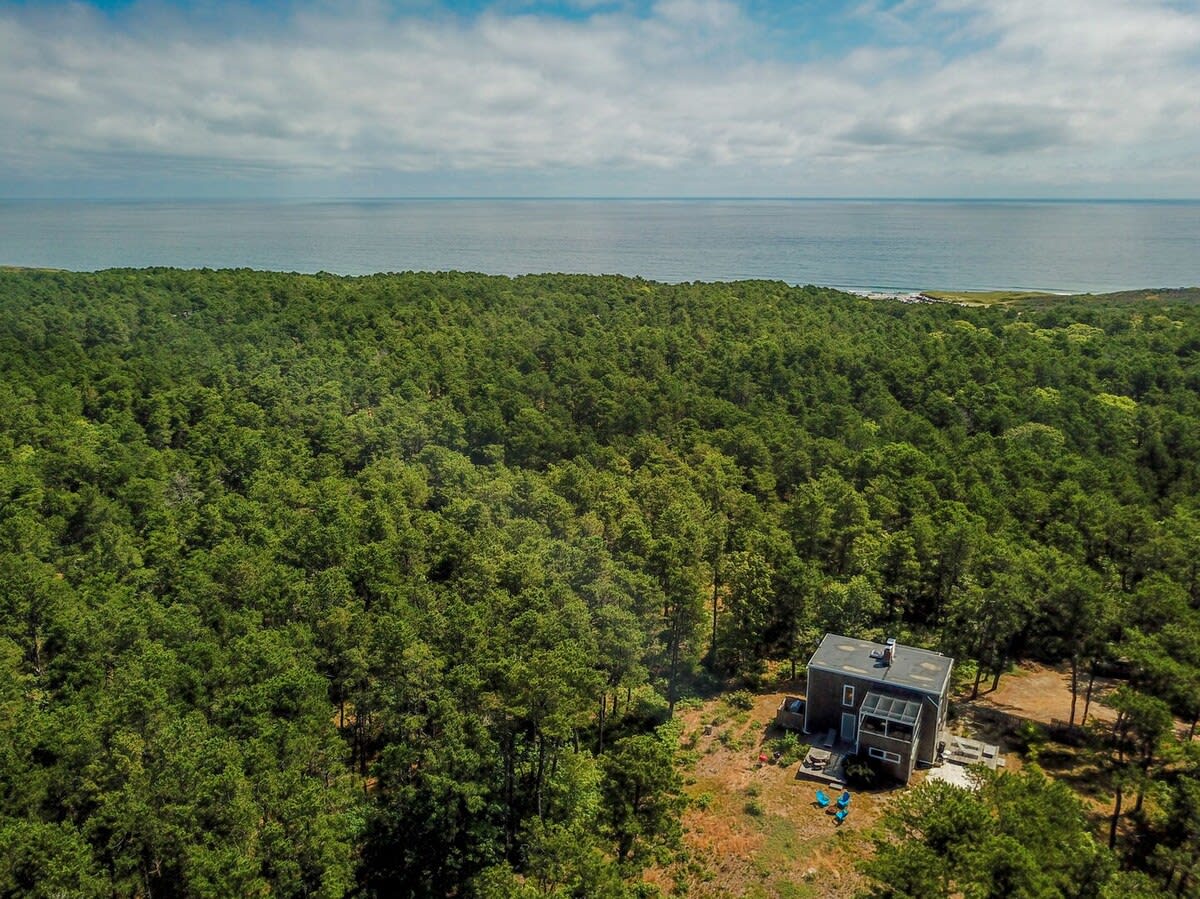
Host listing copy describes the ponds as accessible on foot from properties within the Seashore boundary — including the Architect's Escape at Newcomb Hollow Beach, which sits on over five acres of hilltop seclusion within the National Seashore, with hosts noting it is a 5-minute walk to the best ponds and a 10-minute trail walk to Newcomb Hollow Beach itself.
The Seashore's location creates a specific trade-off for renters: properties within or adjacent to it offer extraordinary privacy and natural surroundings, but high-speed internet is unavailable within the boundary — one host notes that Comcast is not available and a hotspot is the best option. For families who want silence, coastal walking trails, and ocean beaches without driving past rows of souvenir shops, this is not a trade-off.
Wellfleet: Oysters, Artists, and the Outer Cape
Wellfleet has been synonymous with oysters since the 18th century. The cold, nutrient-rich water of Wellfleet Harbor produces oysters with a distinctive brine and mineral character; the wild oysters of the tidal flats around Lieutenant Island are part of the same tradition. The town itself is small, with galleries, independent bookshops, and a summer drive-in theater concentrated in a walkable village center near Wellfleet Harbor.
Lieutenant Island is an exclusive enclave of Wellfleet accessed via a land bridge that submerges during high tide, isolating the island for a few hours each day. The island has private beaches accessible only to residents and guests, where during high tide the water is clear enough for swimming and kayaking; when the tide recedes, the flats open for exploration of crabs, oysters, dunes, and hiking trails. The rental homes on Lieutenant Island are among the most character-rich on the Cape — designed with water views from multiple levels, screened sunrooms, bay-facing decks, and the sound of the tides as a constant backdrop.
Wellfleet is also where the Outer Cape's early modernist tradition is most visible in the built environment. Architect Serge Chermayeff — a luminary of modernist design and colleague to Eero Saarinen and Marcel Breuer — originally built the Architect's Escape at Newcomb Hollow Beach in the 1950s. Perched on over five acres of hilltop seclusion with no neighbors in sight for over 500 yards, the property is a working example of how Cape Cod attracted serious architectural talent in the postwar period, not just painters and novelists.
Hosts at a Wellfleet treetop retreat note that the property is "less than ten minutes from Wellfleet Harbor" — a measure of how compact the village geography is for a place with this much cultural texture.
Provincetown: The End of the Road
Route 6 ends at Provincetown, the final town on the tip of the Cape, and the most singular. Provincetown has been a fishing port, an artist colony, and a major LGBTQ+ resort destination in successive waves, and it manages to hold all three identities simultaneously. Commercial Street runs along the harbor for about a mile; Bradford Street, one block inland, is quieter and more residential. One Provincetown listing host describes the location as "steps from Bradford Street and a mere two-minute stroll to the heart of town."
Race Point Beach, within the National Seashore at the northern tip of Provincetown, faces north and west — one of the few places on Cape Cod where you can watch the sun set over the ocean rather than the bay. The dunes north of Provincetown are among the most dramatic landscape features on the entire Cape, with rolling sand hills, Atlantic views in every direction, and a scale that makes the human figure feel genuinely small.
A Truro host notes that "the best eateries in Truro and P-town and the National Seashore beaches are just a 10 minute drive away" — a useful measure of how tightly the Truro and Provincetown experience are linked for visitors based anywhere on the Outer Cape.
Chatham: The Elbow of the Cape
Chatham sits at the elbow of the Cape — the sharp turn where the arm bends south — and it carries itself with a particular confidence. More composed than Wellfleet, more prosperous in appearance than Harwich, Chatham has a Main Street of independent shops, galleries, and restaurants that functions as a real town center. Host listing copy names the Impudent Oyster, Chatham Squire, Bluefins Sushi & Sake Bar, and Wild Goose Tavern as restaurants within walking distance of centrally located properties.
The Chatham area faces Nantucket Sound and the barrier beach; a storm breach in 1987 created a new inlet and dramatically altered local currents, turning the outer bar into a major gray seal habitat. The seals attract great white sharks — enough so that a shark theme has become a recurring motif in Chatham rental marketing. Ridgevale Beach is 1.7 miles from centrally situated Chatham vacation homes.
The town also has a working fishing pier, a lighthouse walkable from downtown, and band concerts on Friday evenings in summer at Kate Gould Park — a tradition that reflects the town's preference for the genuinely traditional over the commercially nostalgic.
The Rail Trail and the Bay Side
The Cape Cod Rail Trail runs 25 miles along a former railroad right-of-way from Dennis to Wellfleet, passing through Brewster, Orleans, Eastham, and South Wellfleet. The trail is flat, paved, and passes through pitch pine forest, over kettle ponds, and alongside salt marsh. It is the primary recreational artery of the Mid and Outer Cape for cyclists, and most rental properties in the corridor note proximity to the trailhead as a feature.
The bay side of the Cape has calmer, warmer water than the Atlantic side — the shallows of Cape Cod Bay warm up faster in summer, making bay beaches better for young children and flat-water swimming. Mayflower Beach in Dennis is a classic bay-side beach: broad at low tide, with a long flat walkout that local hosts describe as "a favorite among locals and visitors alike," located 3 miles from certain Dennis rental properties. A Dennis host notes it is an 8-minute drive from their property.
In Orleans, hosts note that Uncle Harvey's Pond is "a tenth of a mile" from their rental — ideal for kayaking and paddleboarding without driving anywhere. Nauset Beach in Orleans is where the Atlantic side of the Cape is most accessible from the Mid-Cape, a long barrier beach with strong surf and dramatic views north to the Outer Cape.
On the Harwich side, Long Pond offers freshwater swimming, kayaking, and paddleboarding. Red River Beach in Harwich provides access to Nantucket Sound. The Cape Cod Rail Trail passes through Harwich, making bike access to both beach and village straightforward from most rental properties in town.
When to Go
July and August are peak season — the widest range of businesses open, the warmest water temperatures, and the highest rental rates. Houses book solid from late June through Labor Day; many properties require a weekly minimum. September is when the Cape is at its best for visitors who have flexibility: the water stays warm (often warmer than August, since the ocean takes time to heat up), the crowds thin dramatically after Labor Day, and the light shifts toward the low-angle, sideways quality that made Cape Cod famous to painters for generations. Restaurant reservations are attainable again. Rental rates drop.
October extends the season further for foliage walking in the National Seashore, migratory bird watching on the kettle ponds, and surf fishing. The Outer Cape in fall has an emptiness and scale that is genuinely different from the summer version — less a beach resort and more a landscape in the classic sense.
Off-season (November through April) finds most tourist businesses closed and many seasonal properties unavailable, though the Cape in winter has its own austere appeal: storm light on the dunes, empty National Seashore beaches, and a handful of year-round businesses in Wellfleet, Chatham, and Provincetown that serve the community that actually lives here.
Find your base in Cape Cod, MA — browse stays indexed by CielStay.
Search stays on CielStay →Frequently asked questions
What is the Cape Cod National Seashore and what beaches does it include?
The Cape Cod National Seashore is a 40-mile-long federally protected stretch of Atlantic-facing beach, kettle ponds, and pitch pine forest along the Outer Cape, established in 1961. Its major ocean beaches include Coast Guard Beach, Nauset, Marconi, Head of the Meadow, and Race Point in Provincetown. The Seashore also includes extensive freshwater kettle ponds — including Gull Pond in Wellfleet — formed by retreating glaciers. There is no development behind the beach; the backing landscape of dunes and forest is as close to its pre-colonial state as any beach environment on the New England coast.
When is the best time to visit Cape Cod?
July and August are peak season, with warm water, all businesses open, and the widest range of activities. September is arguably the best month for flexibility travelers: the ocean is still warm (sometimes warmer than August), crowds thin sharply after Labor Day, and rental rates drop. October offers migratory bird watching, fall foliage in the Seashore, and surf fishing season. Most seasonal properties and businesses close from November through April, though Provincetown, Chatham, and Wellfleet have year-round communities.
How far is Cape Cod from Boston?
The Sagamore Bridge at the Cape Cod Canal — the western gateway to the Cape — is roughly 60 miles south of Boston. Traffic on Route 3 and Route 6 can make the drive significantly longer in summer, particularly on Friday afternoons and Saturday mornings during peak season, when the approach to the bridges becomes a major bottleneck. The Outer Cape towns of Wellfleet and Provincetown are an additional 30 to 40 miles from the bridges via Route 6.
What is Lieutenant Island in Wellfleet?
Lieutenant Island is an exclusive enclave of Wellfleet on Cape Cod Bay, accessed via a land bridge that submerges during high tide, briefly isolating the island a few hours each day. It has private beaches accessible only to residents and guests, with swimming and kayaking during high tide and tidal flat exploration — crabs, oysters, dunes, and hiking trails — when the tide recedes. The rental homes on Lieutenant Island are among the most sought-after on the Outer Cape for groups who want a genuinely remote Cape Cod experience with direct water access.
Stays near this guide
Top-rated independent stays in the region, ranked by CielStay authenticity score.


Try a search
Searches inspired by this guide — describe the vibe you want.
More guides


Nearby landmarks & attractions
Key destinations and attractions in the Cape Cod, MA area.
Cape Cod National Seashore ↗ Maps
40 miles of preserved Atlantic beaches, dunes, and kettle ponds — the most beloved stretch of coastline in New England.
Provincetown ↗ Maps
The Cape's outermost tip — America's oldest continuous arts colony, iconic LGBTQ+ destination, and the landing site of the Mayflower.
Woods Hole ↗ Maps
Home to the Woods Hole Oceanographic Institution — ferry terminal to Martha's Vineyard and the Cape's most active scientific community.
This guide was assembled from the local knowledge of hosts with properties throughout Cape Cod, MA, as indexed by CielStay. The descriptions of restaurants, trails, swimming holes, and local tips reflect what hosts share with guests in their listings — not the observations of a travel journalist or guest reviewer. Photos are sourced from host listing images and are credited to their respective listings. Information about permits and trail conditions may change; always verify with official sources before your trip.