
The Geography
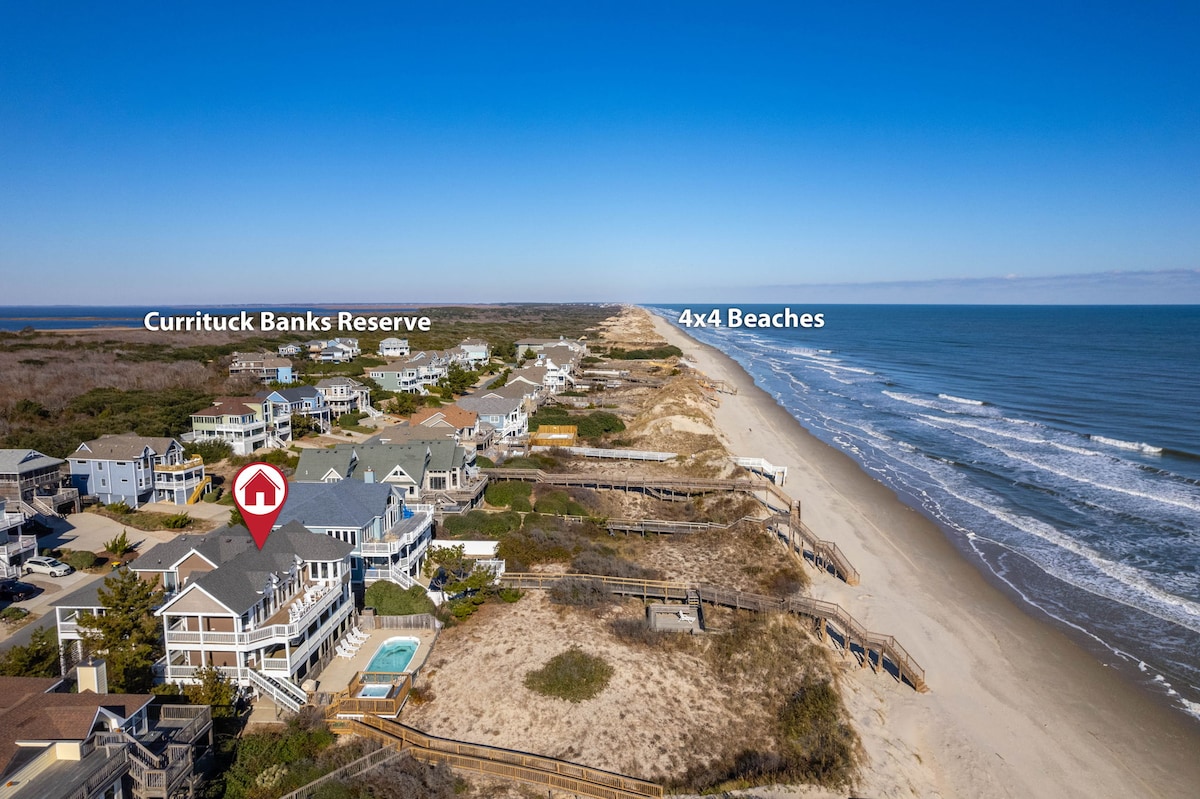
The Outer Banks is a 100-mile chain of barrier islands and peninsulas extending from the Virginia border south to Ocracoke Inlet, separated from the North Carolina mainland by Pamlico Sound and Currituck Sound. The geography produces a place unlike any beach destination on the East Coast: the ocean is on the east, the sound is on the west (with famously flat water and spectacular sunsets), and the road runs down the middle. North of Corolla, the paved road ends — the beach beyond that point, stretching toward the Virginia line, is accessible only by 4WD vehicle on the sand.
The chain divides roughly into three regions: the Northern Beaches (Corolla, Duck, Southern Shores, Kitty Hawk, Kill Devil Hills, Nags Head), accessible by bridge from the mainland; Hatteras Island (Rodanthe, Waves, Salvo, Avon, Buxton, Frisco, Hatteras), connected to Nags Head by the long Herbert C. Bonner Bridge; and Ocracoke Island, accessible only by ferry from Hatteras or the mainland — the most remote and least developed section of the chain.
The Wild Horses of Corolla
The Corolla Wild Horse Fund manages a herd of Colonial Spanish Mustangs that roam the beach and dunes north of the Corolla village — the last wild horse herd on the East Coast. The horses are descended from Iberian stock brought by 16th-century Spanish explorers and are smaller and more compact than modern horse breeds, with a genetic profile distinct from any domesticated breed. They roam freely over roughly 7,500 acres of beachfront, maritime shrub, and wetland habitat between the paved road end at Corolla and the Virginia line.
Access to the horse area requires a high-clearance 4WD vehicle with aired-down tires on the sand. Guided tour operators run daily excursions from Corolla. The horses are wild — they have been known to approach parked vehicles — and contact is prohibited by ordinance to protect the herd. The current population is maintained at approximately 100 animals.
Kill Devil Hills and the Wright Brothers
On December 17, 1903, Orville Wright piloted a 12-second, 120-foot flight from the sand at Kill Devil Hills — the first powered, controlled, sustained flight in history. The site is now the Wright Brothers National Memorial, a 425-acre park with granite markers at the takeoff and landing points of all four flights that day (the fourth covered 852 feet in 59 seconds), a reconstructed hangar and living quarters, and a 60-foot granite monument on top of Kill Devil Hill visible for miles.
The memorial hill and monument are visible from the rooftop decks of Kill Devil Hills vacation homes — a reference that appears in host listing copy as a feature of the view, which is a reasonable measure of how embedded the Wright Brothers monument is in the local landscape.
Nags Head and the Old Cottage Tradition
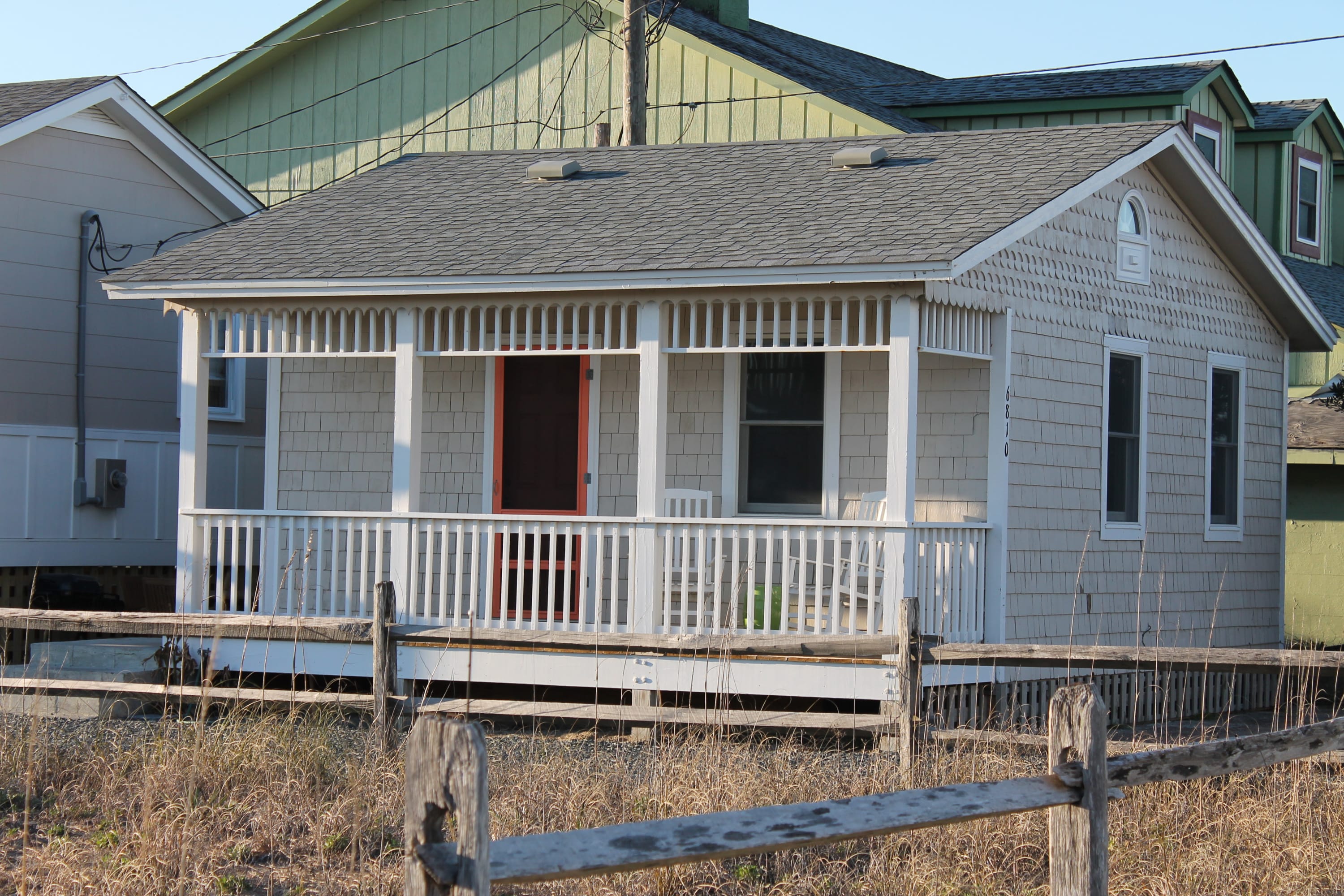
Nags Head has been a beach vacation destination since the 1830s, when Elizabeth City and Edenton residents first began building summer cottages on the barrier island. The resulting tradition of modest, functional beach cottages — shingled, weathered-grey exteriors, screen porches, outdoor showers — still survives in the original cottage colony and in the working stock of affordable rentals that make the Outer Banks accessible to a different market than, say, Kiawah Island.
The 1950s and 1960s vintage cottages at Nags Head represent a particular kind of beach experience: "the sound of the screen door closing behind you, the smell of the sea in the air and the vintage feel of old school Nags Head" — a character that hosts describe explicitly in listing copy for guests who are looking for it. This is the OBX version of nostalgia, and it draws a specific and loyal repeat visitor.
Duck
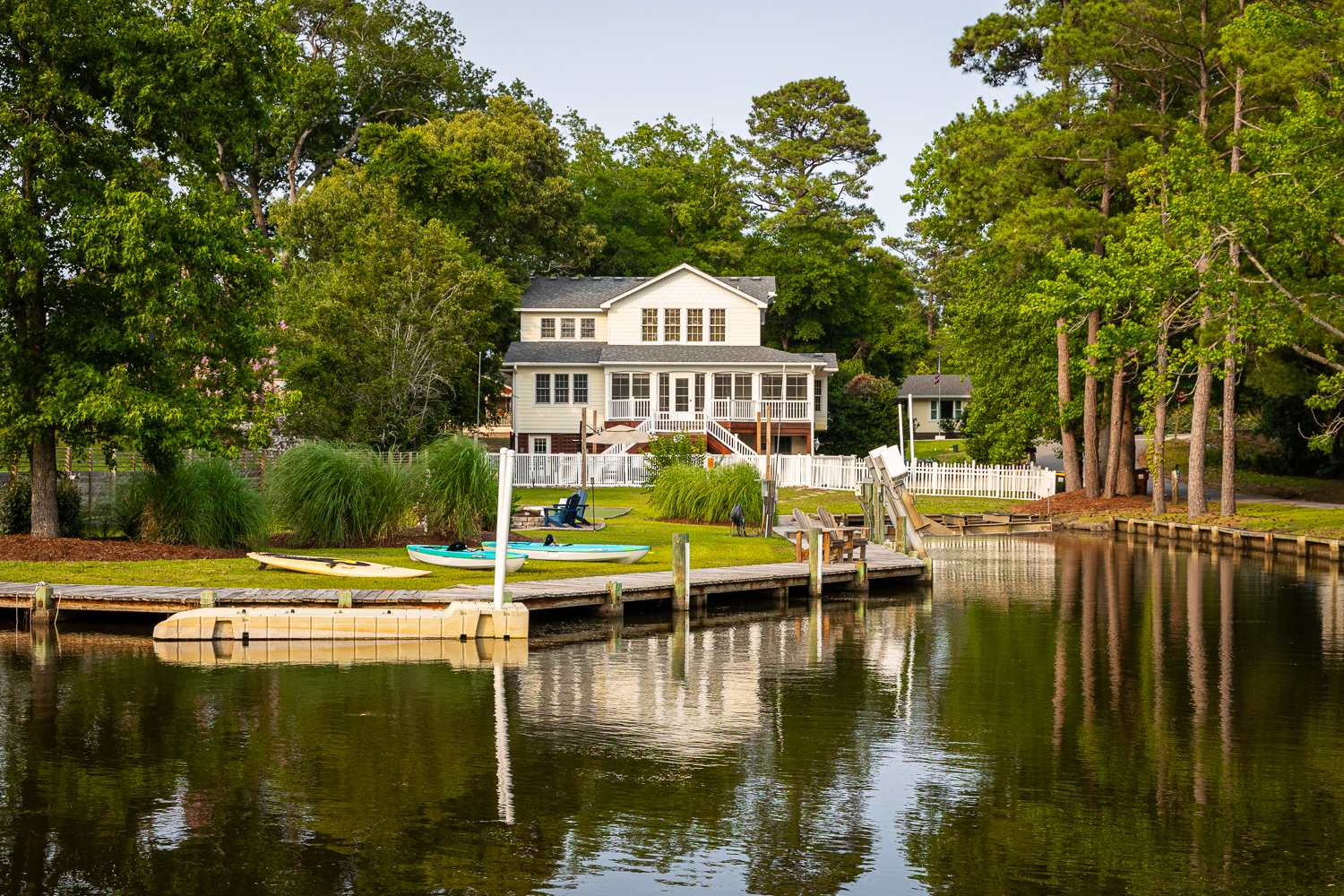
Duck is the northernmost town in the Dare County resort zone — quieter than Kill Devil Hills and Nags Head, with a walkable village boardwalk along the sound, independent restaurants, and the acoustic quality of a place that attracts families who come back every year. The sound-side location produces glassy water for kayaking and paddleboarding and the best sunsets on the OBX, while the beach is a short walk to the east.
Cape Hatteras and the National Seashore
The Cape Hatteras National Seashore extends 75 miles from Nags Head to Ocracoke — the first national seashore in the United States, established in 1937. The seashore includes undeveloped beach, maritime forests, and the Pea Island National Wildlife Refuge on the northern Hatteras section. Cape Hatteras Lighthouse — the tallest brick lighthouse in the United States at 198 feet, with a distinctive black-and-white spiral daymark — was moved 2,900 feet inland in 1999 in a major engineering operation to protect it from the eroding shoreline.
The surf at Cape Point on the southern tip of Hatteras Island is one of the most consistent surf breaks on the East Coast and one of the premier surf fishing locations in the Southeast — the convergence of the Gulf Stream and the Labrador Current creates baitfish concentrations and the migratory species (cobia, king mackerel, red drum) that follow them.
Ocracoke
Ocracoke is accessible only by free ferry from Hatteras (40 minutes) or toll ferry from the mainland — the most remote inhabited island in the Outer Banks chain, with no chain stores, no traffic lights, and a permanent population of about 900. The village, centered on Silver Lake harbor, has a distinct character shaped by 300 years of near-isolation: a local brogue unlike any other English dialect in the US, a tradition of commercial fishing still visible in the docks, and the grave of the pirate Blackbeard, who was killed in Ocracoke Inlet in 1718.
When to Go
June through August is peak season — school calendars drive the weekly Saturday-to-Saturday rental pattern, and the larger houses book solid from Memorial Day through Labor Day. April–May and September–October offer the best combination of accessible water temperatures, manageable crowds, and lower rental rates. The OBX surf fishing season runs October through December. Hurricane season (August–October) requires monitoring; evacuations happen.
Find your base in Outer Banks, NC — browse stays indexed by CielStay.
Search stays on CielStay →Frequently asked questions
What are the wild horses of Corolla?
The Corolla Wild Horse Fund manages a herd of Colonial Spanish Mustangs that roam the beach and dunes north of Corolla village — the last wild horse herd on the East Coast. The horses are descended from Iberian stock brought by 16th-century Spanish explorers and are genetically distinct from any domesticated breed. Accessing the horse range requires a high-clearance 4WD vehicle with aired-down tires on the sand; guided tour operators run daily excursions from Corolla.
When is the best time to visit the Outer Banks?
Peak season runs Memorial Day through Labor Day, with weekly Saturday-to-Saturday rentals driving the largest houses. April–May and September–October offer better availability, lower rates, and manageable crowds while the ocean is still swimmable. The OBX surf fishing season runs October through December. Hurricane season (August–October) requires weather monitoring; mandatory evacuations do occur and travel insurance is advisable for late-summer bookings.
How far is the Outer Banks from Raleigh and Virginia Beach?
Nags Head is about 200 miles east of Raleigh (roughly 3 hours on US-64) and about 85 miles south of Virginia Beach (1.5 hours via US-158). The northern OBX (Corolla, Duck, Kitty Hawk) is closer to Virginia Beach; the Hatteras Island section is closer to the North Carolina mainland via US-264. There is no bridge to Ocracoke — access is by free ferry from Hatteras village (40 minutes) or toll ferry from Swan Quarter and Cedar Island.
What is the Wright Brothers National Memorial at Kill Devil Hills?
The Wright Brothers National Memorial at Kill Devil Hills marks the site of the first powered, controlled, sustained flight in history — December 17, 1903, when Orville Wright flew 120 feet in 12 seconds from a sand hill near Kitty Hawk. The NPS site includes granite markers at the four flight landing points, reconstructed 1903 hangar and living quarters, a museum with a full-scale reproduction of the 1903 Flyer, and a 60-foot granite monument on top of Kill Devil Hill. Admission is $10 per person; the park is open daily year-round.
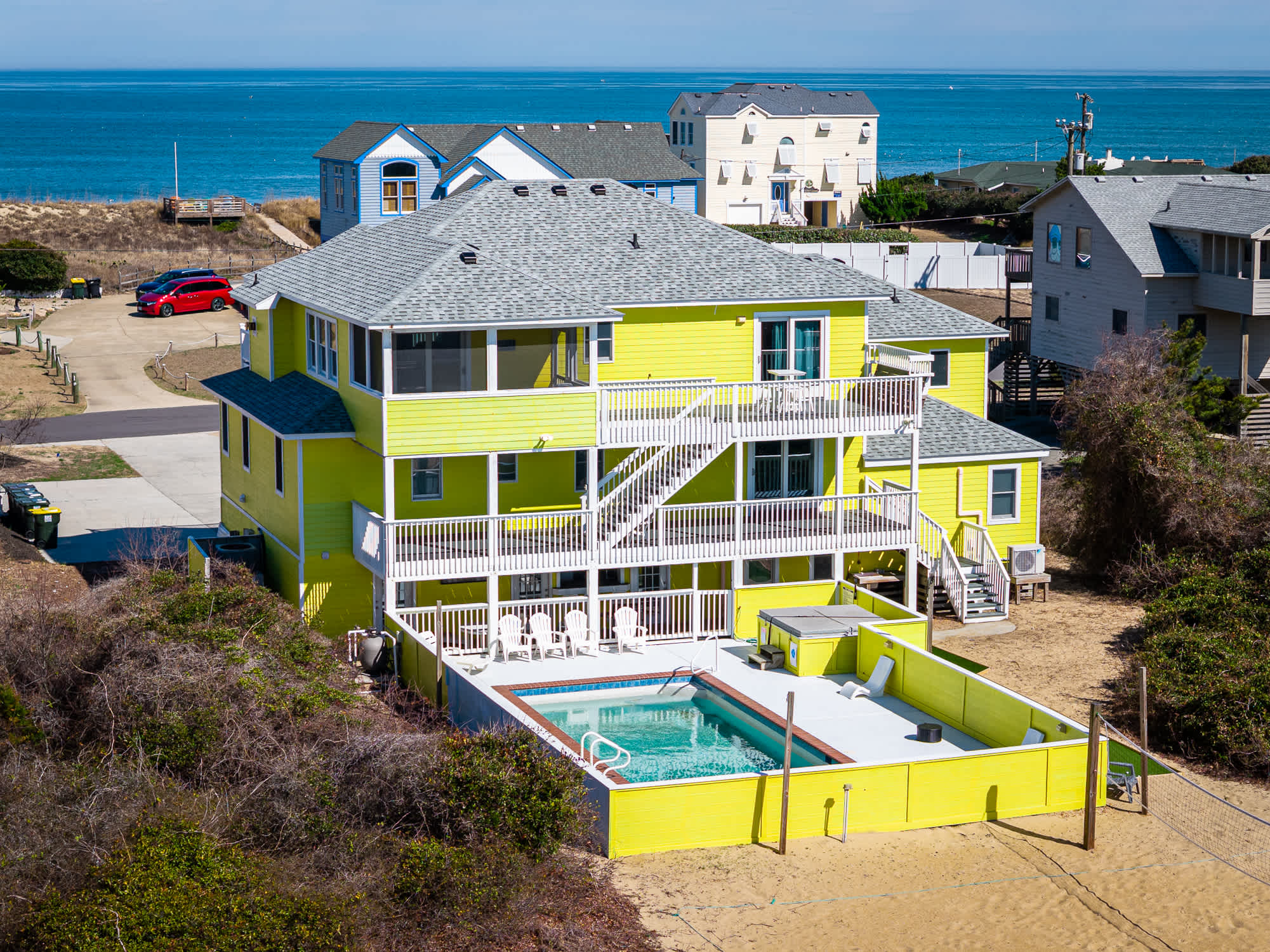
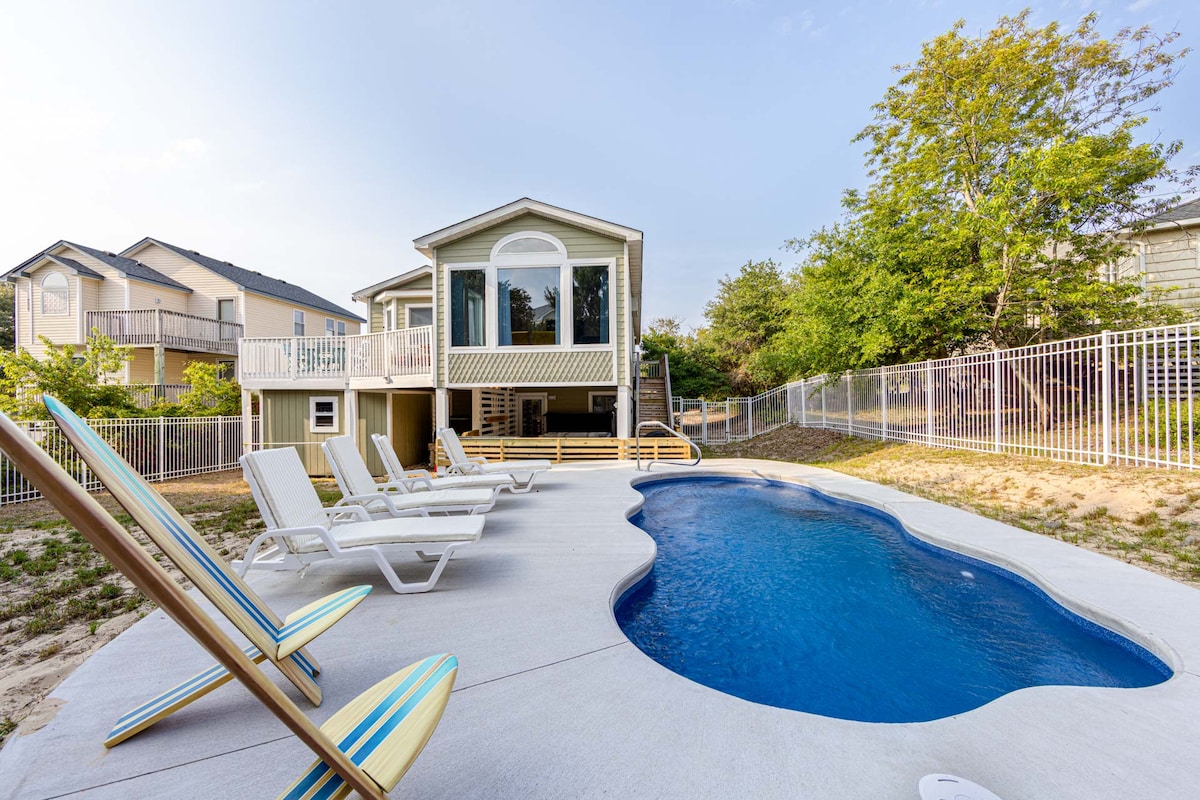
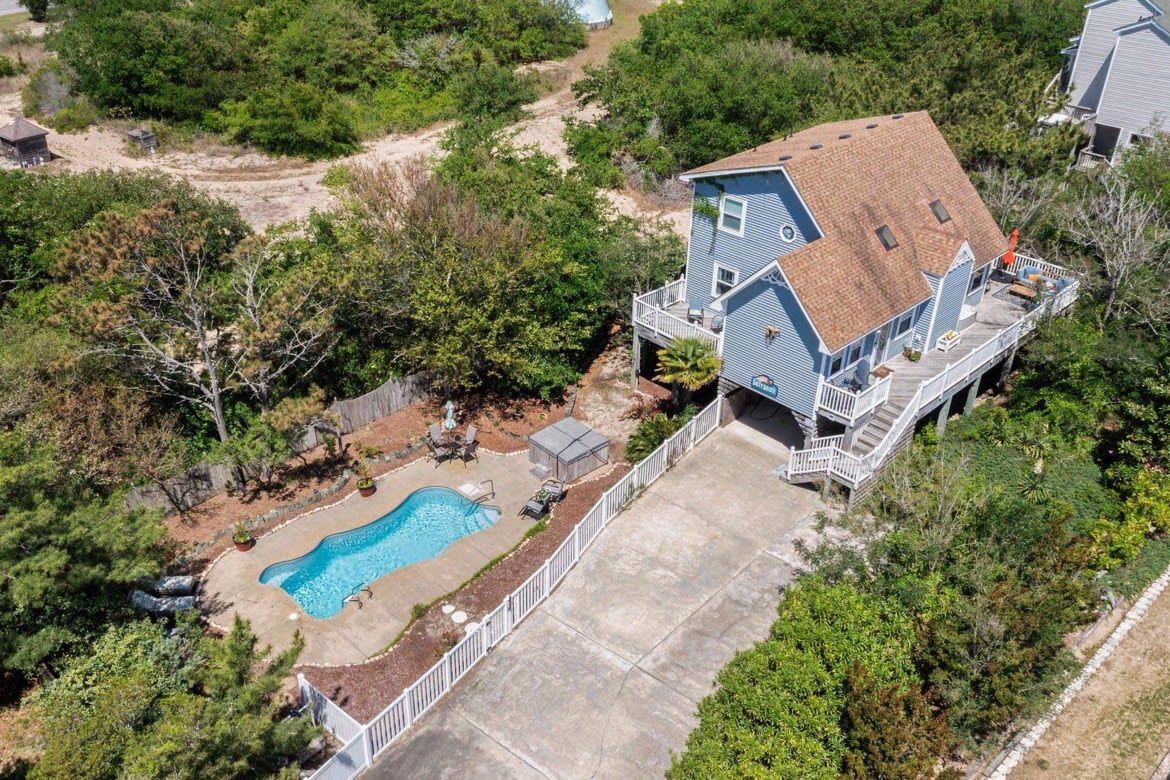
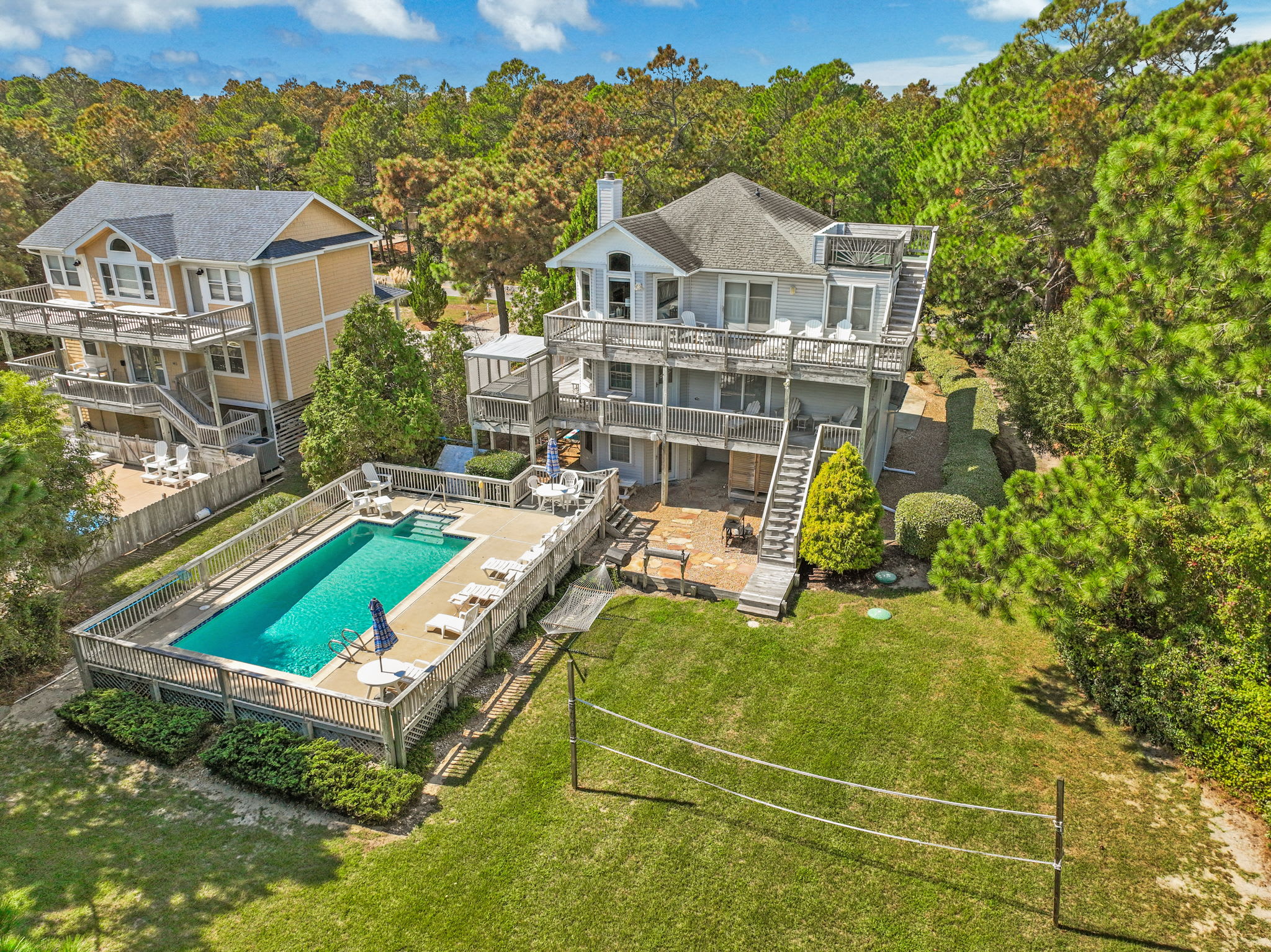
Stays near this guide
Top-rated independent stays in the region, ranked by CielStay authenticity score.

Try a search
Searches inspired by this guide — describe the vibe you want.
More guides

Nearby landmarks & attractions
Key destinations and attractions in the Outer Banks, NC area.
Outer Banks ↗ Maps
A 200-mile chain of barrier islands — the birthplace of flight, pirate history, wild horses, and the East Coast's best surf.
Cape Hatteras National Seashore ↗ Maps
The longest stretch of undeveloped seashore on the US East Coast — lighthouse, shipwrecks, and endless beach.
Wright Brothers National Memorial ↗ Maps
Where the first powered flight took place on December 17, 1903 — a granite monument marks the spot.
This guide was assembled from the local knowledge of hosts with properties throughout Outer Banks, NC, as indexed by CielStay. The descriptions of restaurants, trails, swimming holes, and local tips reflect what hosts share with guests in their listings — not the observations of a travel journalist or guest reviewer. Photos are sourced from host listing images and are credited to their respective listings. Information about permits and trail conditions may change; always verify with official sources before your trip.