Mammoth Mountain
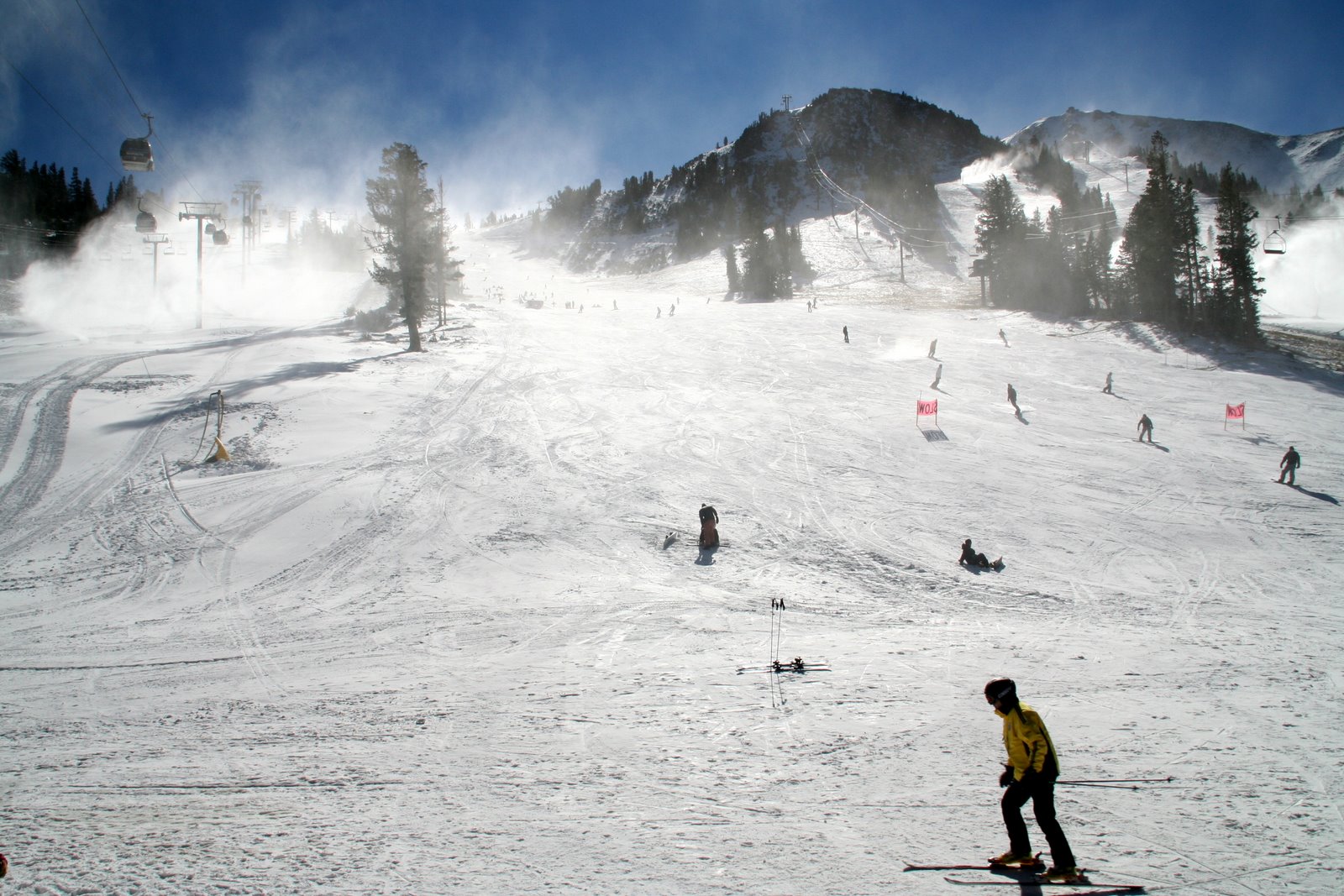
Mammoth Lakes sits at 7,953 feet elevation in the Eastern Sierra, at the base of Mammoth Mountain — an 11,053-foot peak formed from a lava dome complex that remains geologically active today. The mountain's volcanic origins are written into the landscape in every direction: the obsidian formations for which the gated Obsidian community is named, the steaming fumaroles on the upper slopes, and the columnar basalt walls at nearby Devil's Postpile National Monument are all products of the same volcanic forces that built the peak visitors come to ski.
The ski area at Mammoth Mountain is one of the largest in California — a summit at 11,053 feet that captures Sierra snowfall on both eastern and western aspects, giving it a season that regularly extends into June, sometimes July, when surrounding California resorts have closed. Gondola access from Main Lodge delivers riders to the summit with sweeping views across the Great Basin to the east and toward the Sierra Nevada crest to the west. The mountain's 3,100-foot vertical drop produces genuinely long top-to-bottom runs that reward the elevation.
Two lodge bases anchor the mountain's operations. Eagle Lodge on the lower mountain is the ski-in/ski-out hub — the Bridges, Sunstone, Juniper Crest, and Obsidian communities all flow onto or near the Eagle Lodge network. The Eagle Express chairlift runs from the base, and hosts at Sunstone Lodge note that guests can "walk out and ski down to Eagle Express at Mammoth Mountain." The Bridges ski run provides direct slope access to Eagle Lodge from the Bridges condo community. Juniper Springs Lodge, above Eagle Lodge on the Eagle Run trail, marks the transition zone from the mid-mountain terrain to the ski-in/ski-out belt.
Canyon Lodge near the Village at Mammoth is the second major base — connected to the Village gondola and providing access to restaurants, coffee shops, retail, dining, and a full calendar of year-round events in the Village corridor. Hosts at Mammoth Point note the property is "close to Canyon Lodge with walking distance or ski-in/ski-out access (experts only)" and "a short drive to the Village."

Ski-In/Ski-Out Communities
Mammoth's rental landscape is organized around distinct communities, each positioned differently relative to the mountain. Understanding the geography makes the difference between a ski trip where you drive to the lift every morning and one where you step into your bindings at the back door.
The Bridges at Eagle Lodge is one of the most established ski-in/ski-out communities in Mammoth, with the Bridges run delivering direct slope access to Eagle Lodge. Units range from remodeled two-bedroom condos to three-bedroom-plus-loft townhouses, with covered parking, elevator access, and shared hot tubs. The community offers "expansive panoramic views down the valley and the Sherwin mountain range," and its position directly on the lower mountain makes it the most literal ski-in/ski-out option in the area.
Juniper Crest is one of the newest developments in Mammoth — three-story townhomes with private hot tubs, radiant heated flooring throughout, unobstructed Sherwin Mountain Range views, and access to miles of bike paths in summer and cross-country skiing and snowshoeing in winter. The community sits next to a nature preserve, providing genuine quiet despite its proximity to Eagle Lodge. Hosts at Juniper Crest #2 describe it as "surely one of the finest places to stay in Mammoth," and the combination of location, amenities, and mountain views makes it one of the more compelling options in the portfolio.
Obsidian is a gated community in the center of town, overlooking the Sierra Star Golf Course with ski lifts minutes away. The residences run to 5,000 square feet — floor-to-ceiling windows, radiant heated stone floors, custom wood accents, movie theater rooms, private hot tubs, and covered entertaining terraces. Shuttle service to the ski lifts is available via the community concierge desk, with a public shuttle stop just outside the gates that provides access "to get anywhere in town within minutes." The Obsidian homes are among the largest privately available vacation residences in Mammoth, suited to multigenerational groups seeking full-house privacy within a secured community.
Sierra Star Golf Course anchors the summer real estate corridor — an 18-hole course running through the center of town with mountain views on every hole. The Timbers, Lodestar, and Obsidian communities all front the course, and the combination of golf course setting and mountain backdrop makes this the premium real estate zone in Mammoth during the summer months. The Lodestar home on the 3rd fairway is described by its hosts as "one of the few homes in Mammoth available for nightly rental," and at 4,200-plus square feet on a private one-acre lot with a 3-car garage, it justifies that claim.
Every rental property covered in this guide includes complimentary access to the Snowcreek Athletic Club — an indoor heated pool, steam room and sauna, yoga and Pilates studios, a cycling studio, and a full fitness center. For families combining skiing with off-mountain recovery, or guests visiting in shoulder season, the Athletic Club is a meaningful daily amenity.
The Mammoth Lakes Basin
The Mammoth Lakes Basin — a cluster of high alpine lakes immediately above town — is the summer heart of the destination. Lake Mary, Lake George, Twin Lakes, Lake Mamie, and a constellation of smaller backcountry lakes fill glacially carved bowls in the mountains above 8,500 feet, most reachable by paved road or short trail within minutes of the main rental communities.
The Mammoth Lakes Basin bike path runs through the lower basin and connects the main rental communities, enabling car-free transit between neighborhoods during summer. Hosts at Juniper Crest note the property's "convenient access to the Mammoth Lakes Basin bike path," which feeds into a larger trail network extending up toward the wilderness lakes above.
Twin Lakes at the upper end of Lake Mary Road sits at nearly 8,700 feet. The upper lake occupies a glacially carved cirque with granite walls on three sides and Mammoth Mountain visible to the west. Early morning on the upper cirque — when the surface is still and the peak reflected clearly — ranks among the most accessible alpine scenery in the Eastern Sierra.
Summer evenings cool quickly at elevation. Temperatures that reach the 70s by afternoon drop into the 40s and 50s after dark, and a jacket is necessary at the lakes basin even in July. This thermal cycle is part of what makes Mammoth functional as a summer destination when the Owens Valley below is extreme. Mountain biking is a major summer activity — multiple listings mention proximity to mountain biking infrastructure, and the road and trail network through the basin accommodates everything from casual paved rides to serious technical singletrack.
Devil's Postpile National Monument
Devil's Postpile National Monument, reached via the Reds Meadow Valley shuttle from Mammoth Mountain Adventure Center, contains one of the world's best-preserved examples of columnar basalt — a 60-foot wall of hexagonal columns formed when a lava flow cooled slowly enough to fracture into geometric prisms. The face of the postpile was polished flat by a glacier roughly 10,000 years ago, exposing a cross-section at the summit that resembles a tiled mosaic floor. The columns range from 18 inches to 2.5 feet in diameter and stand nearly vertical.
Rainbow Falls on the Middle Fork of the San Joaquin River, accessible by a 1.5-mile trail from the monument, is a 101-foot waterfall that produces a persistent rainbow in the gorge below when mid-morning sun angles hit the mist correctly. The trail from the Postpile to Rainbow Falls is relatively flat and one of the most rewarding easy day hikes in the Eastern Sierra.
During peak summer season, private vehicles are restricted past the Minaret Vista checkpoint during daytime hours. The shuttle departs from Mammoth Mountain Adventure Center and serves multiple stops through the Reds Meadow Valley. A fee is collected at the checkpoint. Visit the National Park Service for current fees, shuttle schedules, and seasonal operating hours.
The Eastern Sierra Beyond Town
Mammoth's position on US-395 at the base of the Eastern Sierra escarpment places it within reach of a concentrated set of distinctive landscapes.
Mono Lake, north along US-395, is an ancient saline lake of extraordinary ecological significance — alkaline waters that support vast populations of brine shrimp and alkali flies, which in turn attract millions of migratory shorebirds and waterfowl. The lake's defining visual feature is its tufa towers: calcium carbonate formations that rose from the lake bottom where freshwater springs once met the alkaline water. The South Tufa area preserves the densest concentration of towers, and the early morning light on the formations is exceptional. The Mono Lake Committee operates a visitor center in the town of Lee Vining on the lake's west shore.
The June Lake Loop — a 16-mile scenic drive off US-395 south of Mono Lake — circles four lakes through a mountain valley with genuine resort-town character. June Lake, Gull Lake, Silver Lake, and Grant Lake each offer distinct scenery; Silver Lake, backed by the Carson Peak massif, is the most dramatic. The loop is a natural complement to a Mammoth stay — an afternoon excursion through genuinely different country.
Convict Lake, south of Mammoth off US-395, sits at the base of a steep cirque of colorful metamorphic rock. The lake is deep and cold and startlingly blue; the trail around its perimeter is flat and accessible, while the canyon at the back provides entry into the high wilderness above.
Planning Your Visit
Mammoth Lakes is genuinely year-round, with two distinct seasons that attract different visitors with different priorities.
Winter (November through June) is the ski season. The mountain's elevation and position to capture Pacific storm systems mean reliable snow and a season that extends later than virtually any other California resort. The ski-in/ski-out communities are at their highest demand during winter; road conditions require AWD or chain-equipped vehicles during storm periods, and multiple hosts explicitly note that "4x4 vehicles and chains may be required" when accessing the Mammoth area during winter weather. Check the Mammoth Mountain website for current conditions and lift status.
Summer (July through September) brings hiking, mountain biking, fishing, the Devil's Postpile shuttle, and the Sierra Star Golf Course into full operation. Crowds peak around the 4th of July and Labor Day; the weeks between those holidays typically offer full summer conditions with better availability.
Shoulder season — October and November in fall, May and early June in spring — offers variable but often excellent conditions. Fall brings aspen color to the June Lake area and the slopes near town; spring skiing on the upper mountain in May runs on fast, firm snow that the local community prizes for its speed and lack of crowds.
Find your base in Mammoth Lakes, CA — browse stays indexed by CielStay.
Search stays on CielStay →Frequently asked questions
When is the best time to visit Mammoth Lakes?
Mammoth Lakes is a year-round destination with two distinct seasons. Winter (November through June) is ski season — the mountain's high elevation means reliable snow and one of the longest ski seasons in California, regularly extending into June. Summer (July through September) is ideal for hiking the lakes basin, mountain biking, fishing, and visiting Devil's Postpile National Monument. Fall brings aspen color to the June Lake area and quieter trails.
How far is Mammoth Lakes from Los Angeles?
Mammoth Lakes is approximately 320 miles from Los Angeles via US-395 north through the Owens Valley — one of the most scenic highway drives in California, running along the base of the Eastern Sierra escarpment for much of the route. In winter, chain-control zones are enforced on US-395 approaching Mammoth; AWD or chains are required when conditions warrant.
What is Devil's Postpile and how do I visit it?
Devil's Postpile National Monument is a formation of hexagonal columnar basalt columns, up to 60 feet tall, formed by a slowly cooling lava flow and polished flat by a glacier. It's located in the Reds Meadow Valley a few miles from Mammoth Lakes. During peak summer season, private vehicles are restricted during daytime hours and visitors take a shuttle from Mammoth Mountain Adventure Center. Rainbow Falls, a 101-foot waterfall about 1.5 miles from the monument, is a popular companion stop on the same shuttle route.
Is Mammoth Lakes worth visiting in summer — not just for skiing?
Yes. Summer Mammoth is a fully distinct destination from its ski season. The Mammoth Lakes Basin bike path connects the rental communities to a cluster of alpine lakes (Twin Lakes, Lake Mary, Lake George) reachable by car or trail within minutes of town. Mountain biking, fishing, kayaking, and hiking are the core summer activities. Devil's Postpile National Monument and Rainbow Falls are accessible by summer shuttle. Evening temperatures at elevation drop sharply even in July, making Mammoth comfortable when the Owens Valley below is extreme.
Stays near this guide
Top-rated independent stays in the region, ranked by CielStay authenticity score.

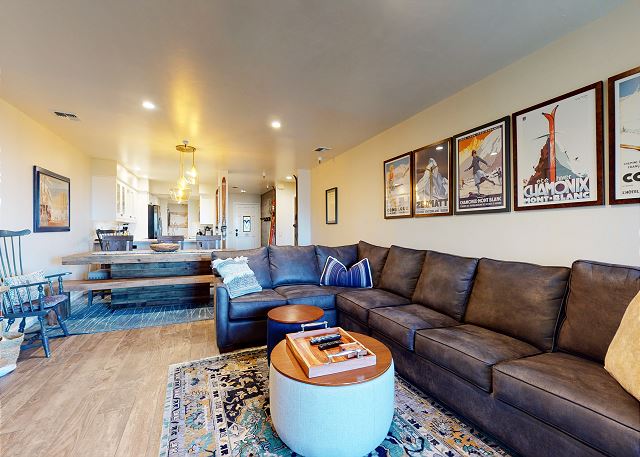
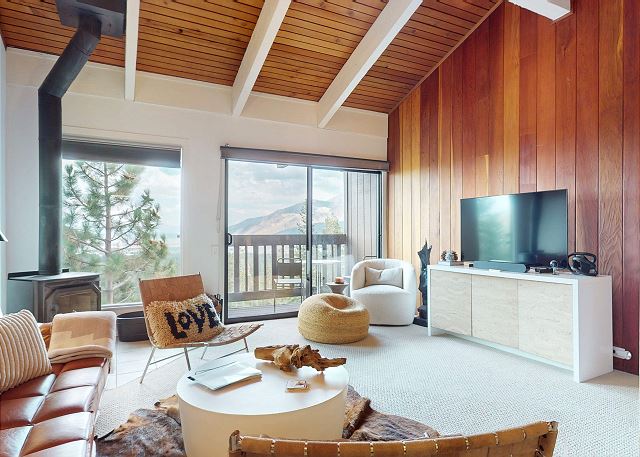
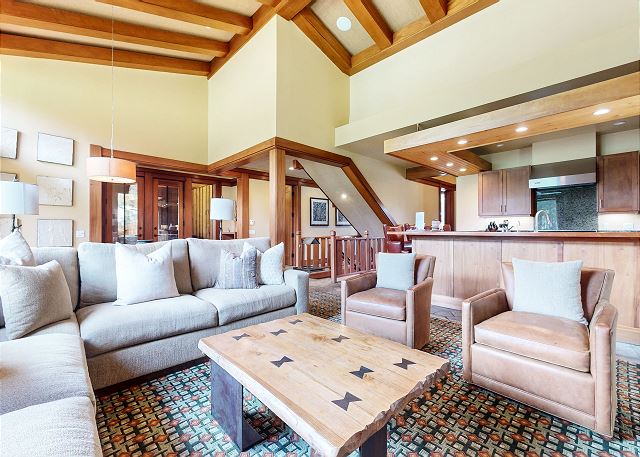
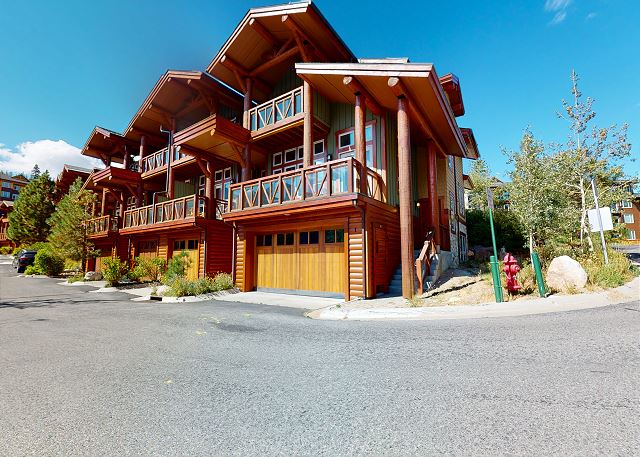
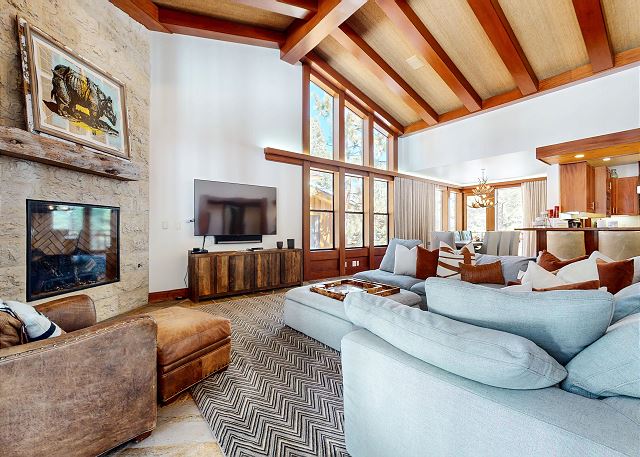
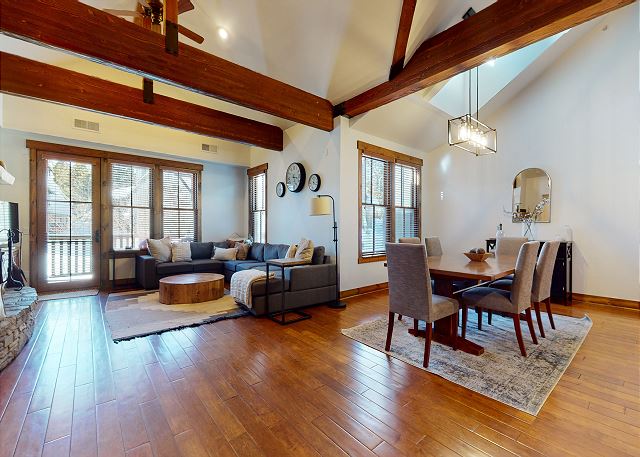
Try a search
Searches inspired by this guide — describe the vibe you want.
More guides


Nearby landmarks & attractions
Key destinations and attractions in the Mammoth Lakes, CA area.
Mammoth Mountain ↗ Maps
California's top ski resort — 3,500 skiable acres at 11,000 feet with the longest season in the Sierra Nevada.
Devils Postpile National Monument ↗ Maps
A rare formation of columnar basalt — 60-foot hexagonal columns formed by slow lava cooling 100,000 years ago.
Hot Creek Geological Site ↗ Maps
Geothermal springs bubbling up through a mountain stream in a dramatic volcanic canyon — swimming now prohibited but spectacular to view.
This guide was assembled from the local knowledge of hosts with properties throughout Mammoth Lakes, CA, as indexed by CielStay. The descriptions of restaurants, trails, swimming holes, and local tips reflect what hosts share with guests in their listings — not the observations of a travel journalist or guest reviewer. Photos are sourced from host listing images and are credited to their respective listings. Information about permits and trail conditions may change; always verify with official sources before your trip.