
Big Sky & Bozeman, MT at a glance
- Skiable terrain
- About 5,850 acres, 4,350 ft vertical (resort figures)
- Summit
- Lone Peak, 11,166 ft
- From Bozeman airport (BZN)
- About 45-50 miles / 1 hour via US-191
- To Yellowstone West Entrance
- About 50 miles / 1 hour via US-191 south
- To Gardiner (North Entrance)
- 120+ miles via Bozeman and Livingston
Big Sky, "The Biggest Skiing in America"
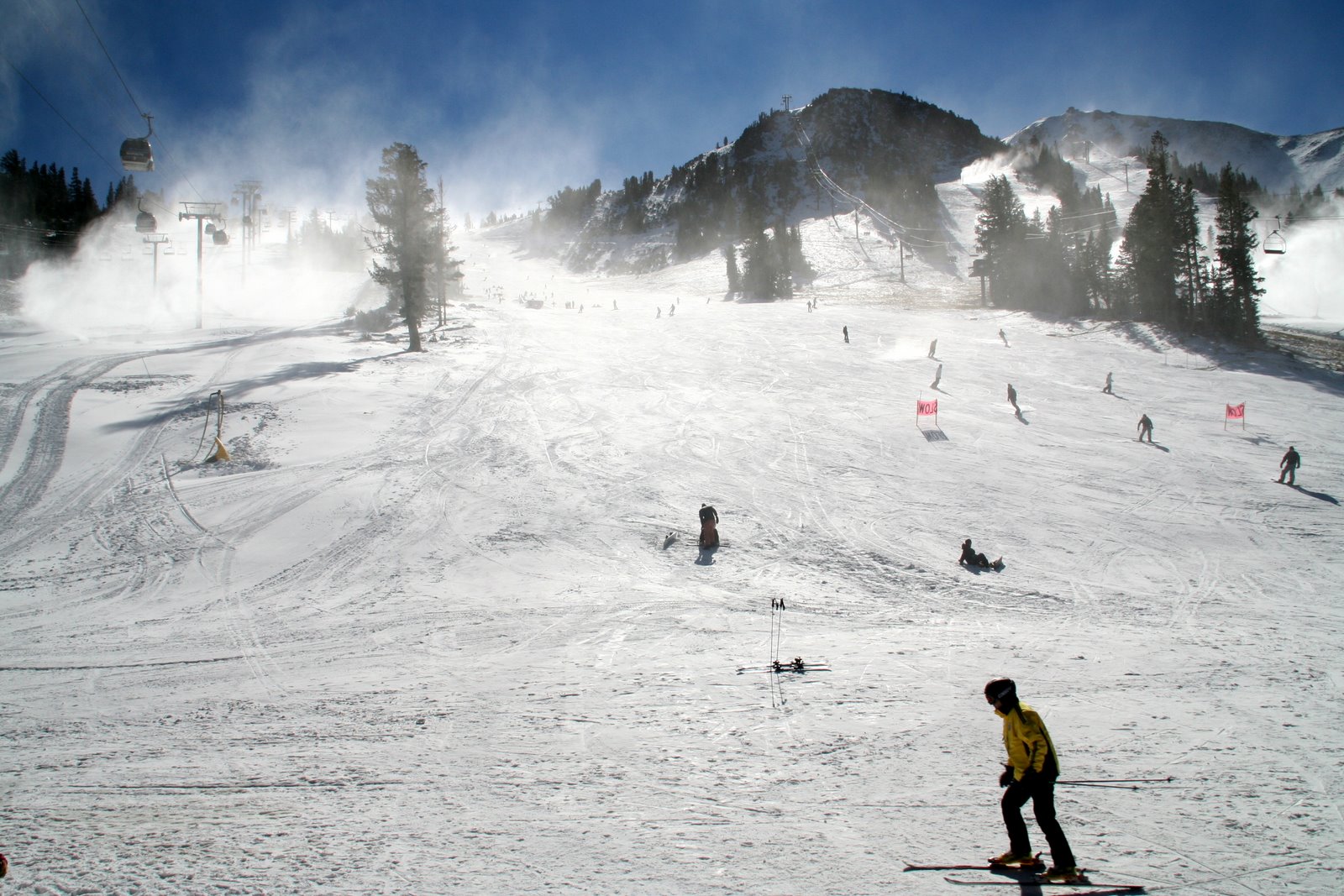
Big Sky Resort bills itself as "The Biggest Skiing in America," which is marketing rather than a ranking: with about 5,850 acres, 4,350 feet of vertical drop, roughly 320 named runs and 39 lifts, it is one of the largest ski areas in the US, though Park City, for example, is bigger. The resort cites about 400 inches of annual snowfall. The numbers that most distinguish it from comparable-scale resorts: the skier-to-terrain ratio. On a day when Vail or Park City is crowded, Big Sky is generous. The mountain is large enough that finding untracked snow hours after opening is routine.
Lone Peak at 11,166 feet is the summit — the Lone Peak Tram reaches the top, serving the Big Couloir, Liberty Bowl and the steepest summit terrain; Headwaters has its own lift. The former Moonlight Basin side, merged into Big Sky in 2013, has a separate base area and quieter character and is covered by the same lift ticket. The Andesite Mountain sector is the intermediate stronghold with the longest sustained groomers.

Lone Mountain Ranch, a few miles below the resort on Lone Mountain Trail, is a leading Nordic ski center with about 85 kilometers of groomed cross-country trails through the Gallatin Valley wilderness. In summer it operates fly fishing on the Gallatin, horseback riding, and guided backcountry trips. The Big Sky Town Center, by Meadow Village about 5 miles below the resort's Mountain Village, has restaurants, shops, a movie theater, and free outdoor concerts in summer.
The Gallatin River & Summer Big Sky
Highway 191 north from Big Sky to Bozeman follows the Gallatin River through Gallatin Canyon — one of the great scenic drives in Montana. The Gallatin is a blue-ribbon trout stream with fly fishing access along most of its length; it also runs class III-IV whitewater through the canyon that makes it one of the better accessible rafting rivers in the Northern Rockies.
In summer, Big Sky converts to mountain biking with lift-served access, plus hiking and the resort's zip lines and ropes courses. The Spanish Peaks unit of the Lee Metcalf Wilderness, northwest of Big Sky, has genuine backcountry hiking in an area that sees a small fraction of the crowd that the national park to the south attracts.

Bozeman
Bozeman (population about 57,000) is the college town that anchors the region — home to Montana State University, the main commercial airport (BZN), and a downtown Main Street that has accumulated genuine quality over the past two decades. It has been one of the fastest-growing cities in Montana, which brings both vitality and the usual tensions.
The food scene is real: independent restaurants concentrated on Main Street and Mendenhall Avenue with an emphasis on local ingredients — bison, trout, Wagyu from Montana ranches. The Museum of the Rockies on the MSU campus has one of the premier paleontology collections in the world, including one of the largest T. rex skulls known and the dinosaur discoveries of paleontologist Jack Horner from the Montana badlands. The Bridger Bowl ski area 16 miles northeast of downtown is the locals' mountain — "ski the cold smoke" — with about 2,000 acres, a handful of chairlifts, and the kind of light powder that the university students have been exploiting since 1955.
Bozeman Hot Springs, about 8 miles west of downtown at Four Corners, is the after-ski recovery destination: indoor and outdoor pools fed by geothermal springs.
Yellowstone from Big Sky
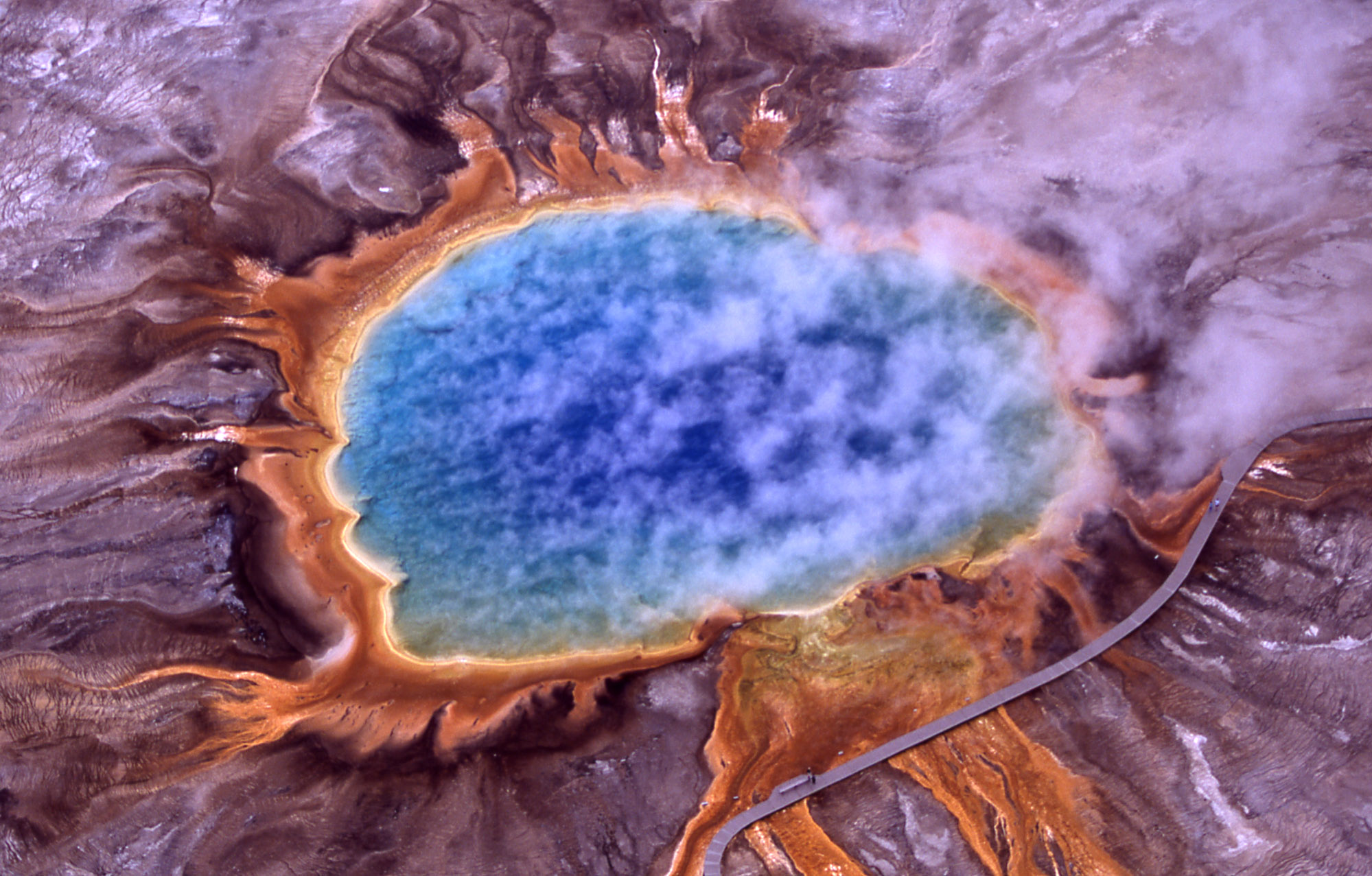
The West Entrance at West Yellowstone is about 50 miles, roughly an hour, south of Big Sky on US-191, making a day trip to Yellowstone National Park (the world's first national park, established 1872) realistic. The park's Grand Prismatic Spring, one of the largest hot springs in the world (NPS gives roughly 200 to 370 feet across and over 121 feet deep), is one of its most photographed features, and Old Faithful is a bit under an hour beyond the entrance. The Lamar Valley in the northeast, the best wildlife watching in the lower 48, is reached via the North Entrance at Gardiner, about 120 miles from Big Sky via Bozeman and Livingston, so a Lamar day trip from Big Sky is a long one.
As of October 2026, check nps.gov/yell for current road status and winter-season dates before you plan a park trip. In winter, most interior roads are open only to guided snowcoaches and snowmobiles; the road from Gardiner to Cooke City is plowed for cars all year.
West Yellowstone and Island Park
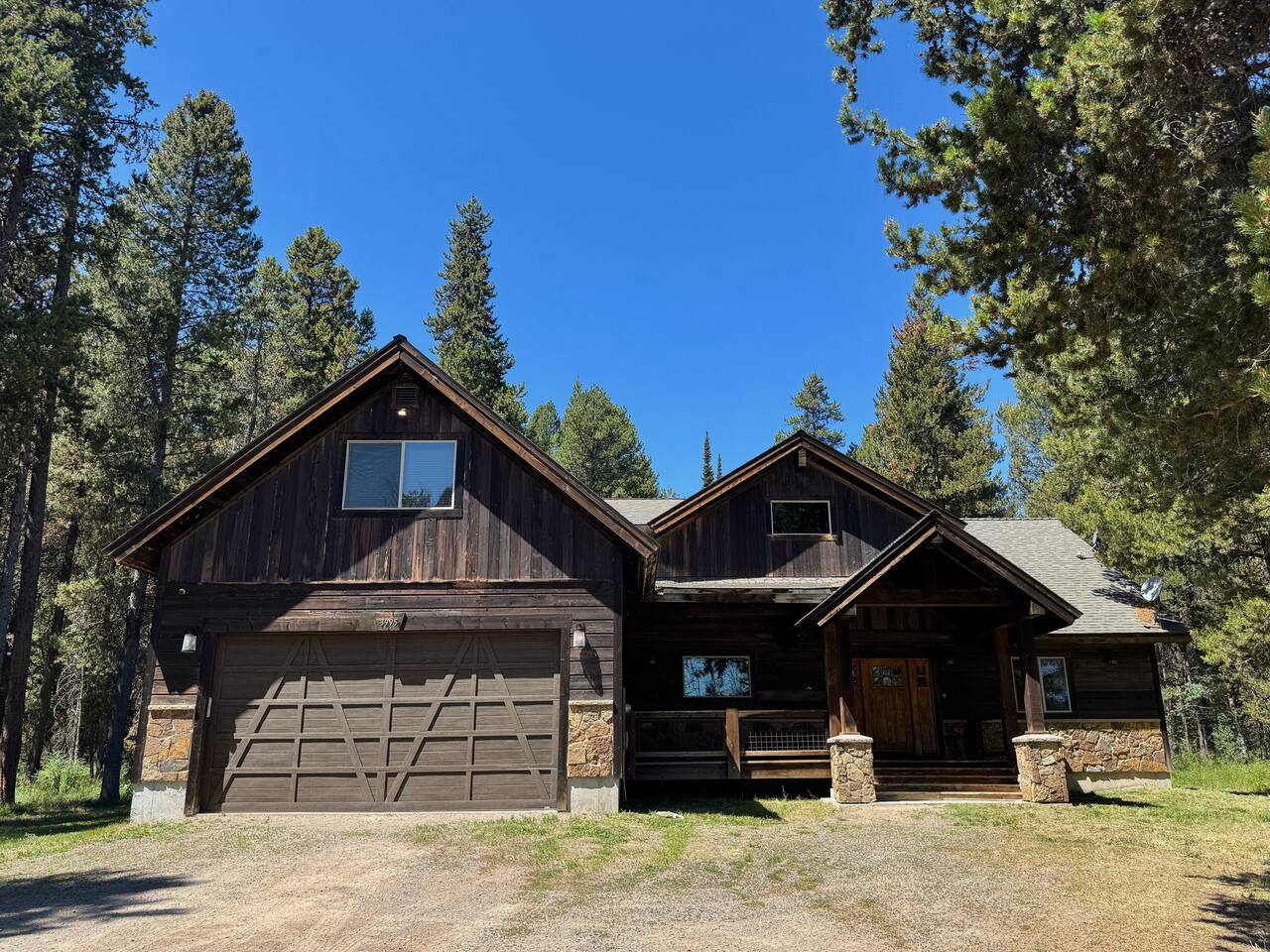
If Yellowstone is the priority, many visitors base on the park's west side instead. West Yellowstone, Montana, is a small town at the West Entrance; just across the Idaho line, Island Park has a long string of lodges and cabins along the Henrys Fork of the Snake River, with fly fishing, nearby Harriman State Park and Mesa Falls. Island Park homes tend to be large and suit big groups, and from there the West Entrance is typically 30 to 50 minutes depending on the home.
Find your base in Big Sky & Bozeman, MT — browse stays indexed by CielStay.
Search stays on CielStay →Frequently asked questions
How far is Big Sky from Yellowstone National Park?
The West Entrance (West Yellowstone) is about 50 miles, roughly an hour, south of Big Sky on US-191; the highway also clips the park's northwest corner on the way. The North Entrance at Gardiner is much farther, about 120 miles via US-191 north to Bozeman, I-90 east to Livingston and US-89 south, over two hours. The North Entrance road to Cooke City is the one park road open to wheeled vehicles all year, and it leads to the Lamar Valley, known for wolves and bison. Check nps.gov/yell for current road status.
When is Yellowstone least crowded?
May and September to early October are the quieter shoulder seasons: most roads and facilities are open, wildlife is active and crowds are smaller than in July. Snow can linger in May and some roads open or close on posted dates, so check nps.gov/yell. In winter, most interior roads are open only to guided snowcoaches and snowmobiles (the 2025-26 season began December 15); the West Entrance in West Yellowstone is a main oversnow gateway, while the North Entrance road to Cooke City stays open to cars.
How large is Big Sky Resort?
Big Sky Resort has about 5,850 skiable acres, a 4,350-foot vertical drop, around 320 named runs and 39 lifts (resort figures), across Lone Mountain, Andesite Mountain and the former Moonlight Basin. It is one of the largest ski areas in the US, though not the largest. Moonlight Basin merged into Big Sky in 2013, and one Big Sky lift ticket now covers all the terrain. The resort cites about 400 inches of annual snow; January and February are the deepest, and March often has the best mix of snow and sun.
How far is Bozeman Airport from Big Sky?
Big Sky is 45 miles south of Bozeman on Route 191 — about 50 minutes through the Gallatin Canyon. Bozeman Yellowstone International Airport (BZN) receives direct flights from over 25 cities including Los Angeles, New York, Chicago, Denver, and Seattle. It is the primary gateway for both the Big Sky resort and Yellowstone's Northern Range.
Stays near this guide
245 homes within 12 mi on CielStay · 242 bookable on the host's own site. These are a few of them, chosen for this guide.
Browse every home in Big Sky.
Describe your stay and search
Or ask your AI assistant: Search the web for homes on cielstay.com in Big Sky for 6 people
For exact dates and live prices, connect CielStay to ChatGPT, Claude or Gemini.


Try a search
Searches inspired by this guide — describe the vibe you want.
More guides




Nearby landmarks & attractions
Key destinations and attractions in the Big Sky & Bozeman, MT area.
Yellowstone National Park ↗ Maps
America's first national park — geysers, bison, wolves, and 3,500 square miles of volcanic wilderness.
Big Sky Resort ↗ Maps
The Biggest Skiing in America — 5,800 acres and reliably uncrowded by Rocky Mountain standards.
Bozeman ↗ Maps
The cultural and culinary anchor of the region — university town with serious restaurant and craft beer scene.
This guide was assembled from the local knowledge of hosts with properties throughout Big Sky & Bozeman, MT, as indexed by CielStay. The descriptions of restaurants, trails, swimming holes, and local tips reflect what hosts share with guests in their listings — not the observations of a travel journalist or guest reviewer. Photos are sourced from host listing images and are credited to their respective listings. Information about permits and trail conditions may change; always verify with official sources before your trip.