
The Flathead Valley
Whitefish sits at the northern edge of the Flathead Valley — a broad agricultural basin between the Rocky Mountain Front and the Cabinet Mountains, drained by the Flathead River. The Great Northern Railway built its main line through here in 1904, giving the town its street grid and its bones. A century later, the bones are still visible: the restored Depot is the architectural anchor of downtown, and the independent restaurant and bar scene that fills the blocks around it has the energy of a town that didn't need to manufacture itself.
The combination of assets within a short radius is unusual: a legitimate ski mountain above town, one of the great national parks in the American West 45 minutes east, the largest freshwater lake west of the Mississippi 20 minutes south, and a trail network accessible from the edge of downtown. Most mountain towns excel at one or two of these things. Whitefish has all of them.
Whitefish Mountain Resort
Whitefish Mountain Resort — called Big Mountain by locals who never adopted the rebrand — sits above Whitefish Lake with 3,000+ skiable acres, 14 lifts, and 2,353 feet of vertical. It holds a consistent #3 in the West ranking from Ski Magazine readers, earning it behind Deer Valley and Jackson Hole but ahead of everything in Colorado. The mountain's character is distinct: genuine old-growth forest tree skiing, lower crowds than comparable-scale Colorado resorts, a base village that connects directly to downtown via free shuttle, and the particular low-attitude culture of a Montana mountain town that has been doing this since 1947 and doesn't need to explain itself.

The resort runs mountain biking, zip lines, ropes courses, and an alpine slide through summer, with the chair lift carrying bikes up to the trail network. The Whitefish Trail system adds 43 miles of hiking and biking accessible directly from the edge of town.
Downtown Whitefish has the restaurants and bars a serious mountain town needs: the Great Northern Bar & Grill in the old railway building for après-ski, local breweries, independent galleries, and the Huckleberry Days Arts Festival in August. The town's Winter Carnival has run for decades. Huckleberry ice cream, pancakes, and jam are the local obsession — for good reason.

Flathead Lake & Bigfork
Twenty miles south of Whitefish: Flathead Lake, 28 miles long, 15 miles wide, clear enough to see 30 feet to the bottom, and home to native bull trout, westslope cutthroat, and lake trout. It is the largest natural freshwater lake west of the Mississippi in the lower 48. Sailing, kayaking, paddleboarding, and fishing from private waterfront properties with boat docks. The Flathead cherries grown along the east shore — warmed by the lake's thermal mass — are genuinely exceptional and show up at farmstands from July through August.
Bigfork on the northeast shore has been called one of the 100 Best Small Art Towns in the West: galleries, the long-running Bigfork Summer Playhouse, and restaurants that would hold up in a larger city. It's a 45-minute drive from Whitefish and worth an afternoon in either direction.
Glacier National Park
Forty-five minutes east on US-2 then north on US-89: Glacier National Park, 1,013,572 acres of the Northern Rockies straddling the Continental Divide. It has 700+ miles of trails, 130 named lakes, 25 remaining named glaciers (down from 150 in 1850), and a scale and wildness that separates it from most of the national park system. It received 3.1 million visitors in 2023 — impressive in absolute terms, but a fraction of the 6 million at Rocky Mountain or 12 million at the Smokies. The backcountry genuinely feels empty.
Going-to-the-Sun Road
The park's defining feature is also one of the great engineering achievements in American road construction: the Going-to-the-Sun Road, a 50-mile highway carved through the Continental Divide that took 11 years to build (1921–1932) and reaches Logan Pass at 6,646 feet. The road crosses an alpine landscape that looks actively geological — waterfalls dropping off sheer cliff faces, snowfields in July, mountain goats and bighorn sheep that treat the road as their own.

The road opens fully by mid-July most years and closes in October. In peak summer, the Logan Pass parking lot fills by 7am — the park's free shuttle system is the practical solution. Timed-entry permits are required for vehicle access during peak hours from late June through Labor Day; book through Recreation.gov well in advance.
Trails
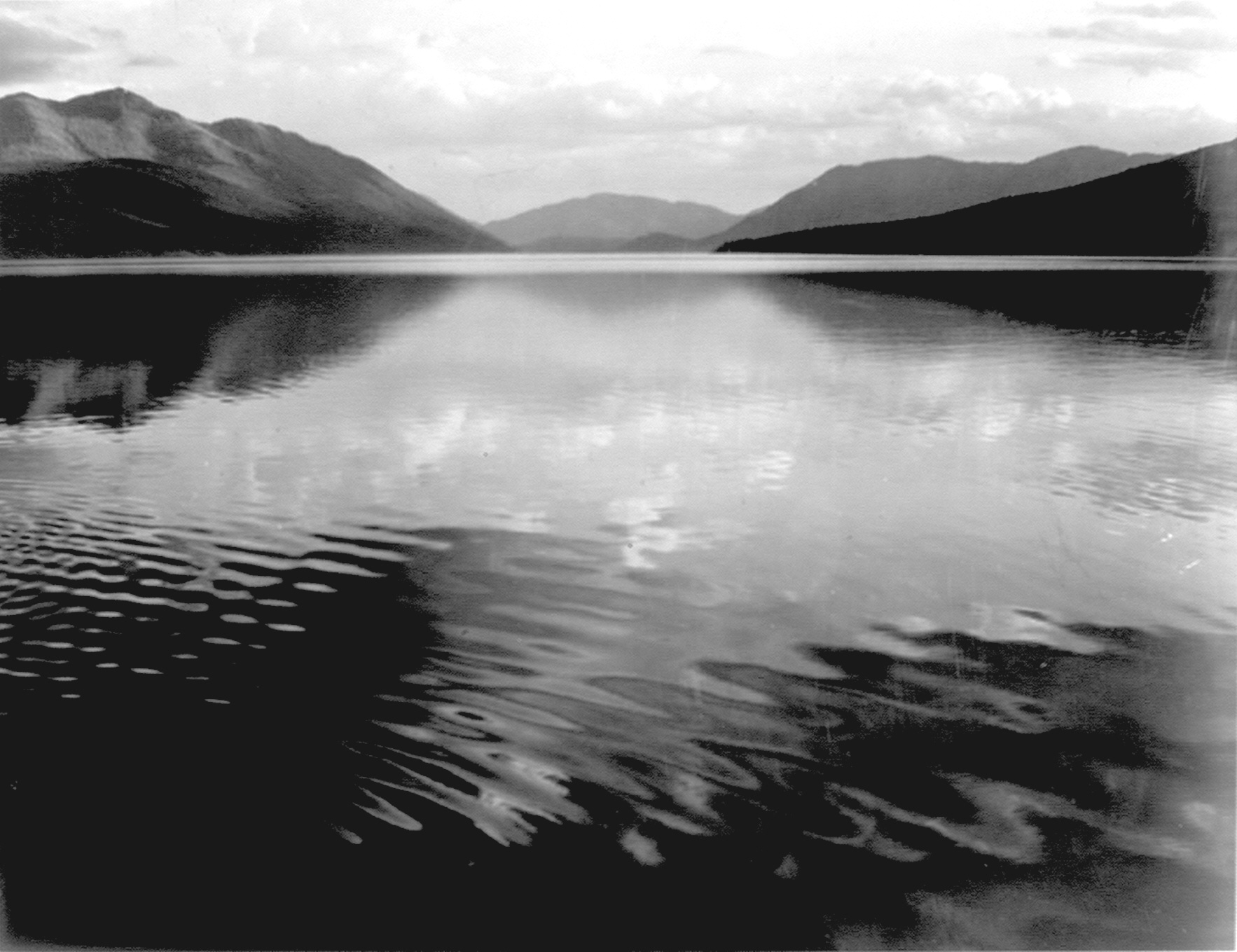
Lake McDonald is the first thing most visitors see: a 10-mile glacially carved lake just inside the west entrance at Apgar Village, with crystal-clear water over a multicolored rock bottom and the park's mountains reflected at dawn. It's one of the most photographed lakes in the American West for reasons that become obvious immediately.
The Highline Trail from Logan Pass is the park's most celebrated day hike: 11.6 miles along the Garden Wall ridge, 200 feet of total elevation gain, with continuous views across the park and into Canada. Mountain goats often walk the trail alongside hikers. The trail ends at The Loop on the Going-to-the-Sun Road with a shuttle back to Logan Pass. It is genuinely one of the great ridge walks in the American West — accessible to most hikers with reasonable fitness.
Grinnell Glacier is a 10.6-mile round trip from the Many Glacier trailhead that rewards the effort with a full view of one of the park's remaining named glaciers and the turquoise meltwater lake below it. The USGS has documented Grinnell's retreat photographically since 1887 — the comparison photos are striking. The Many Glacier area in the park's northeast is generally less crowded than the Going-to-the-Sun corridor and arguably more dramatic.

Two Medicine valley in the southeast is the most overlooked sector: fewer crowds than Many Glacier, two trailhead lakes, and access to the park's quieter backcountry. Bowman Lake in the northwest (accessible via unpaved road) is where people who know the park go when they want solitude.
Wildlife
Glacier has the full suite of Northern Rockies megafauna: grizzly bear, black bear, gray wolf, mountain lion, moose, elk, mountain goat, and bighorn sheep. The Many Glacier area and the North Fork valley are the best zones for bear and wolf activity. Mountain goats at Logan Pass are habituated to humans and will approach closely — the park asks visitors not to feed them or approach within 25 yards, which the goats routinely ignore from their side.
Winter & Dark Skies
In winter, the Going-to-the-Sun Road closes to vehicles at the park boundaries but opens to snowshoers and backcountry skiers. The crowds disappear entirely. Apgar Village and the west entrance area stay accessible year-round, and The Grizzly Suites there — the first luxury condos inside the park boundary itself — are the most distinctive lodging option in the park, open year-round with trail access from the front door.
Glacier is certified as an International Dark Sky Park. The night sky above the backcountry is as dark as any place in the lower 48 — the Milky Way visible as a structural feature with naked-eye star-forming regions.

Find your base in Whitefish, MT — browse stays indexed by CielStay.
Search stays on CielStay →Frequently asked questions
What county is Whitefish, Montana in, and how high is it?
Whitefish is in Flathead County, Montana, at about 3,028 feet (923 m) on the northern edge of the Flathead Valley. It had 7,751 residents at the 2020 census and is roughly 25 miles from the west entrance of Glacier National Park.
Do you need a reservation to drive Going-to-the-Sun Road in Glacier?
Yes — vehicle reservations are required to enter Glacier National Park on the Going-to-the-Sun Road corridor from late May through mid-September, bookable on recreation.gov. Reservations sell out within minutes of release. Alternatives include the free hop-on/hop-off park shuttle (no reservation required) and entering at less-visited areas like Two Medicine, Many Glacier, and the North Fork.
How far is Whitefish from Glacier National Park?
Whitefish is about 25 miles from the west entrance of Glacier National Park at Apgar — roughly 35 minutes by car. Glacier Park International Airport (FCA) is 12 miles south in Kalispell and receives direct flights from Seattle, Salt Lake City, Denver, and Minneapolis. The Amtrak Empire Builder stops at Whitefish Train Depot, a 5-minute walk from Main Street.
When is the best time to visit Whitefish and Glacier?
July and August offer the most reliable access — all park facilities open, Going-to-the-Sun Road fully passable, wildflowers at peak above treeline. Fall (September–October) has brilliant larch color and significantly thinner crowds. Winter transforms Whitefish Mountain Resort into one of the best mid-sized ski mountains in the Rockies, with Glacier's North Fork and Many Glacier areas accessible by snowshoe.
What wildlife can you see at Glacier National Park?
Glacier supports one of the most intact large mammal ecosystems in the lower 48: grizzly bears, black bears, gray wolves, mountain goats, bighorn sheep, moose, and wolverine. The Many Glacier valley is the highest-concentration wildlife area. Dawn and dusk at Many Glacier Hotel and the Swiftcurrent area provide the best sighting odds. Bear spray is required when hiking off-road.
Stays near this guide
Top-rated independent stays in the region, ranked by CielStay authenticity score.


Try a search
Searches inspired by this guide — describe the vibe you want.
More guides




Nearby landmarks & attractions
Key destinations and attractions in the Whitefish, MT area.
Glacier National Park ↗ Maps
The Crown of the Continent — Going-to-the-Sun Road, glacial lakes, and some of North America's most dramatic alpine terrain.
Whitefish Mountain Resort ↗ Maps
The primary ski mountain near Glacier — 3,000 acres with consistent powder and a charming base village.
Whitefish Lake ↗ Maps
Glacier-carved lake adjacent to town — swimming, paddleboarding, and lakefront rentals.
This guide was assembled from the local knowledge of hosts with properties throughout Whitefish, MT, as indexed by CielStay. The descriptions of restaurants, trails, swimming holes, and local tips reflect what hosts share with guests in their listings — not the observations of a travel journalist or guest reviewer. Photos are sourced from host listing images and are credited to their respective listings. Information about permits and trail conditions may change; always verify with official sources before your trip.