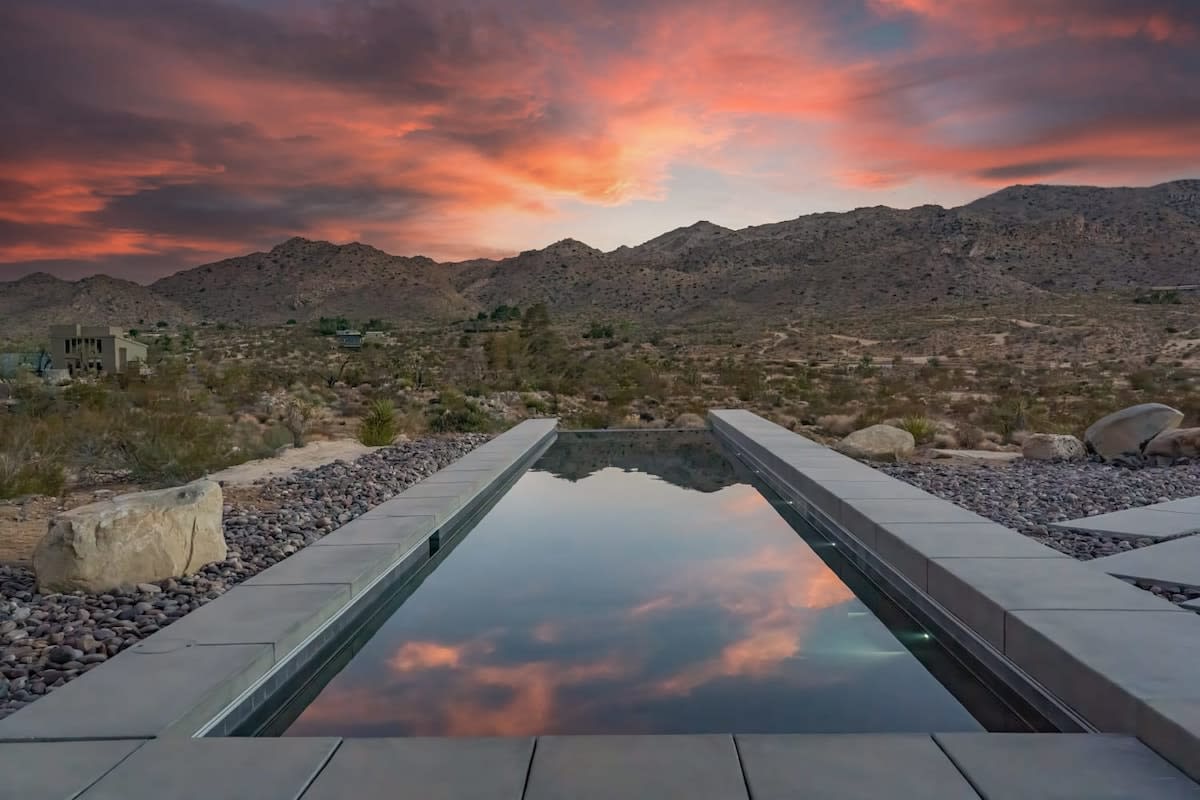
Where the Mojave Meets the Colorado
Joshua Tree sits at a geological seam. The park's 795,000 acres straddle two distinct desert ecosystems — the higher Mojave Desert to the west, where the namesake Joshua trees grow in dense groves across a pale, boulder-strewn landscape, and the lower Colorado Desert to the east, where the land drops into a sparser, hotter terrain of ocotillo, cholla, and smoke trees. The junction between them is visible as you drive east through the park: the Joshua trees thin, the boulders give way to flat scrub, and the light changes entirely.
The park was first declared a national monument in 1936 — established largely through the advocacy of Minerva Hoyt, a Pasadena socialite who spent years lobbying Washington to protect a desert she loved. Three million people visit per year. Most of them arrive on Saturday and leave by Sunday. A midweek morning here — no wind, the boulders glowing orange in first light, not another car in the trailhead lot — is one of the great California experiences.
Joshua Tree National Park
The main west entrance is off Highway 62 in the town of Joshua Tree. From there, the Park Boulevard winds through the heart of the park, passing the iconic boulder formations of Hidden Valley — a natural enclosure of massive granite rocks that gold-rush cattle ranchers used as a corral and that climbers have been mapping obsessively for decades. The short Hidden Valley Trail (1 mile loop) is the most accessible introduction to the park and passes through some of its most dramatic scenery.
Skull Rock is the most photographed formation in the park — a weathered granite boulder eroded into an unmistakable face, reachable on a 1.7-mile loop trail from the Jumbo Rocks campground. Cholla Cactus Garden, near the transition zone between the two deserts, is a dense field of teddy bear cholla lit luminescent gold in afternoon light — one of the park's most striking and undervisited spots. Don't touch them; the barbed spines detach on contact.
Keys View is the mandatory overlook: a short walk from a parking area up to a ridge at 5,185 feet with unobstructed views across the Coachella Valley, the Salton Sea, and on clear days all the way to the Mexican border. Best at sunrise and at golden hour, when the smog layer below turns pink and the ridgeline shadows pull long across the valley.
The Oasis of Mara at the Twentynine Palms visitor center tells the park's pre-European story — the Serrano, Cahuilla, and Chemehuevi peoples all lived near this spring, the park's most significant water source, for thousands of years. The oasis is still alive: 29 native fan palms surrounding a slow-seeping spring, a quiet five minutes from the highway.
For longer hikes: Ryan Mountain (3 miles, 1,000 ft gain) is the best summit in the park with 360-degree views. Lost Palms Oasis (7.5 miles round-trip) descends into a remote canyon with the park's largest palm grove, accessible only on foot. The Boy Scout Trail (8 miles one-way) crosses from the west entrance through boulder fields and open desert to the north — shuttle required, best done with a car at each end.
Wildflower season — typically February through April, depending on winter rains — can transform the park floor entirely. A good year produces carpets of yellow coreopsis, purple phacelia, and white primrose across the flats between boulder formations. The park service's website posts bloom reports; it's worth watching in late February if you're planning a spring visit.
Climbing
Joshua Tree is one of the premier climbing destinations in the world. The granite monzogranite here — formed 100+ million years ago and shaped by millions of years of weathering into friction-perfect domes, cracks, and faces — attracts serious climbers from every continent. There are over 8,000 established routes in the park, from beginner top-rope slabs to El Capitan-grade crack systems. Hemingway Buttress, Saddle Rocks, Intersection Rock, and the Wonderland of Rocks are the major areas; all are accessible within minutes of the main park road.
For non-climbers, watching the activity at Intersection Rock (directly across from the Hidden Valley campground) gives you a full afternoon of entertainment. The routes there are moderate enough that you see full progression from beginner to expert, and the setting is spectacular. Vertical Adventures in Joshua Tree town rents gear and runs guided climbing experiences for first-timers; they've been operating in the park since 1984.
Stargazing & Dark Skies
Joshua Tree is one of the closest designated Dark Sky areas to a major metropolitan corridor in the United States — less than 130 miles from Los Angeles, but far enough from any city glow that the Milky Way is visible with the naked eye on moonless nights. The park sits at 3,000–5,000 feet elevation, further reducing atmospheric distortion.
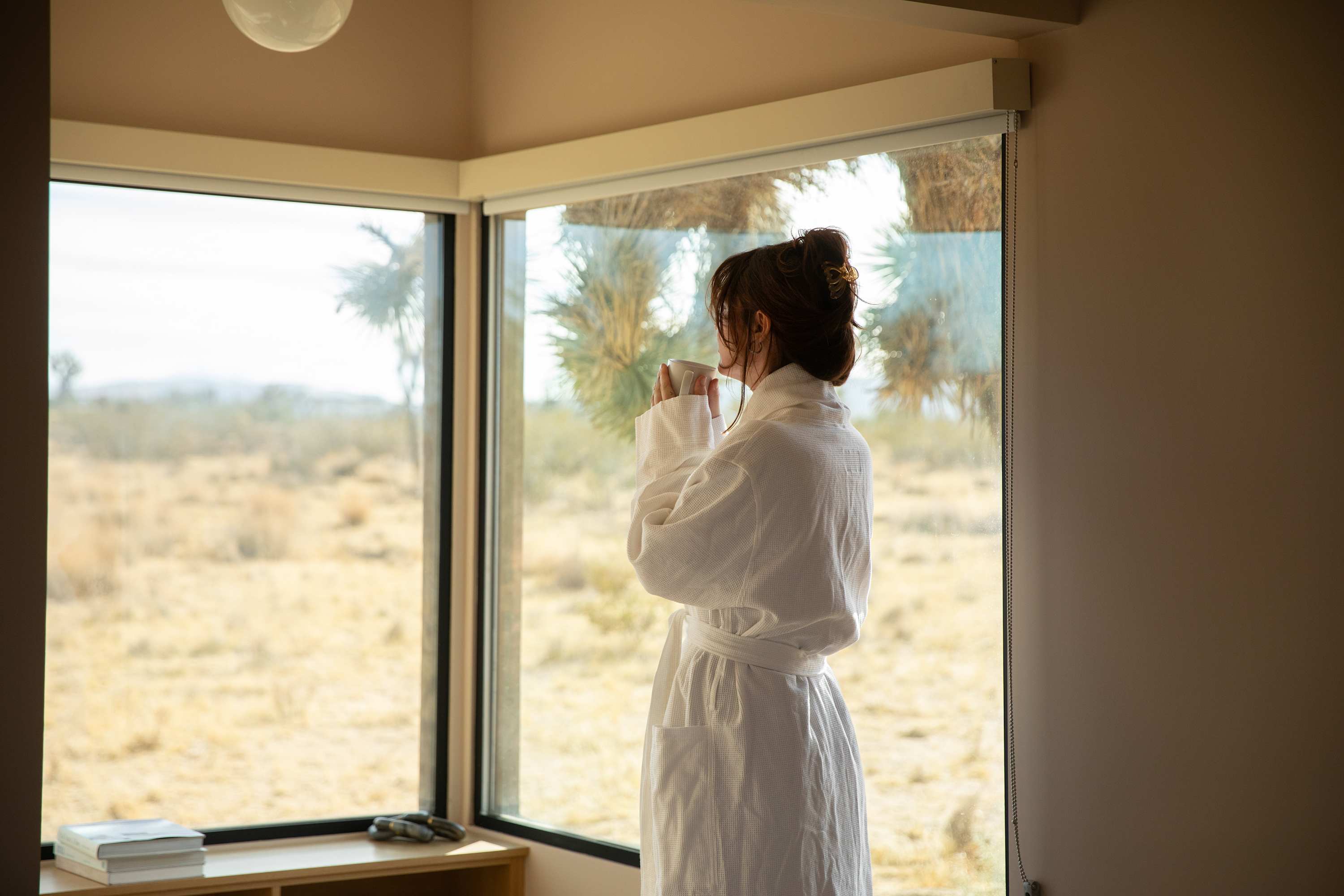
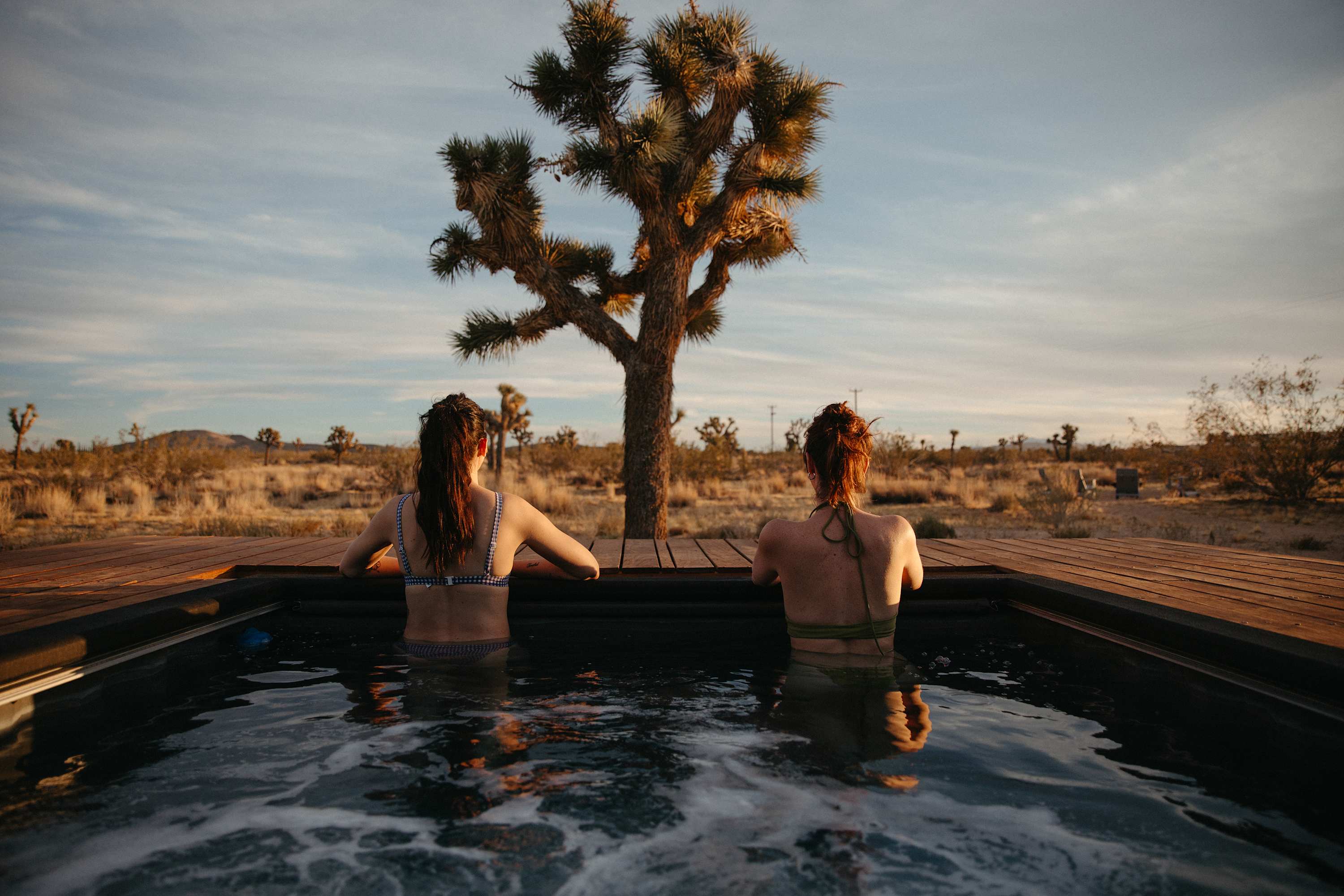
The best stargazing spots in the park are the pull-outs along Park Boulevard away from the campground lights, but the real experience is from a private property outside the park boundary. The Homestead Modern estates in particular are sited specifically for horizon-wide sky views. Several have outdoor soaking tubs positioned to face open desert — the combination of the hot tub, the absolute silence, and a sky full of stars is the defining Joshua Tree experience.
The Joshua Tree Music Festival (April and October) uses the dark sky as a feature — camping, live music, art installations, and late-night fire circles under a desert sky.
Pioneertown
Nine miles northwest of Yucca Valley, up a winding California Scenic Drive that climbs to 4,055 feet, Pioneertown is one of the great anachronisms of the American West. It was built in 1946 as a living film set — Roy Rogers, Gene Autry, and dozens of B-Western productions filmed here through the 1950s. The wood-front buildings on Mane Street are on the National Register of Historic Places. The set was never torn down; it became a real town.
Pappy & Harriet's Pioneertown Palace is the anchor — a roadhouse bar, restaurant, and live music venue that has hosted Paul McCartney, Vampire Weekend, Iggy Pop, and Robert Plant on its small stage over the years. The shows are generally excellent; the barbecue is legitimately good; the crowd is a specific mix of locals, visiting musicians, and design-world visitors from Los Angeles. Book ahead on weekends, especially in the cooler months.
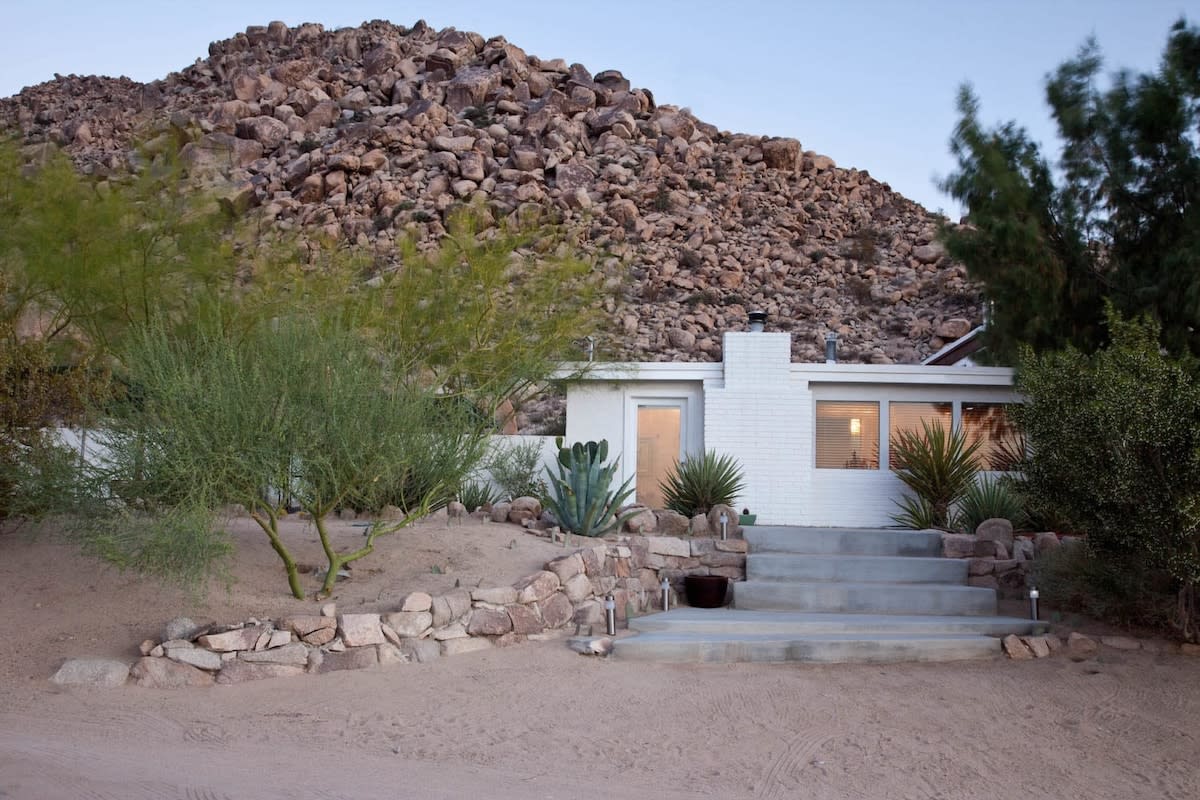
Pipes Canyon — the area around Pioneertown — has a distinct character from the rest of the High Desert: higher elevation, more juniper and pinyon pine, cooler nights, and a genuine quiet that the closer-in Joshua Tree communities don't always have. The Hawk & Mesa property by Homestead Modern sits on 120 private acres here, named by Sunset Magazine as the #1 Most Loved Retreat — adjacent to Sand to Snow National Monument, with boulder and butte views in every direction.
The Architecture
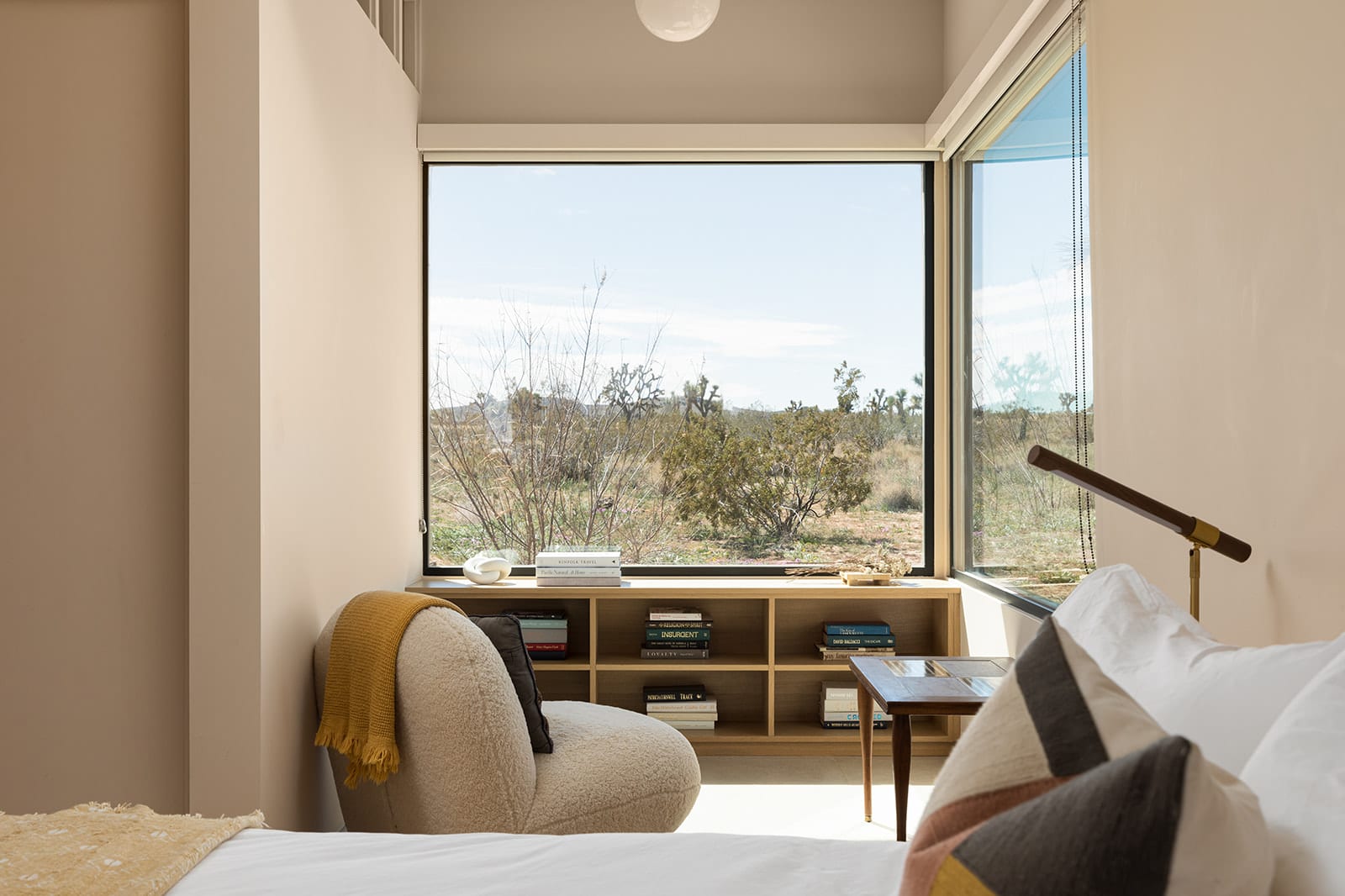
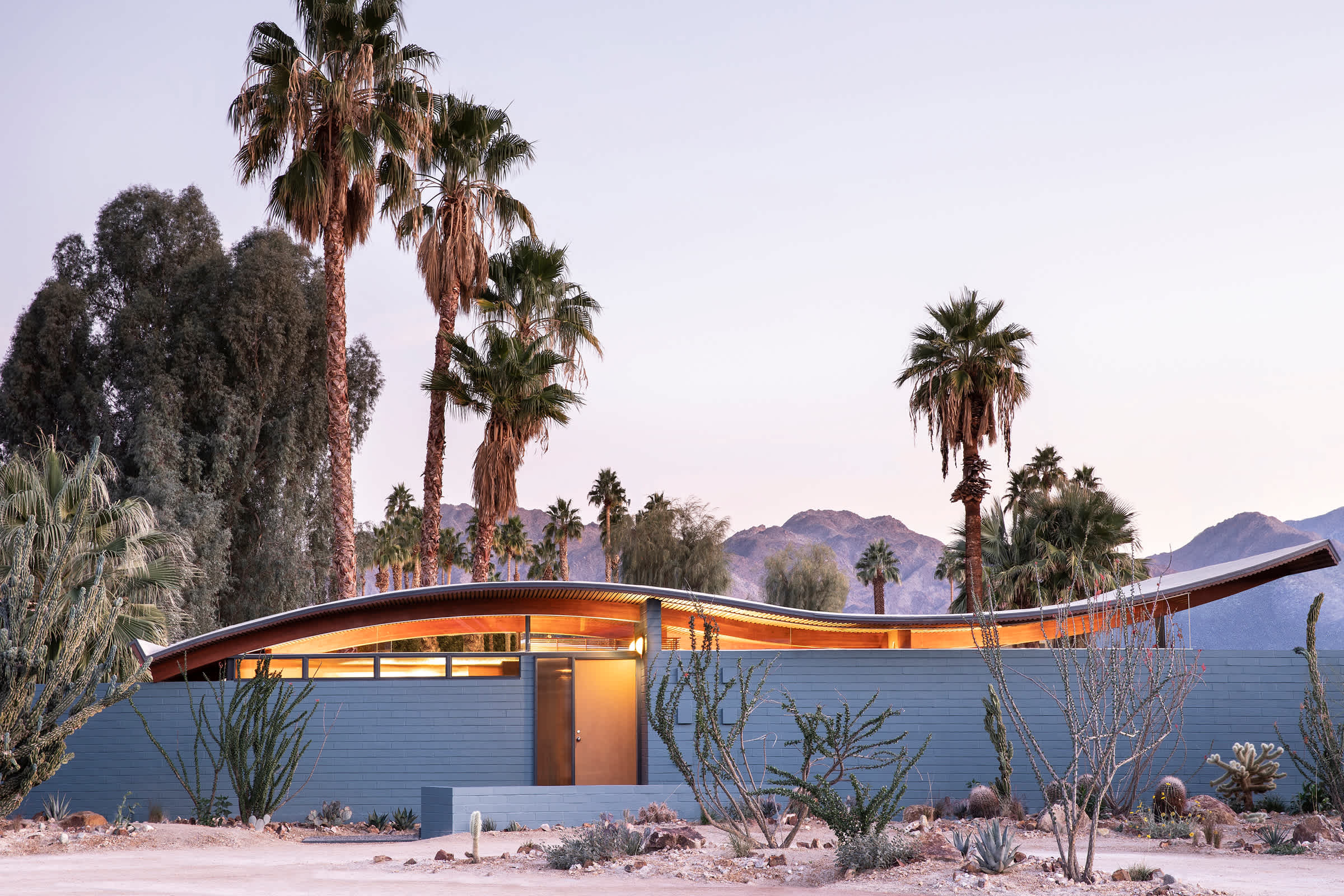
Joshua Tree has become one of the most design-forward short-term rental markets in the world — a function of cheap land, extraordinary light, and proximity to Los Angeles's architecture and design culture. The properties that have emerged here over the past decade are genuinely remarkable.
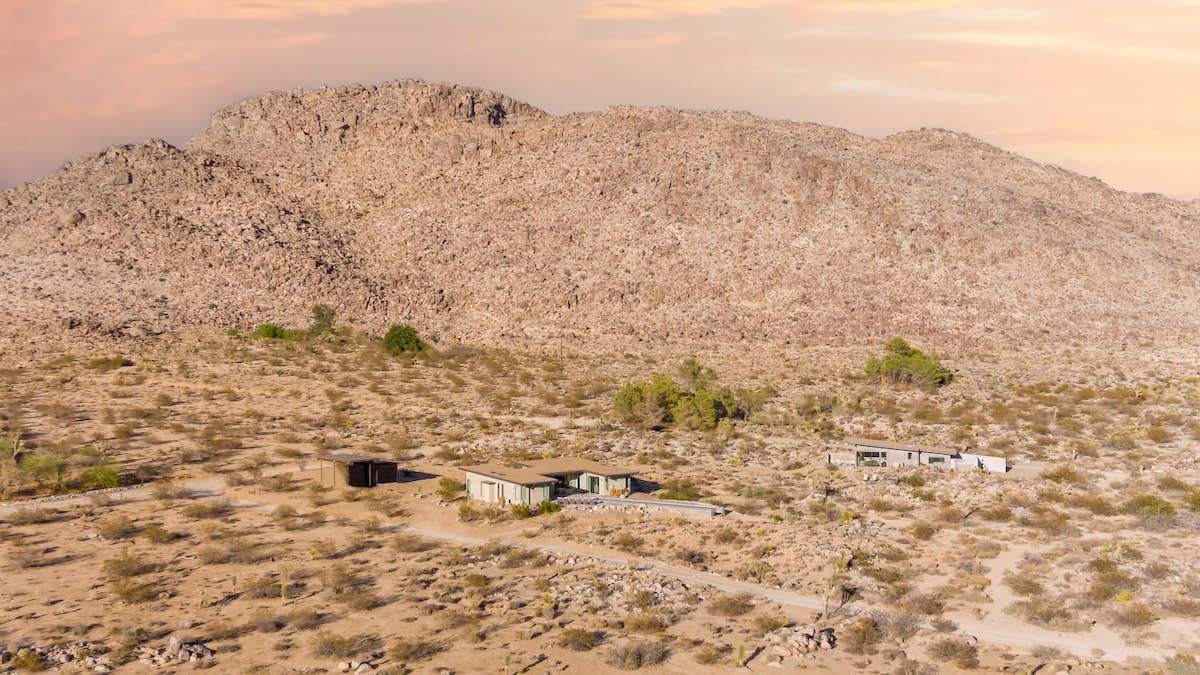
The Radziner Modernist Cabin — designed by Ron Radziner of Marmol Radziner, featured on the LA Times cover — sits on 5 acres directly adjacent to the park, with white terrazzo floors, a 2-person outdoor soaking bathtub, and direct hiking access into the national park from the front door. The Landing House, featured in Vogue and the New York Times and designed by Industry of All Nations, has a heated plunge pool perched over the national park boundary with cedar-clad walls and custom white oak furniture.
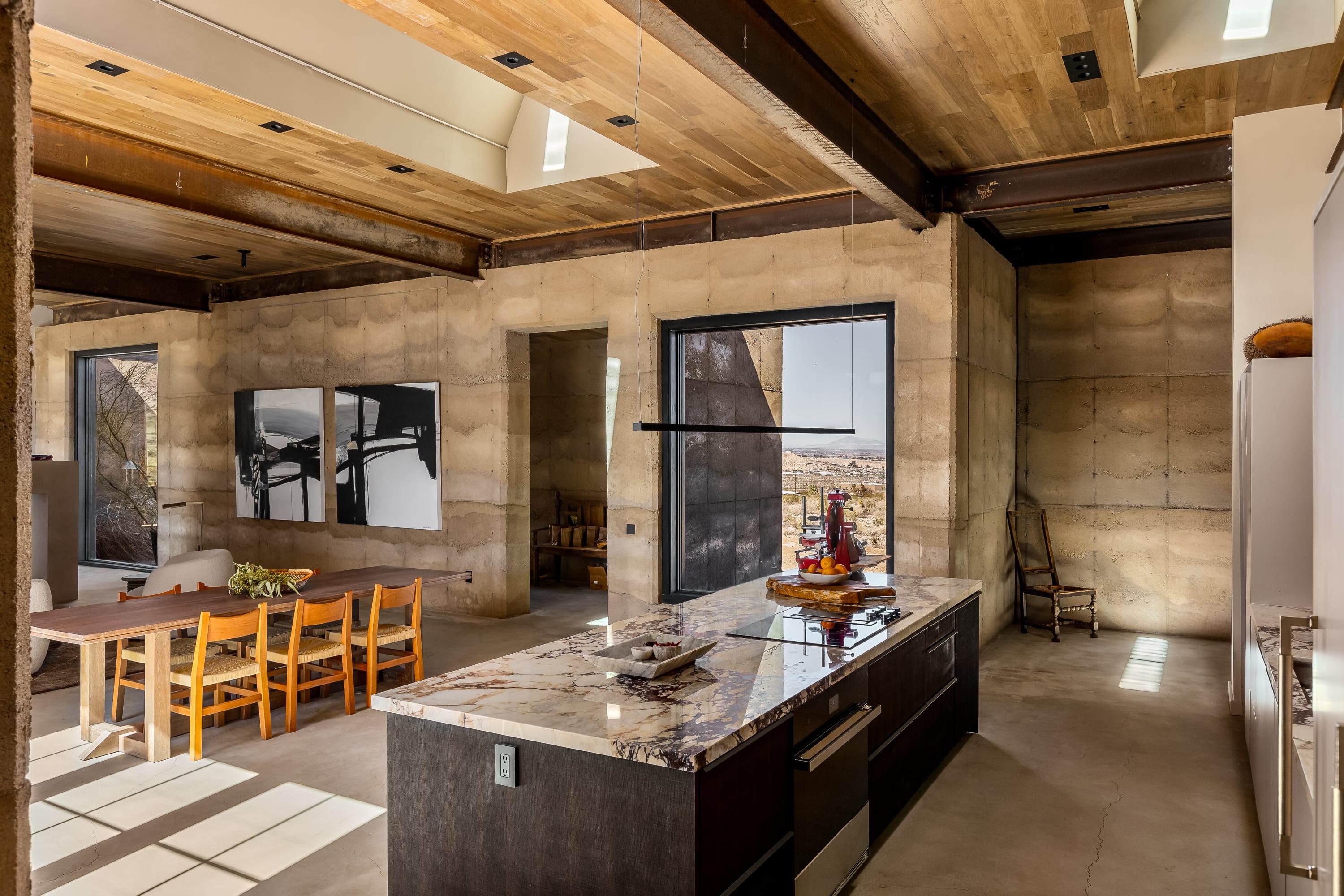
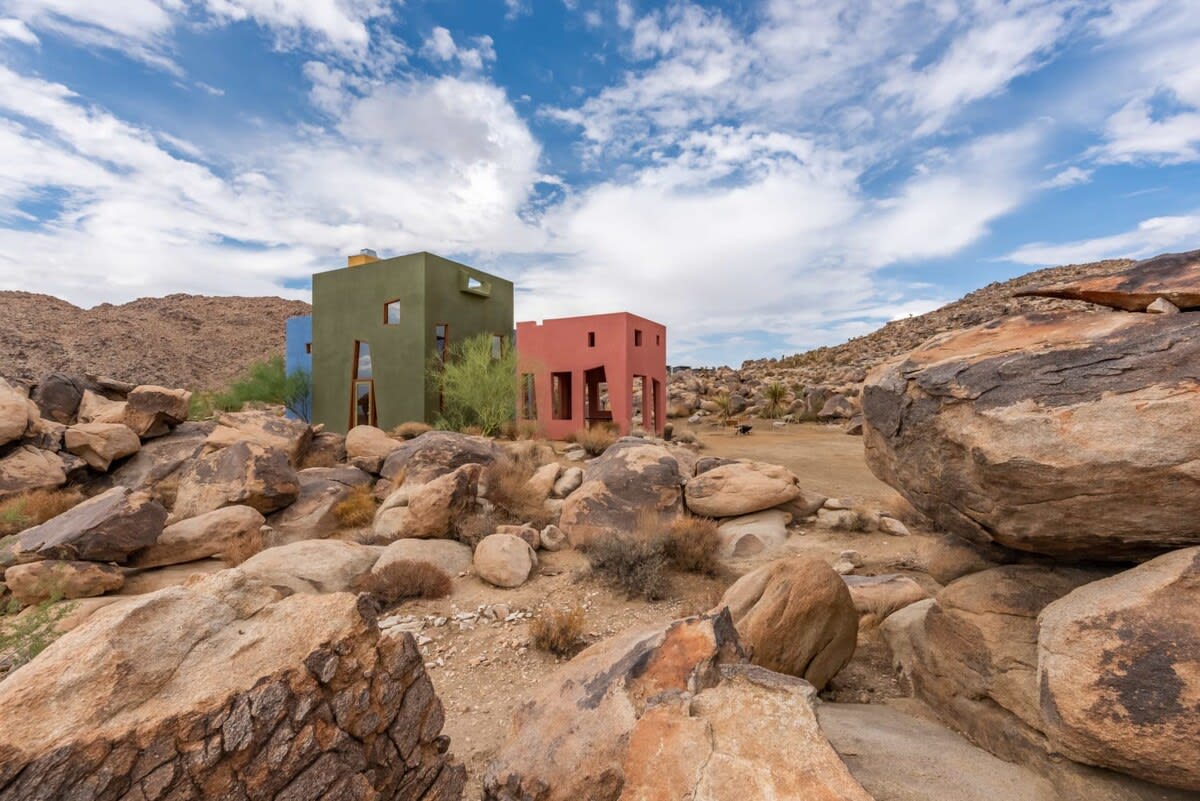
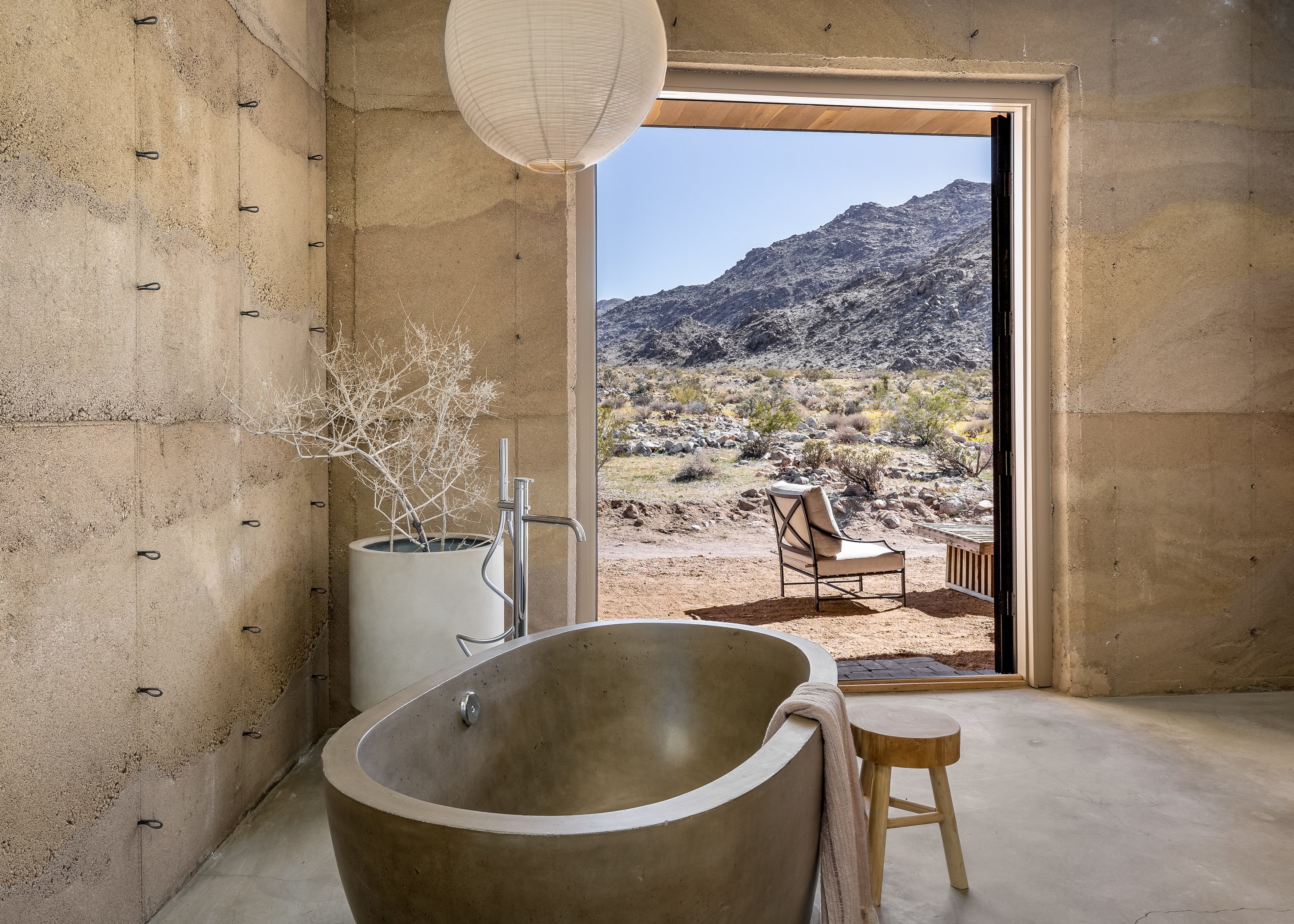
A-Z West House is in a different category: the former home of artist Andrea Zittel, on an 80-acre experimental compound with site-specific outdoor installations. Every object in the house was designed by Zittel as part of a sustained investigation into modern living. It's not comfortable in the conventional sense — it's interesting in a way most vacation rentals never manage to be. Morning Dove in Twentynine Palms is the largest in the area: a 7,000 square foot rammed earth estate built from the granite soil of the site, with floor-to-ceiling glass and a 20-acre setting at the park boundary.
The Black Desert House (Architectural Digest, Condé Nast Traveler) sits above a protected desert preserve in Yucca Valley with an infinity-edge pool and a courtyard entry with a sculptural olive tree — the kind of stillness that makes you understand why serious designers keep coming back to the desert.
The Towns
Joshua Tree town has the best independent businesses: the Joshua Tree Saloon for live music and cold beer; Crossroads Café for an excellent breakfast; JT Country Kitchen for a proper sit-down meal; Frontier Café for the local lunch spot. The World Famous Crochet Museum is what it sounds like, occupying a former photo booth, and is worth five minutes.
Twentynine Palms is the eastern gateway, home to a large Marine Corps base (the largest base by area in the world) and the park's busiest entrance. The 29 Palms Inn — 11 adobe bungalows and a garden restaurant on the Oasis of Mara — has been operating since 1928 and is the most characterful lodging option in the park corridor if you want something other than a private rental.
Yucca Valley has the practical infrastructure: grocery stores, gas, the hardware store. It's also where you'll find the Integratron — a domed structure built in the 1950s by George Van Tassel, who claimed extraterrestrial contact provided the design. Whatever the origin, the acoustics inside the dome are genuinely extraordinary, and the sound bath experiences offered there are popular for good reason.
Find your base in Joshua Tree, CA — browse stays indexed by CielStay.
Search stays on CielStay →Frequently asked questions
When is the best time to visit Joshua Tree?
October through April offers the most comfortable conditions — daytime highs of 60–75°F with cool nights. Spring (February–April) adds wildflower blooms in wet years, which are spectacular across the Mojave and Colorado desert zones within the park. Summer is extreme (110°F+) and genuinely dangerous for day hiking; heat-related rescues spike in June and July.
Do I need a reservation to enter Joshua Tree National Park?
Joshua Tree requires timed-entry vehicle reservations on peak weekends and holidays from October through May, bookable at recreation.gov. Weekday entry is typically walk-up. Campground reservations fill weeks in advance for peak season weekends — book as soon as the 6-month window opens.
What is the rock climbing like at Joshua Tree?
Joshua Tree has over 8,000 documented climbing routes on monzogranite boulders, making it one of the premier trad climbing destinations in the US. The range covers grades from beginner (5.4) to expert (5.14). The Wonderland of Rocks and Hidden Valley Campground have the highest route concentration. Local guide services in Joshua Tree town offer instruction for all levels.
How far is Joshua Tree from Palm Springs?
The park's west entrance is about 40 miles from Palm Springs — 45 minutes by car. Palm Springs International Airport (PSP) offers direct flights from over 20 US cities and is the most convenient gateway for Joshua Tree visits. The Coachella Valley cities (Palm Springs, Palm Desert, Indio) all make practical bases for park day trips.
Stays near this guide
Top-rated independent stays in the region, ranked by CielStay authenticity score.
Try a search
Searches inspired by this guide — describe the vibe you want.
More guides

Nearby landmarks & attractions
Key destinations and attractions in the Joshua Tree, CA area.
Joshua Tree National Park ↗ Maps
Where the Mojave and Colorado deserts meet — iconic Joshua trees, boulder fields, and dark-sky stargazing.
Pioneertown ↗ Maps
1940s Hollywood Western set turned real town — Pappy and Harriet's is the legendary honky-tonk anchor.
Cholla Cactus Garden ↗ Maps
A dense field of jumping cholla cacti in the Colorado Desert section of the park.
This guide was assembled from the local knowledge of hosts with properties throughout Joshua Tree, CA, as indexed by CielStay. The descriptions of restaurants, trails, swimming holes, and local tips reflect what hosts share with guests in their listings — not the observations of a travel journalist or guest reviewer. Photos are sourced from host listing images and are credited to their respective listings. Information about permits and trail conditions may change; always verify with official sources before your trip.